
















































%20and%20Batch%20Production%20Records%20(BPR).png)
















Designing for Dignity: Reshaping Trauma-Informed, Universal Design in Supportive Housing
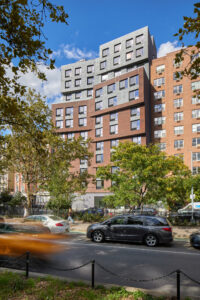
Freedom Village, a new 65,000-square-foot residence providing permanent supportive housing, empowers its community through dignity, autonomy and inclusion. | Photo Credit (all): Garrett Rowland
By James E. LaPosta, Jr., FAIA, LEED AP
Healthcare and supportive housing share a foundational mission of helping those in need and present opportunities for each field to learn from the best practices and approaches of the other. Across each, design plays a powerful role in supporting healing and the successful delivery of services to clients. Thoughtfully implemented universal design principles and trauma-informed approaches create the infrastructure required for these building typologies to respond to the unique and complex needs of the people they serve.
Freedom Village, a new 65,000-square-foot residence providing permanent supportive housing, presents a compelling case study in the application of these principles. Located in New York City’s Lower East Side (LES), the project challenges common assumptions about the aesthetics of supportive housing. It creates an environment that is both empowering and universally supportive for individuals and families living with disabilities, while promoting connection and well-being through the integration of natural light, color, and controlled access to the outdoors.
A Project with Pride and Purpose
Barrier Free Living (BFL) is a nationally recognized organization dedicated to supporting individuals with disabilities and assisting them in living dignified lives free from abuse and bias. Building on its longstanding presence and legacy as a pillar of the LES community for more than 45 years, BFL developed Freedom Village to reflect its commitment to accessibility, independence, and connection within the vibrant neighborhood.
BFL engaged JCJ Architecture to design a thoughtful approach to accessible interiors paired with a unique architectural presence in the rapidly evolving community. The design team carefully considered each element of the program, which includes a mix of 74 studio, one-, two-, and three-bedroom apartments, along with administrative offices, community and support spaces, a rear garden, and an elevated outdoor recreation area.
Enhancing Accessibility Through Universal Design
Design for the project was the result of a close collaboration between JCJ and BFL and focused on creating a universally accessible facility that would welcome individuals as well as families. The design exceeds local requirements as well as the Americans with Disabilities Act (ADA) and fosters a more direct and confident relationship between residents and their environment. The design team was challenged with addressing residents’ wide spectrum of needs, including mobility, visual, and hearing impairments, within a single, cohesive design framework. Freedom Village creates spaces that are intuitive and legible for all residents without relying on specialized or separate solutions – the results of a cohesive approach that carefully considered circulation, unit layouts, wayfinding, lighting, and sensory cues.
From the group floor up, the color palette was purposefully selected to signify entrances and signage in recognizable shades to assist in wayfinding for those who cannot see in color. Throughout the building, every hallway is widened to accommodate wheelchair traffic in both directions to support uninterrupted movement and circulation.
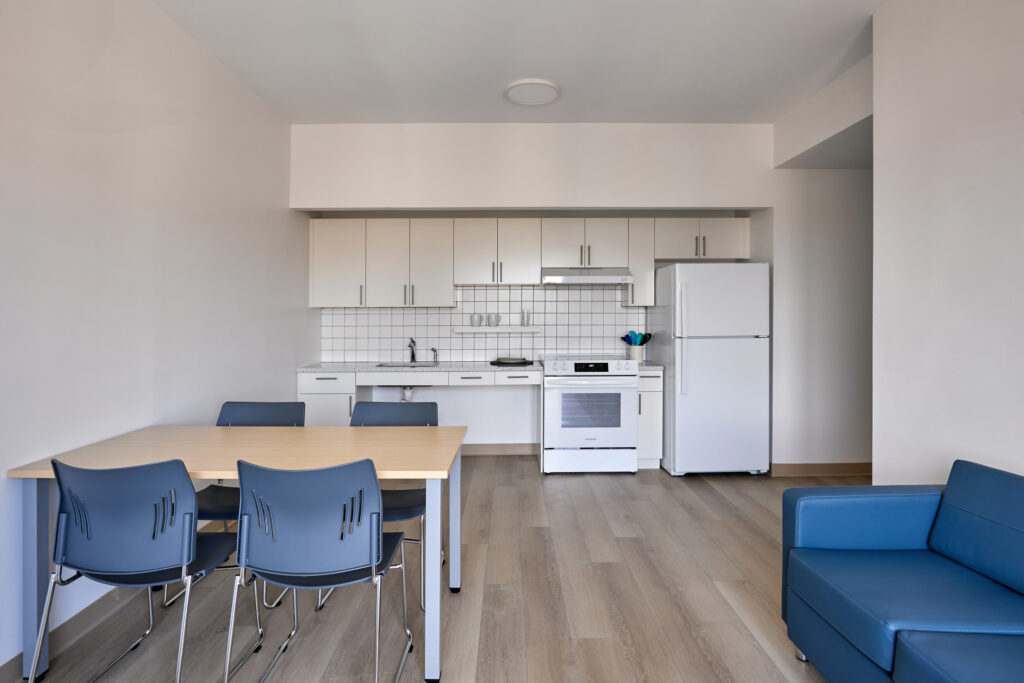
The spacious residential units feature bathrooms and kitchenettes fully equipped to handle a variety of needs and abilities. Counter heights and cabinets were strategically selected to accommodate the reach of someone in a wheelchair, while stoves shut off automatically once they reach a certain temperature as a safety precaution. For those who are hearing impaired, select units are outfitted with special devices featuring flashing lights that alert residents to someone knocking at the door.
At the door itself, visual security holes are located at two different heights to cater to those using mobility devices, and floor tiles that transition colors indicate the entrance for each unit. By embedding universal design principles throughout the building from its inception, residents are able to navigate their environment confidently and without limitations, reinforcing a sense of equality and self-sufficiency.
Trauma-Informed Design for Dignity
Freedom Village creates a residential environment that empowers its community through dignity, autonomy, and inclusion. For residents, many of whom have experienced trauma, the project offers a stable home designed to support both independence and well-being. The design team’s approach to the project was rooted in the prioritization of trauma-informed principles and guided by BFL’s unwavering goal of creating spaces that provide a sense of safety, respect, community, and dignity for all.
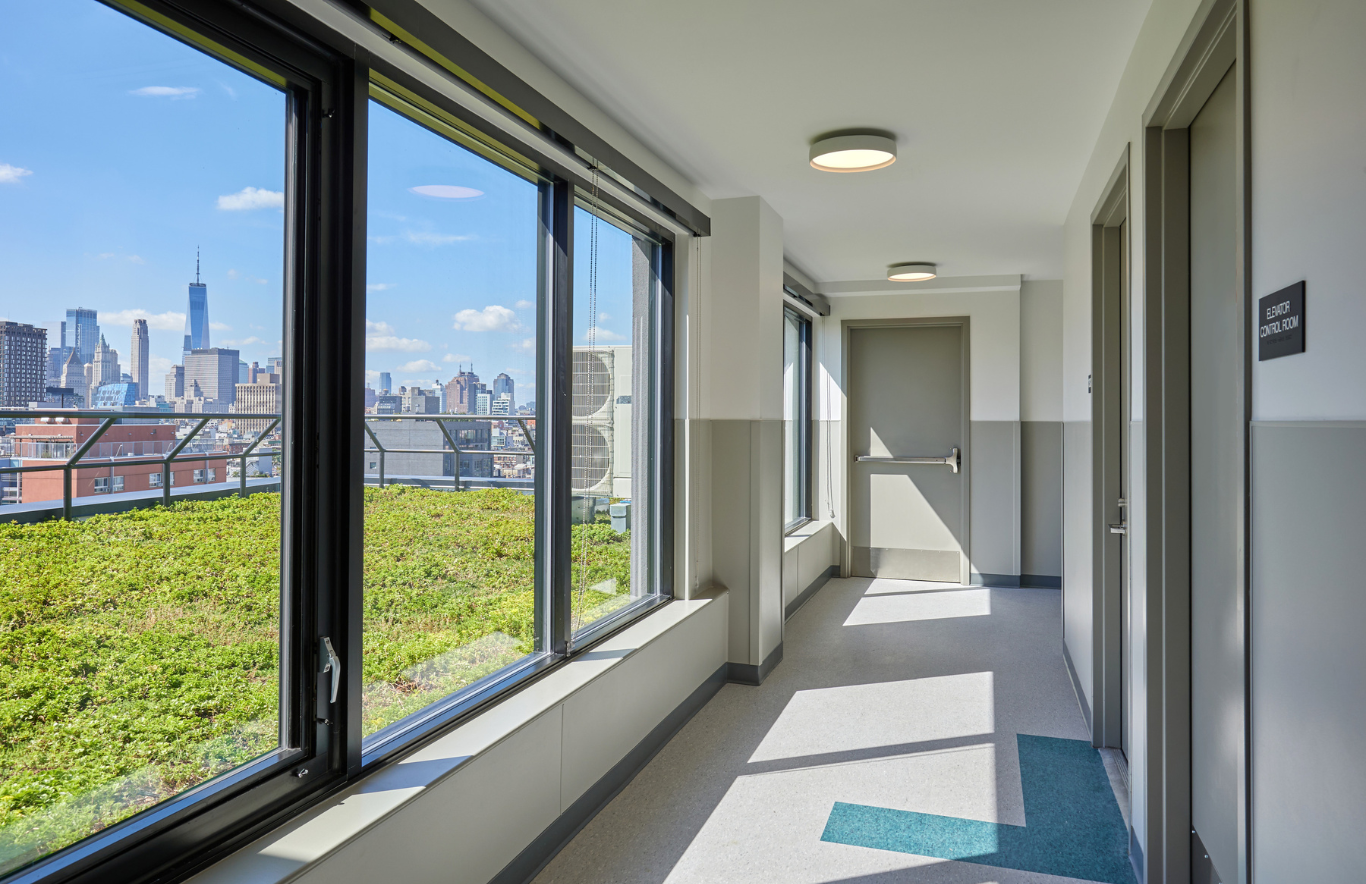
Designing an environment that felt safe and trauma-informed while remaining uplifting and aspirational required a delicate approach from the team. Clear sightlines were essential for security, yet the spaces needed warmth, color, and visual interest to avoid an institutional atmosphere. Outdoor access was prioritized as a wellness strategy, resulting in two landscaped terraces on the second and ninth floors with expansive views of the New York City skyline. These spaces are actively programmed for therapy, recreation, and social events, and reinforce the connection between physical health, mental well-being, and access to nature.
Collectively, the universal, trauma-informed design of Freedom Village transforms the project into more than a residential building; it is a thoughtful, socially responsive, and materially expressive environment that elevates the standard for supportive housing and demonstrates how design can be a catalyst for dignity, inclusion, and community pride. In doing so, Freedom Village illustrates how thoughtful design can shape supportive housing that meets functional needs while uplifting the lives of the people it serves.
James E. LaPosta, Jr., FAIA, LEED AP, is Principal and Chief Architectural Officer at JCJ Architecture.
The post Designing for Dignity: Reshaping Trauma-Informed, Universal Design in Supportive Housing appeared first on HCO News.
The post Designing for Dignity: Reshaping Trauma-Informed, Universal Design in Supportive Housing appeared first on HCO News.
Apa Reaksi Anda?
 Suka
0
Suka
0
 Kurang Suka
0
Kurang Suka
0
 Setuju
0
Setuju
0
 Tidak Setuju
0
Tidak Setuju
0
 Bagus
0
Bagus
0
 Berguna
0
Berguna
0
 Hebat
0
Hebat
0