






















New Study in the US Confirms That Seaweed Integration Boosts Efficiency and Cuts Waste in Aquaculture
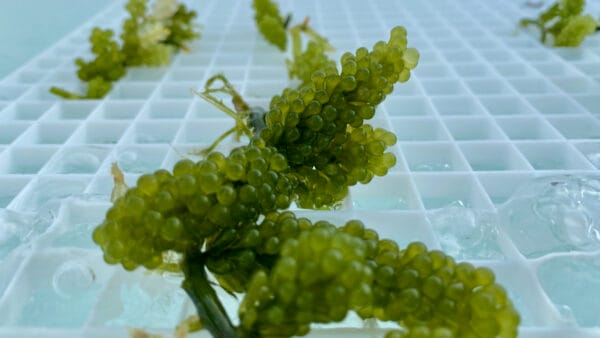
Researchers of University of Miami Rosenstiel School of Marine, Atmospheric, and Earth Science provide guidance for the producers
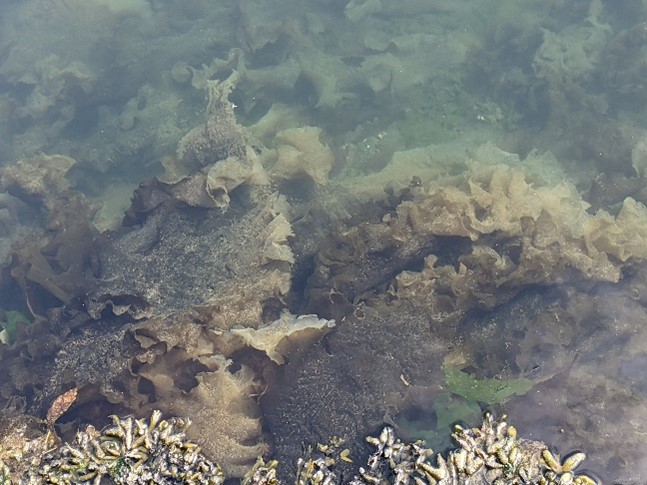
A new study of the University of Miami Rosenstiel School of Marine, Atmospheric, and Earth Science found that cultivating seaweed species alongside marine finfish in integrated multi-trophic aquaculture (IMTA) operations can significantly reduce − and even eliminate − key waste products from marine finfish farming. In the IMTA seaweeds receive nutrient-rich effluent from fish production, they confirmed.
According to the scientist, the results demonstrate the potential of IMTA in these regions and offers potential mitigation solutions for many of the most prominent sustainability concerns regarding the development of marine aquaculture operations for fed-species such as marine finfish.
In that sense, Haley Lasco, the leader author of the study and a marine biology graduate student at the Rosenstiel School − and currently a scientist at the South Carolina Department of Natural Resources, assured: “With the significant interest in the development of marine aquaculture throughout the Southeast United States (US) and Caribbean, these findings can be used to guide the selection of extractive macroalgae species in operations culturing marine finfish.”
The study offers new insights into how aquaculture producers can improve sustainability by farming macroalgae species in a complementary system alongside finfish. “Our findings support more sustainable aquaculture operations and help producers make smarter choices about macroalgae for IMTA,” added Lasco.
Pilot-Scale
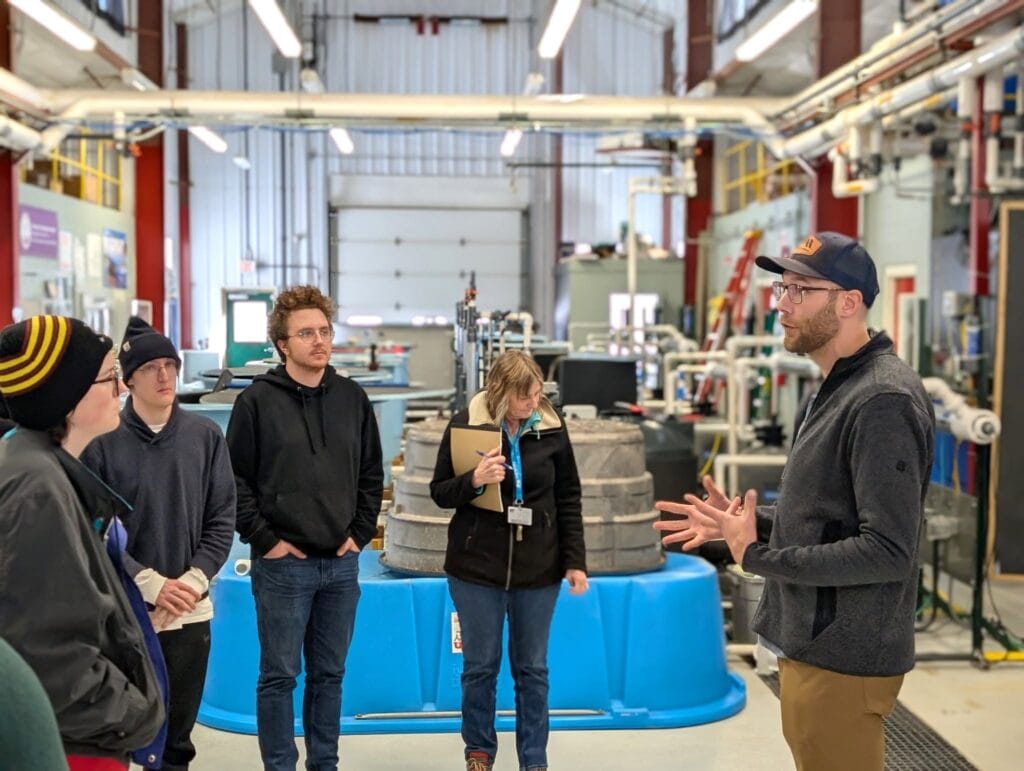
To conduct the study, the researchers established a pilot-scale Integrated Multi-Trophic Aquaculture system at the Rosenstiel School’s Experimental Hatchery facility on Virginia Key, Florida, to evaluate the performance of four candidate macroalgae species under consistent marine finfish effluent conditions.
The flow-through IMTA system used a consistent source of nutrient-rich effluent from a yellowtail snapper (Ocyurus chrysurus) grow-out tank maintained at commercial-scale density and feeding rates. Each macroalgae species was grown in three replicate tanks receiving the same effluent, enabling controlled comparisons of nutrient removal, nutritional composition, and market potential under conditions representative of commercial aquaculture.
At the end of each two-week trial, macroalgae were evaluated for growth and analyzed for protein, fat, fiber, ash, minerals, metals, and carbon and nitrogen content, including stable isotope ratios. Results provide new insights into macroalgae performance under real-world conditions and demonstrate the potential to reduce total ammonia nitrogen (TAN) in marine finfish aquaculture effluent to below detectable levels.
“This work shows how integrating macroalgae into marine finfish aquaculture systems can reduce waste while producing a valuable secondary crop. It provides a practical framework for selecting species based on specific production goals, improving environmental performance while creating opportunities for better production economics and more diversified products using an IMTA approach,” said for his part John Stieglitz, a research associate professor in the Department of Marine Biology and Ecology, who led the project as principal investigator.
The Goal: To Mimic Natural Ecosystems
Let’s remember that IMTA is a production system where different species from different trophic levels are farmed together in a complementary system with a goal to mimic natural ecosystems, thus improving sustainability, reducing waste, and increasing overall productivity. This form of aquaculture allows for the waste of one organism to be utilized by another organism across trophic levels, creating a system with less waste and therefore a lower environmental impact.
The primary aim of this study was to provide an understanding of which macroalgae species from the Southeast US and Caribbean regions perform the best in these different categories, providing stakeholders with a guide to select a desirable species of macroalgae to utilize and implement in their operations.
According to the scientist, the results demonstrate the potential of IMTA in these regions and offers potential mitigation solutions for many of the most prominent sustainability concerns regarding the development of marine aquaculture operations for fed-species such as marine finfish.
Already Published
The study titled “Evaluation of native macroalgae species of the Southeast U.S. and Caribbean for use in integrated multi-trophic aquaculture (IMTA)” was published in the journal Aquaculture International February 10, 2026. The authors include Lasco, Hilary G. Close, Ronald H. Hoenig, Phillip R. Gillette, Daniel D. Benetti, and John of the University of Miami Rosenstiel School of Marine, Atmospheric and Earth Science.
Funding for the study was provided by subawards from the Gulf States Marine Fisheries Commission (GSMFC) in cooperation with NOAA Fisheries Service.
Apa Reaksi Anda?
 Suka
0
Suka
0
 Kurang Suka
0
Kurang Suka
0
 Setuju
0
Setuju
0
 Tidak Setuju
0
Tidak Setuju
0
 Bagus
0
Bagus
0
 Berguna
0
Berguna
0
 Hebat
0
Hebat
0