




















Study links postbiotic and phytogenic combinations to improved blackhead outcomes
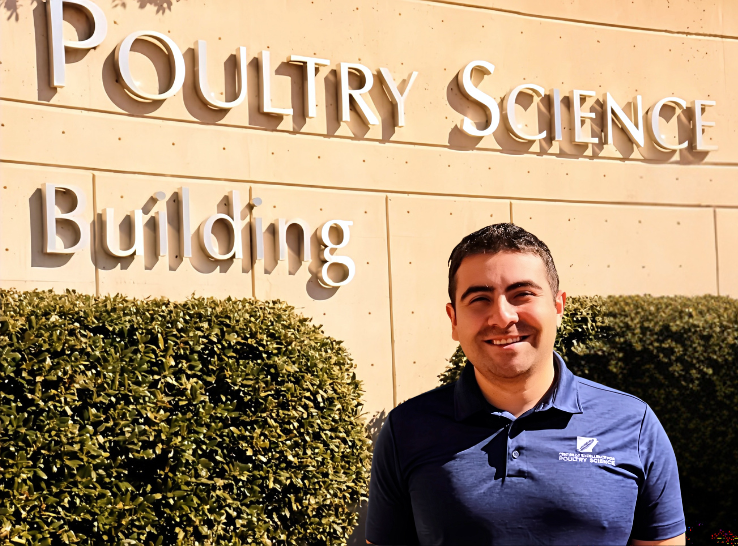
A University of Arkansas study indicated that turkey poults receiving postbiotic and phytogenic combinations showed encouraging blackhead outcomes under a controlled challenge — including lower horizontal transmission and zero contact mortality — offering a valuable health-support tool for producers facing limited treatment options.
For turkey producers, blackhead remains a high-impact threat, particularly in young birds, where infection can spread quickly and cause major losses. With limited approved treatment options compared with past decades, interest has grown in alternatives that may help reduce spread and limit disease severity before an outbreak accelerates.
“With fewer tools available, the focus shifts to prevention and limiting how far the disease spreads,” said Diego Cortes, DVM, a seasoned field veterinarian who conducted this research as part of his graduate studies in poultry science at the University of Arkansas. “That’s where these combinations looked promising — we saw improvements in transmission, lesions and mortality.”
Cortes presented the research at the International Poultry Scientific Forum (IPSF) during the 2026 International Production & Processing Expo (IPPE) in Atlanta.
Why blackhead continues to challenge turkey production
Histomoniasis is caused by the protozoan parasite Histomonas meleagridis, and in turkeys, it can be especially severe. Cortes said outbreaks can move quickly through flocks and, in the worst cases, mortality can climb into the 80% to 100% range.
Control of the cecal worm Heterakis gallinarum — an important carrier of blackhead — remains one of the most critical factors in managing histomoniasis risk. At the same time, producers are navigating growing concern about dewormer performance and emerging resistance trends, making parasite management more complicated than it has historically been.
Growing focus on preventive tools
With limited approved treatment options available for blackhead, the focus has increasingly shifted toward preventive tools that help birds maintain gut integrity and immune resilience before challenge pressure rises. Among these, postbiotics and phytogenic compounds have gained attention for their potential to support intestinal function, influence microbial balance and reduce inflammatory pressure — benefits that may help birds better tolerate enteric challenges.
Postbiotics can also offer practical advantages in feed manufacturing because they are not live organisms, improving stability and consistency in handling compared with some probiotic approaches. Although there is a substantial body of research on phytogenics and gut support strategies in broilers, Cortes said there remains a relative lack of turkey-specific data evaluating postbiotic and phytogenic combinations together — one of the gaps this work aimed to address.
Study design focused on horizontal transmission
A key focus of the study was horizontal transmission — the spread of infection from bird to bird through feces and shared environmental contact — which is one of the main ways blackhead moves through turkey flocks once it gains a foothold.
Researchers used a seeder/contact model with 400 poults assigned to a challenged control group or one of three postbiotic and phytogenic combinations based on Cargill’s Biostrong H-Protect (Bio HP) concept. Birds received their assigned diets from placement through day 34.
At day 14, a small number of birds in each pen were challenged and served as “seeders.” The remaining birds were “contacts,” commingled with seeders to evaluate how readily infection moved through the group. The three combinations were designed to compare different postbiotic sources and phytogenic profiles, with the goal of identifying the best overall option.
- Bio HP 1: Postbiotic A plus a single phytogenic compound
- Bio HP 2: Postbiotic A plus a phytogenic multi-compound
- Bio HP 3: Postbiotic B plus a phytogenic nucleus combination
Lower transmission in treated birds
In contact birds, horizontal transmission was highest in the challenged control group at 80% (48 of 60 birds). In the groups receiving postbiotic and phytogenic combinations, contact-bird transmission ranged from 56.67% to 63.33%.
Cortes said transmission outcomes are often difficult to influence once histomoniasis is circulating within a group, which made the observed differences notable.
“Normally, when we test different products, we don’t see a reduction in transmission,” Cortes said. “So, seeing transmission go down is a good starting point to determine what combination works best.”
Zero contact mortality in the treated groups
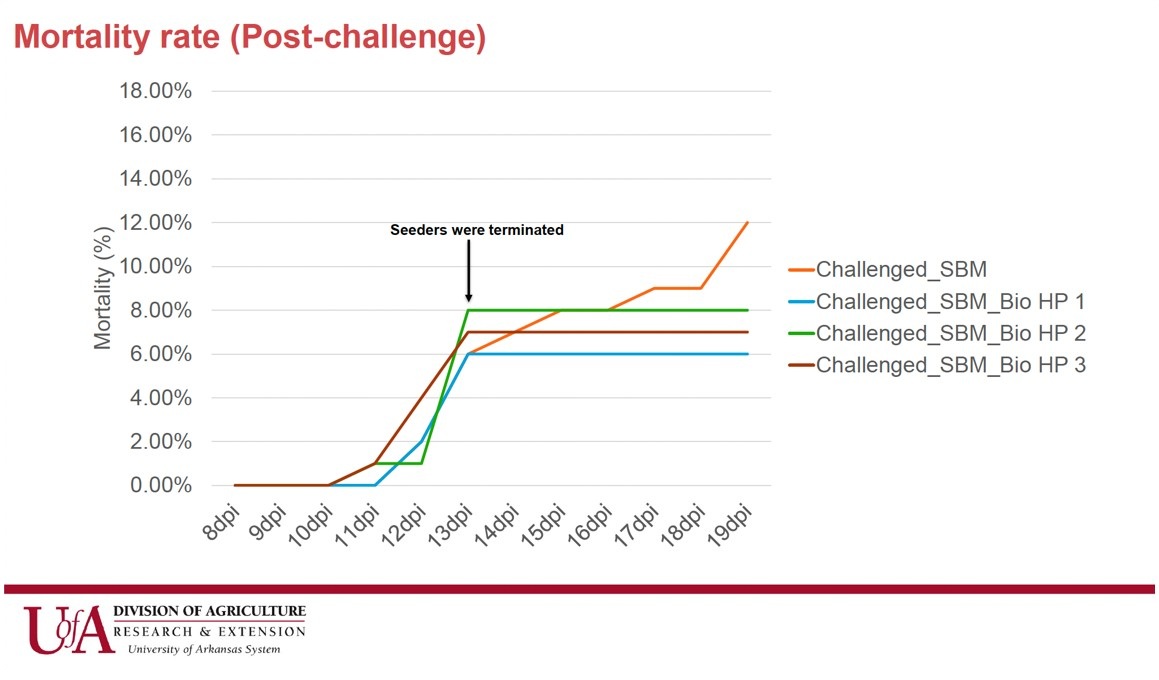
Contact-bird mortality reached 10% (6 of 60 birds) in the challenged control group. In all three groups receiving postbiotic and phytogenic combinations, contact mortality was 0% (Figure 1).
“When the birds are challenged without any combination, they keep dying,” Cortes said. “But with the combinations, they stop dying, and some birds can compensate and recover.”
Figure 1. Mortality rate (post-challenge)
Click to enlarge.
Lower lesion severity in treated birds
Researchers scored lesions in both the ceca and liver on a 0 to 3 scale. In contact birds, Bio HP 1 had the lowest average liver lesion score at 0.02 compared with 0.37 in the challenged control group. In the ceca, all three combination groups had lower average lesion scores in contacts, ranging from 0.63 to 0.70 compared with 1.07 in controls.
“Normally in the challenge control, lesion scores tend to be between 2 and 3,” Cortes said. “But after using the combinations, we saw much lower lesion scores — especially in the liver for Bio HP 1 — and reductions in the ceca in the other prototypes.”
Among seeders, Bio HP 3 showed the lowest average cecal lesion score at 2.05 compared with 2.30 in challenged controls, and it was also numerically lower for liver lesions in seeders.
Growth performance differences narrowed after challenge
Pre-challenge, birds receiving Bio HP 1 showed higher body weight and body weight gain at day 14 compared with controls. By day 34, post-challenge performance in contact birds was broadly similar across treatments, with no statistically significant differences reported, though Bio HP 1 remained numerically higher for body weight.
“If we use this approach from the beginning, the birds can be more prepared for any kind of infection,” Cortes said. “That early body weight could help them handle challenge better.”
Health-supporting role
Cortes said the results support a health-supporting role for these strategies, rather than positioning them as a fix after clinical signs are already widespread.
“This approach should be focused on using these tools from the beginning, before disease becomes a problem,” he said. “They could work under challenge, but are more effective from day one to support gut health and integrity.”
Noting that every prototype has a different benefit, Cortes said, “Some help more in seeders, others in contacts and others in transmission. The idea is to determine the best option or combine the benefits and find the most cost-effective combination. For turkeys, this is a promising start and it gives us valuable insight into what works and what to improve next.”
The post Study links postbiotic and phytogenic combinations to improved blackhead outcomes appeared first on Modern Poultry.
Apa Reaksi Anda?
 Suka
0
Suka
0
 Kurang Suka
0
Kurang Suka
0
 Setuju
0
Setuju
0
 Tidak Setuju
0
Tidak Setuju
0
 Bagus
0
Bagus
0
 Berguna
0
Berguna
0
 Hebat
0
Hebat
0