























The evolution of poultry prophylaxis: effectiveness and precision in the service of animal health
In modern poultry farming, the efficiency of prophylactic operations is no longer assessed solely in terms of speed, but also in terms of dosing accuracy, animal welfare, and biosecurity. These operations, traditionally reliant on manual skill and the experience of vaccination teams, are increasingly becoming a production bottleneck, as the availability of specialized personnel continues to decline.
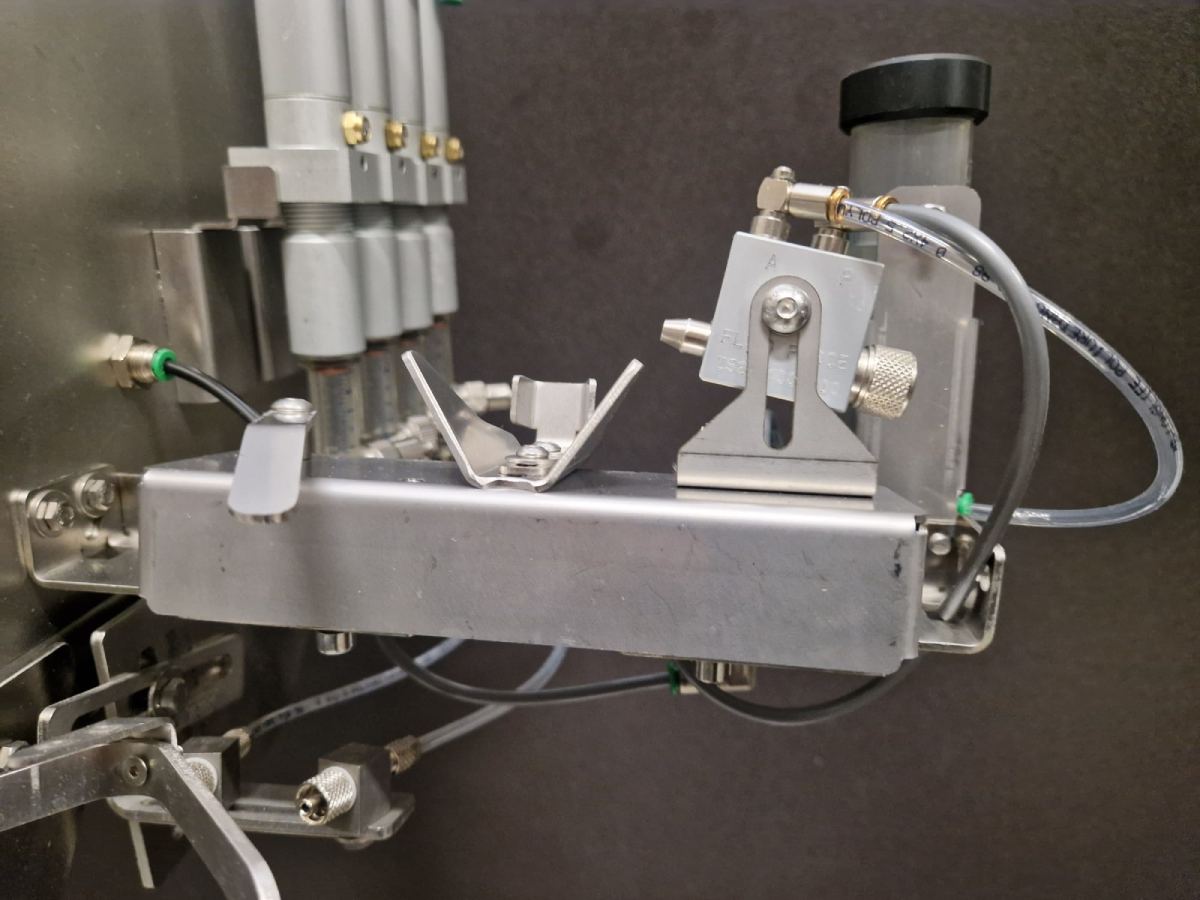
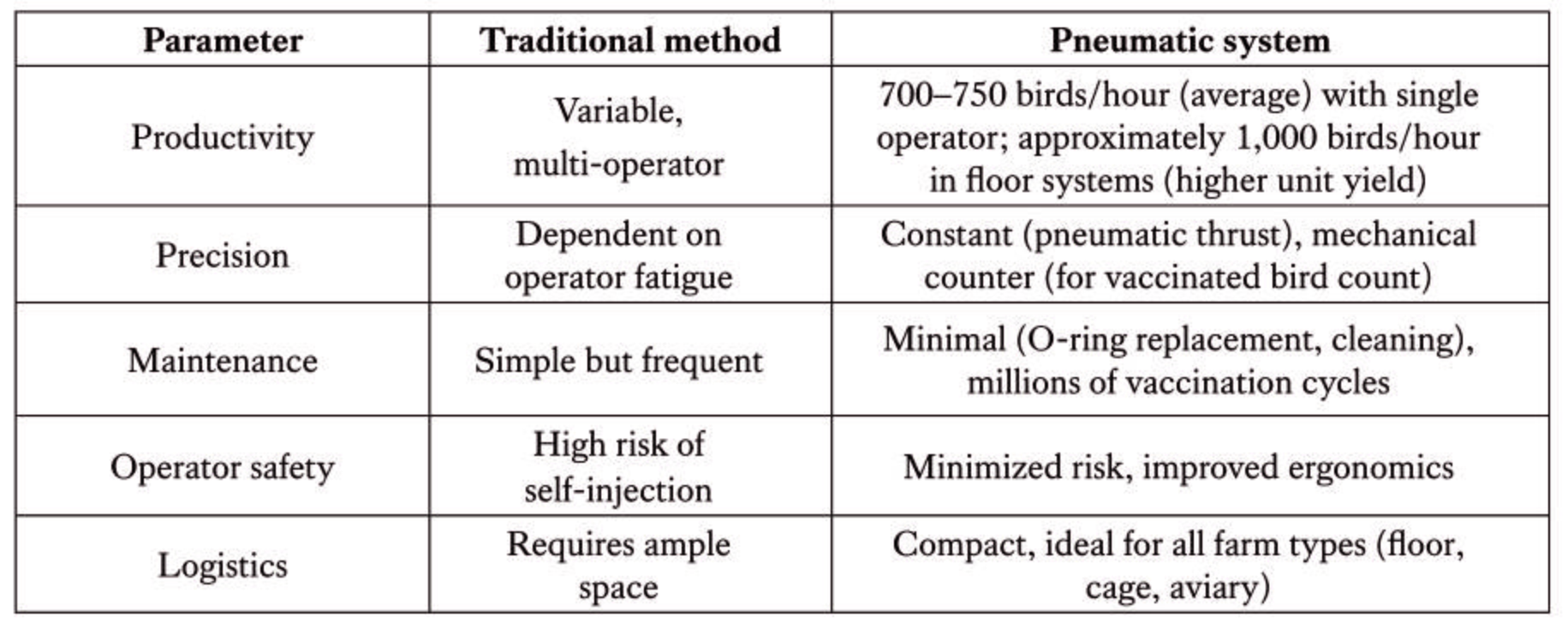
Against this backdrop, the patented device distributed by Giordano and developed by Prof. Dante Lorini, now an integral part of the group’s Vaccination Devices category, represents a significant step forward compared to traditional methods. It is an “all-in-one” pneumatic vaccination station that integrates ocular-conjunctival spray, intramuscular (IM) injection, and wing membrane scarification. The system is designed to standardize the vaccination process, increase its precision, and ensure high operational quality, allowing up to seven vaccinations to be performed during a single handling of the animal.
Design philosophy: ergonomics and adaptability
The core of the innovation lies in the machine’s ability to adapt to the bird’s morphology, rather than requiring the bird to adapt to the equipment. The system is entirely pneumatic, eliminating electrical components and ensuring operability even in challenging environments with high levels of dust and humidity. The stainless-steel construction is easy to sanitize and disinfect at the end of vaccination procedures (any type of disinfectant can be used).
The modular structure allows adjustment along three axes, making it suitable for birds of any age and size, with particular suitability for pullets aged 80-90 days. Moreover, adaptability to the specific operating context is further enhanced, as farmers or operators can modify the rods and/or trolleys supporting the equipment to meet their needs. Thanks to standardized measuring scales, once a single machine is calibrated, the same settings can be accurately replicated on all other devices in use simultaneously.
Finally, its global distribution ensures easy access to manufacturer support and the availability of spare parts for maintenance.
 Anatomical and functional analysis of vaccination methods
The device addresses the limitations of manual vaccination through engineering solutions that respect the anatomy of these animals. The operational procedure involves controlled handling of the animal by gripping the back with the right hand and the left wing with the left hand. The subsequent vaccination steps include:
1. wing puncture
The wing is inserted horizontally, with the dorsal side facing upward, into the central slot of the device for localized intradermal/subcutaneous inoculation or transfixion. Applying light pressure activates a micro-pneumatic mechanism that moves a special needle vertically and perpendicularly downward; this needle is coated with the vaccine solution contained in the underlying tray, distributing the viral suspension into the wing membrane tissues (epidermal/dermal/interstitial connective tissue layers) as it rises back up.
The entire vaccination cycle is completed in about 250 milliseconds, and the system prevents repetition until the command is released.
The device replaces the traditional double needle (often causing excessive lesions or breaks) with a single special needle (160 micron diameter) featuring:
- needle geometry: shaped with a piercing tip and long taper, including an internal roughened zone to retain the exact vaccine dose for tissue adhesion during needle withdrawal. These features ensure minimal damage to the wing membrane.
- guaranteed dosing: tests confirm perfect accuracy, delivering 1,000 doses to 1,000 birds. This eliminates manual method waste, ensures compliance with pharmaceutical solvent/solute ratios, and the tray’s specific geometry maximizes solution use.
2. intramuscular (IM) injection
At the same time as wing positioning, the bird’s chest is placed against the contoured mask on the right. A moving sled brings the needles into contact with the birds’ pectoral muscles, ensuring inoculation at the correct site (in pullets, ideally 2.5–4 cm from the sternal bone, in the upper third of the chest, with the needle angled downward at 45°).
Manual injections are subject to human error related to fatigue, incorrect angle/depth, often leading to deposits in wrong anatomical sites (too superficial or too deep, risking penetration into the coelomic cavity and damage to underlying organs like liver or heart, causing animal death) and/or granulomas.
The pneumatic system eliminates these variables, ensuring:
- constant intrinsic pressure: the vaccine is delivered under controlled force through muscle fibers, ensuring uniform diffusion into deep layers, reducing localized pockets and associated granuloma incidence.
- multiple injections: a sled driven by a pneumatic cylinder enables up to four injections at different points in a single operation, using adjustable parallel/converging needles.
- needle stability/integrity: the smooth sled movement reduces wear (using standard Luer Lock needles of varying diameters/lengths), drastically lowering risks of trauma/infection.
- syringes: individually adjustable for diverse vaccine dosages. Separate injection circuits (each dispenser has its own volume) prevent vaccine mixing, preserving pharmacological integrity.
- support rods: useful for connecting bags/vials of vaccine solutions to fill syringes.
3. ocular-conjunctival spray
Following injection, the operator moves the bird to the left and positions the head on the appropriate contoured support, so that the eyes align with the vaccine spray dispensers; light pressure with the left hand on a mobile lever activates a second micro-pneumatic mechanism that commands timed spray application. The spray deposits the inoculum directly into the conjunctival sac, between the bulbar surface and the inner eyelid. From this site, the vaccine reaches Harder’s gland (a lymphoid organ essential for mucosal immune stimulation) and is subsequently distributed throughout the respiratory epithelium (superficial and/or deep) through passage via nasal cavities/choana and oral cavity, via the nasolacrimal duct.
Traditionally, ocular vaccination required tilting the bird’s head and drop-by-drop dosing, operations that often induced instinctive eyelid closure or required manual force. Furthermore, a hurried or fatigued operator may release the bird before the drop is fully absorbed, without waiting for the bird to blink before releasing it.
The new system leverages the “Venturi effect,” providing the following advantages:
- natural position: the animal maintains the head in a physiological position without recline, on a specialized contour following its morphology. This also reduces the eyelid closure reflex.
- fluid dynamics: spray pressure is calibrated to slightly lift the eyelid, ensuring vaccine reaches the entire ocular orbit before the bird can close its eye.
- flexibility: option for dual reservoirs, individually connected to their respective dispensers, to administer two vaccines simultaneously. The dispensers are adjustable in position and angle to ensure precise orientation toward animal pupils. Vaccine volume is modifiable via screws on individual sprayers.
- efficiency: immediate confirmation of correct administration is visible by observing any dye used by directly inspecting the animal’s oral cavity. Additionally, positioning the spray on the right (or as otherwise configured) allows this operation as the first phase. While the operator proceeds with the subsequent steps, the vaccine has time to be properly absorbed.
Animal welfare and biosecurity
The most significant competitive advantage is the reduction of animal handling. While traditional methods required up to four separate handling steps to complete the full vaccination cycle, the new method involves a single collection of the bird, administrating all treatments in rapid sequence (spray → intramuscular injection(s) + wing puncture).
This approach drastically reduces the risk of trauma and stress for animals. As a result, it lowers potential respiratory and/or enteric conditions associated with stress, reduces the need for medication/additives, and limits the formation of culled birds with improved uniformity and reduced mortality.
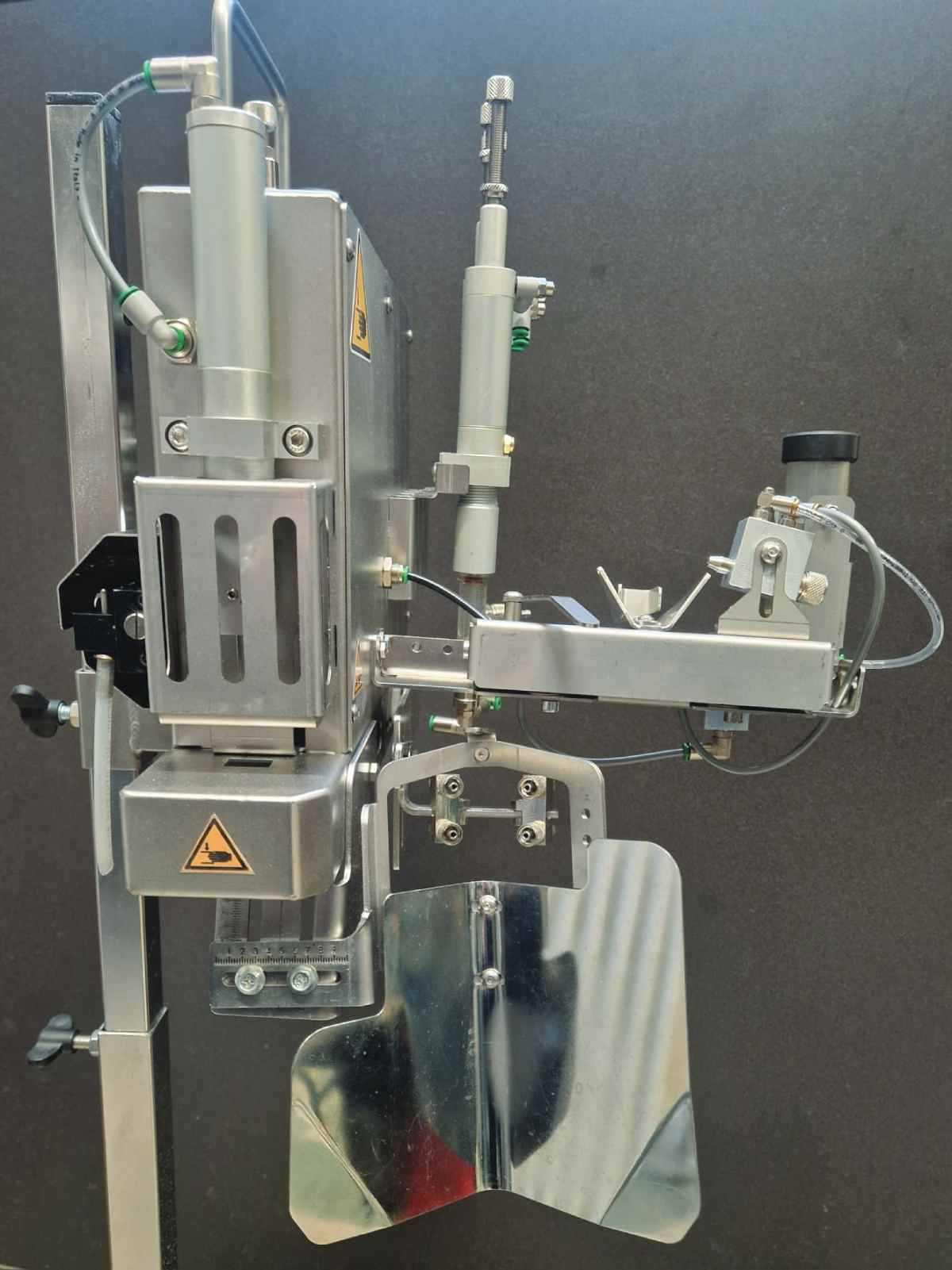 The use of fewer operators and reducing the number of handling steps represents a significant advantage in terms of biosecurity. Fewer personnel movements in and out of the facility, as well as between different sites on the same day or different days, limits the possibility of introducing or spreading potential pathogens, ensuring greater control over the application of hygiene and preventive measures.
Strategic analysis: the machine as a response to personnel shortage
This is where the system’s true long-term value becomes evident. Labor shortages are not a transient phenomenon, but a structural and increasingly urgent issue. The modern farmer must address:
- high turnover: difficulty finding and training personnel who often leave after just a few months.
- training costs: time lost teaching the “sensitivity” of manual vaccination.
- fatigue: human errors due to repetitive movements (RSI) on thousands of birds.
The device acts as a skills equalizer:
- De-skilling of the operation: the operator no longer needs to decide how to vaccinate, but only where to position the animal. The “expert hand” is replaced by machine calibration. Once a “recipe” (pressures, distances, volumes) is set on one machine, it can be replicated at all stations, ensuring that a newly hired operator achieves the same health outcomes as a more experienced one.
- Operator safety and welfare: the risk of self-injection (more common with manual syringes and struggling animals) and reduction of physical strain enable more peaceful and productive work shifts.
- Optimization: with a single operator performing up to four operations simultaneously, the number of personnel needed to complete a vaccination cycle is reduced. In a context where reliable labor is difficult to find, achieving the same results with fewer people becomes a decisive advantage.
Cost-benefit analysis and performance
Despite its advanced technology, the system is designed for robustness and operational economy.
Conclusion
The adoption of this equipment should not be read merely as a “technology purchase,” but as an insurance policy on the production process.
By guaranteeing the certainty of the inoculated dose (1,000 doses = 1,000 birds), correct anatomical placement, and optimal management, independent of individual operator skill, it offers farmers a tool to elevate health standards while reducing labor costs and operational risks. Furthermore, given recent prospects for possible introduction of multiple mandatory parenteral vaccinations, the device is already equipped for simultaneous multiple injections (up to four in a single handling).
In a future where skilled labor continues to become scarcer, this system can transform vaccination from a “manual art” to a standardized, scientifically validated, and economically sustainable “industrial process”.
Discover more about Vaccinator Mark II: https://giordanoglobal.com/it/product/vaccination-devices/vaccinator-mark-ii/
Apa Reaksi Anda?
 Suka
0
Suka
0
 Kurang Suka
0
Kurang Suka
0
 Setuju
0
Setuju
0
 Tidak Setuju
0
Tidak Setuju
0
 Bagus
0
Bagus
0
 Berguna
0
Berguna
0
 Hebat
0
Hebat
0