



















































%20and%20Batch%20Production%20Records%20(BPR).png)
















Low-Cost, Portable Biotech Tools Improve Access to Bioresearch and Diagnostics
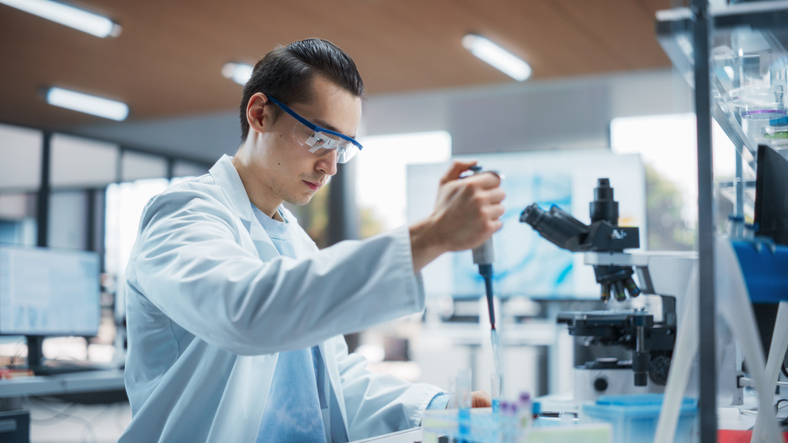
A global research team headed by scientists at University of Toronto’s Leslie Dan Faculty of Pharmacy has demonstrated the effectiveness of a suite of low-cost, portable biotechnology tools that are designed to improve access to laboratory research and diagnostics in resource-limited settings.
The newly reported study highlights how decentralized biomanufacturing tools and freeze-dried reagents can help researchers produce high-value biological materials locally—reducing reliance on fragile international supply chains and expanding access to life sciences innovation globally.
“For labs in low- and middle-income countries [LMICs], access to high-quality supplies and equipment is a chronic problem,” says research lead Keith Pardee, PhD, associate professor at the Leslie Dan Faculty of Pharmacy Pardee. “Shipping can take a long time, it’s expensive, and products often require a cold chain to retain their effectiveness. This research is in response to those challenges to develop tools that are more accessible for labs in lower-resource settings and improve research equity.”
Pardee, alongside collaborators including Camila González, PhD, at the Universidad de los Andes, Bogotá, Fernán Federici, PhD, at Millennium Institute for Integrative Biology (iBio), Santiago, and Lindomar Pena, PhD, at Aggeu Magalhães Institute (IAM), Oswaldo Cruz Foundation (Fiocruz), Recife, reported on the study in Science Advances. In their paper, “International multisite implementation of distributed cell-free protein biomanufacturing to advance health and research equity,” the authors concluded, “This study lays the foundation for fundamental shifts in biotechnology manufacturing practices in LMICs and developing nations, moving from reliance on centralized and outsourced production facilities to adopting decentralized, local production platforms.”
“Emerging biotechnologies hold transformative potential to strengthen economic and health security, while benefiting the planet,” the authors wrote. However, they pointed out, “Access to advanced tools, such as molecular diagnostics, life-saving treatments, and biomanufacturing infrastructure, remains largely concentrated in wealthier regions, thereby restricting access to transformative solutions for communities that need them most.”
A key factor is the reliance on centralized bioproduction systems, “… which require sophisticated, capital-intensive infrastructure and cold supply chains that are often unavailable in resource-limited settings.” Access to healthcare is similarly affected by the availability of biomanufacturing capacity and biologistics, which can slow delivery of diagnostics, delay disease control programs, and limit the ability to carry out life sciences research.
For their newly reported work the team focused on synthetic biology and cell-free systems—technologies that isolate and freeze-dry the molecular machinery needed to produce proteins commonly used in life sciences research. Because the reagents are freeze-dried, they can be shipped and stored without refrigeration, then reactivated simply by adding water. “One promising avenue to improving access is cell-free protein synthesis (CFPS), which offers the potential to empower communities through affordable, low-burden, on-site production of critical bioreagents, diagnostic tools, and therapeutic agents,” the researchers stated.
They paired these systems with low-cost, adaptable hardware, including a 3D-printed hand-powered centrifuge developed by postdoctoral fellow Mohammad Simchi, PhD, at the Leslie Dan Faculty of Pharmacy. Together, the technologies enabled teams to produce a range of research proteins and diagnostic tools in diverse settings, from conventional laboratories to remote field locations.
“With efficient, low-cost systems in place, rapid on-site production of high-value bioproducts for research, including growth factors, vaccines, and diagnostic enzymes, became achievable within a single day and at a fraction of the typical cost,” they commented.
Using the platform, researchers successfully produced growth factors used in life sciences research and therapeutics, as well as a SARS-CoV-2 vaccine candidate tested in mice and diagnostic tools targeting several clinically relevant pathogens. Using molecular, cell-based, animal model, and clinical sample testing, the bioproducts were validated through proof-of-concept studies and multisite clinical trials. “Direct comparisons with high-cost commercial reagents, the current gold standards, demonstrated similar performance, efficiency, precision, and reproducibility,” the investigators further noted.
First author Severino Jefferson Ribeiro da Silva, PhD, a postdoctoral fellow in Pardee’s lab, said, “Our work shows that it is possible to produce high-value bioreagents on site, essentially anywhere. Through this work, we demonstrated our tools across diverse international settings while maintaining performance comparable to commercial products.”
The authors say that, to their knowledge, the study is the first to translate cell-free biomanufacturing from laboratory to real-world use, across multiple geographic settings, including those that historically have had limited access to the bioeconomy. “By prioritizing accessibility, affordability, and reproducibility, we show that cell-free biomanufacturing is a transformative tool for expanding global research capacity and, ultimately, health equity and participation in the bioeconomy.”
A key component of the project involved testing the systems in a variety of environments across Canada and internationally. Da Silva travelled to the Algonquin Highlands to evaluate diagnostic tools for tick-borne pathogens and tuberculosis, while graduate student Quinn Matthews travelled to the Yukon where he produced and purified proteins using the portable system on a mountain outside Whitehorse.
Collaborators in Chile, Brazil, Colombia, and India also tested the systems, helping ensure the technologies addressed the practical realities faced by researchers in different regions. The project involved extensive international collaboration, including regular meetings, student exchanges and knowledge sharing among participating teams.
Da Silva says the research team experienced first-hand many of the logistical challenges their collaborators routinely face, including lengthy customs delays and damaged shipments containing critical reagents.
“Those experiences highlighted how dependent many researchers and labs still are on fragile international supply chains. If a shipment is delayed, an entire project can stop,” says da Silva. “This work makes it possible to reduce that dependency by enabling local production of key proteins directly at the point of need.”
The researchers say the long-term goal is to help research labs in remote and underserved regions gain access to high-quality diagnostics, research reagents and biomanufacturing capabilities produced closer to home, strengthening resilience against future supply chain disruptions while empowering their research capacity and address local healthcare needs. “With their low cost and operational simplicity, we see these platforms and similar disruptive technologies … as part of a new generation of tools that will help shape a future in which bioreagents, advanced diagnostics, and life-saving therapeutics are accessible to all.”
Da Silva added, “This work is really about access and scientific empowerment. Many labs worldwide have the expertise and ideas to conduct life sciences and applied science research, but they face major challenges accessing key bioreagents and essential materials. Decentralized biomanufacturing could help reduce those barriers and make research and diagnostics more accessible globally.”
The post Low-Cost, Portable Biotech Tools Improve Access to Bioresearch and Diagnostics appeared first on GEN - Genetic Engineering and Biotechnology News.
Apa Reaksi Anda?
 Suka
0
Suka
0
 Kurang Suka
0
Kurang Suka
0
 Setuju
0
Setuju
0
 Tidak Setuju
0
Tidak Setuju
0
 Bagus
0
Bagus
0
 Berguna
0
Berguna
0
 Hebat
0
Hebat
0