



















































%20and%20Batch%20Production%20Records%20(BPR).png)















Razor Burn, Ingrown Hairs, and Summer Skin Irritation (Oh My!)
How to Prevent These Common Warm-Weather Skin Issues
For most, getting outdoors in warm weather typically means more skin exposure, which can also mean more frequent shaving and hair removal, and a greater chance of developing some kind of summer skin irritation.
If you’ve ever shaved your legs and headed right into the ocean, you know how quickly razor burn can put a damper on a rain-free summer day. Similarly, you may have suffered chafing or skin “burns” from the combination of sweat and friction caused by repeated movement in the heat.
Other issues, like ingrown hairs, which are typically caused by increased shaving and exposure to heat, sweat, and humidity, are also common in the summer but can be uncomfortable or even lead to infection or discoloration if left untreated.
Don’t worry, we’re not trying to bring down your summer mood. These types of skin irritations are easily preventable if you know what to do, and this article explains how you can be skin smart this summer before you leave the house.
Summer Skin Irritation Risk #1: Razor Burn
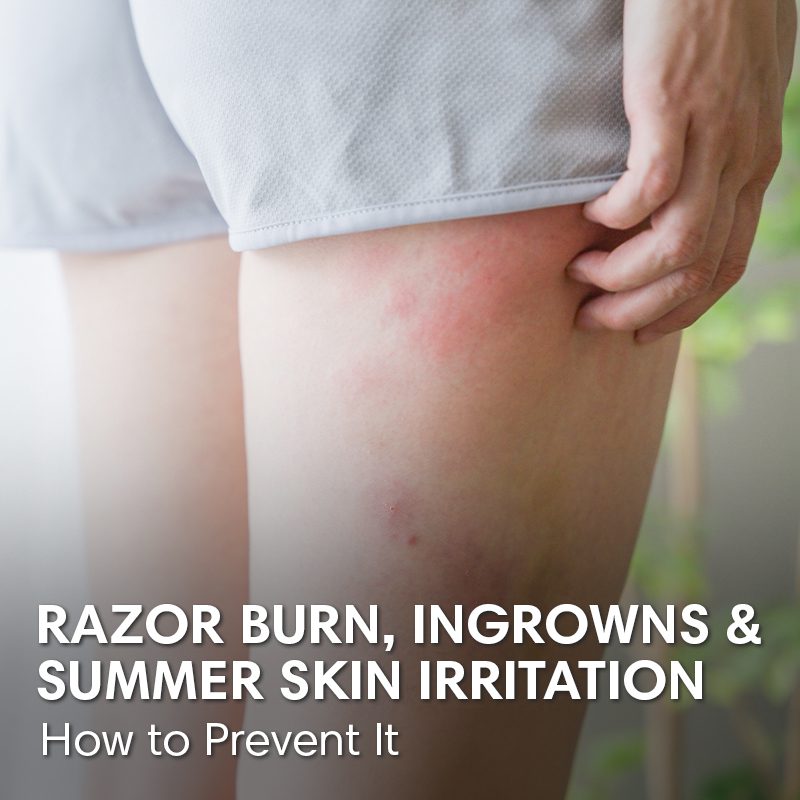
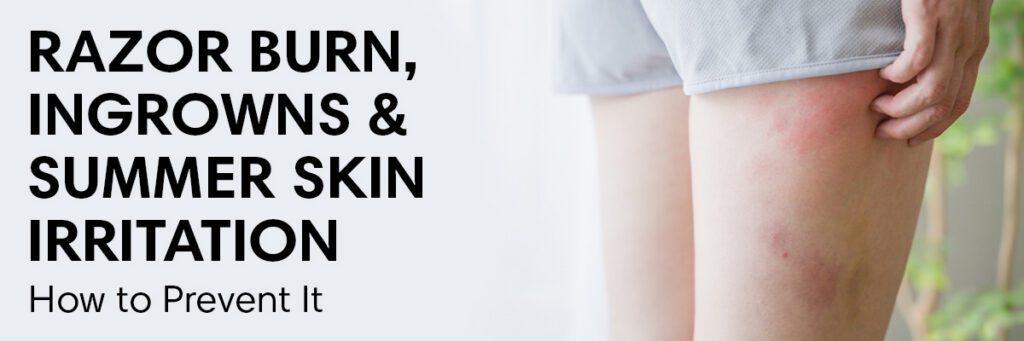
Razor burn is a common but often painful skin irritation that develops after shaving. It typically manifests as a red, blotchy rash across the shaved area and may cause:
- Burning or stinging, especially when brought into contact with salt water
- Itchiness
- Skin sensitivity or tenderness
Razor burn has nothing to do with the hairs themselves and is exclusively skin irritation. Symptoms often appear right after shaving and typically don’t last more than a few hours or days.
Razor Burn Prevention:
- Avoid dry shaving. Make sure skin is moist, using either water or shaving cream.
- Replace old razors as dull blades can irritate the skin.
- Shave “with the grain” – shaving against the direction of your hair growth is not only uncomfortable but will likely cause razor burn right away.
- Shave an area and move on. Repeatedly shaving the same area can lead to irritation.
- Use a fragrance-free, non-comedogenic moisturizer on your skin after shaving.
If you do develop razor burn, apply a cold compress, emollients like after-shave or moisturizer, aloe vera, or home remedies such as an oatmeal bath.
Summer Skin Irritation Risk #2: Ingrown Hairs
Ingrown hairs are another potential side effect of shaving, tweezing, or waxing. As a shaven hair begins to grow back, it grows sideways or curls backward into the skin rather than growing straight up.
Because a hair is trying to re-enter the skin, the body treats it as a foreign object, resulting in inflammation and irritation.
Ingrown hairs can happen any time but are more likely in the summer with increased shaving frequency. Symptoms to look out for include:
- Tiny, swollen bumps where you shave, tweeze, or wax
- Small bumps that look like blisters, and can sometimes become filled with pus
- Small bumps that are darker than the surrounding skin (hyperpigmentation)
- Burning, stinging, or itching
- Hair that is noticeably in the shape of a loop as the tip of the hair curves and grows into the skin
It’s important to see a dermatologist if your symptoms don’t go away, as untreated ingrown hairs can become infected or cause scarring from frequent itching and improper healing.
Ingrown hairs are preventable by following shaving best practices and keeping skin moisturized. For facial shaving, we recommend rinsing the blade after each stroke, washing skin after the shave, and applying a soothing after-shave product or glycolic acid lotion for exfoliation. A benzoyl peroxide 2.5-5% wash may also help prevent ingrown hairs. Because it can be drying or irritating for some people, start by using it every other day, and then increase gradually to daily if your skin tolerates it well. Our team also recommends using an electric razor over a manual razor so you can keep the hair length at a few millimeters – which reduces follicular penetration.
Summer Skin Irritation Risk #3: Heat Rash
Freshly shaven skin is certainly more susceptible to irritation during the summer, but the heat and humidity of summer can cause issues with the skin all on its own.
Heat rash occurs when sweat becomes trapped in the skin, and most commonly manifests within skin folds, such as the armpits, groin, and elbow creases, or where clothing rubs against the skin.
Symptoms can include:
- Tiny, fluid-filled bumps that break easily (mildest form)
- Blister-like bumps that itch or irritate the surrounding skin
- Pus-filled inflamed bumps
- Firm, painful bumps that can break open (less common form)
Heat rash usually only lasts until the skin cools down or the area of friction has been removed. It can recur with each new exposure, so it’s important to take precautions for your skin, such as:
- Wearing loose, lightweight, moisture-wicking clothing
- Avoiding increased movement or activity in direct sunlight or during the hottest times of the day
- Sleeping in a cool, well-ventilated area
- Using non-comedogenic creams or lotions
- Seeking shade or using a cooling compress if you begin to sweat and feel skin irritation
When to See Your Dermatologist
Being skin smart not only means taking steps to prevent skin irritations in the summer but knowing when it’s time to see your dermatologist for a skin issue.
Razor burn, ingrown hairs, and heat rash are common, but that doesn’t mean you have to accept them as part of your summer plans. Refer to these quick tips for prevention:
- Give your skin time to heal after shaving before heading outside or into the water
- Use good shaving techniques to prevent irritation
- Apply moisturizers to prevent or soothe irritation
If you have persistent, worsening, or confusing symptoms, see your dermatologist right away.
Contact Optima Dermatology to schedule an appointment. Our expert team will provide a diagnosis and offer effective treatment options so you can get back to enjoying your summer.
Frequently Asked Questions About Summer Skin Irritations
Why do I get ingrown hairs more often in the summer?
Summer often involves more frequent shaving, increased sweating, and tighter-fitting clothing such as swimsuits and athletic wear. These factors can increase friction and irritation around hair follicles, making ingrown hairs more likely.
What’s the difference between razor burn and razor bumps?
Razor burn is a skin irritation that appears as redness, burning, or itching after shaving and occurs because of the mechanical trauma of the blade on the skin. Razor bumps typically develop 24–48 hours after shaving, when the hair begins to regrow and curls back into the skin instead of growing outward.
Can exfoliating prevent ingrown hairs?
Yes. Gentle exfoliation can help remove dead skin cells that may trap hairs beneath the surface. Regular exfoliation may reduce the likelihood of developing ingrown hairs.
Should I stop shaving if I have razor burn?
If possible, allowing the skin to rest and heal before shaving again can help reduce inflammation and prevent worsening irritation.
When should I see a dermatologist for ingrown hairs?
You should see a dermatologist if ingrown hairs are painful, recurrent, becoming infected, causing skin discoloration, or leaving scars. A dermatologist can recommend treatments to help prevent future outbreaks.
The post Razor Burn, Ingrown Hairs, and Summer Skin Irritation (Oh My!) appeared first on Optima Dermatology.
Apa Reaksi Anda?
 Suka
0
Suka
0
 Kurang Suka
0
Kurang Suka
0
 Setuju
0
Setuju
0
 Tidak Setuju
0
Tidak Setuju
0
 Bagus
0
Bagus
0
 Berguna
0
Berguna
0
 Hebat
0
Hebat
0