























































%20and%20Batch%20Production%20Records%20(BPR).png)
















The Latest Science On HYROX!

This week in the world of sports science, here’s what happened…
- Is HYROX more about running than strength?
- AiKYNETIX’s new tennis serve analysis
- Does Neutonic enhance productivity, or is it a scam?
Is HYROX more about running than strength?

Dr Stephen Patterson, Professor in Applied Exercise Physiology and Performance, recently published a highly informative post on HYROX on LinkedIn. In the post, Patterson outlines the key findings from recent research examining performance in HYROX.
The research analysed HYROX performance across seven competitive seasons and nearly 40,000 individual PRO and ELITE race results. The findings show that performance has improved considerably as HYROX has developed. Among the top 100 performers, race times improved by approximately 13 minutes in the men’s field and 17 minutes in the women’s field from Season 1 to Season 7. Interestingly, much of this improvement came from faster running, with running times improving by approximately eight minutes in men and 10 minutes in women.
However, Patterson also highlights that poor performance in the strength-based stations can disproportionately increase overall finishing time, particularly among slower athletes. Therefore, while running ability appears to be a major driver of HYROX performance, athletes still need sufficient strength to avoid losing significant time during the loaded stations. The challenge appears to be finding the right balance: developing enough strength to perform these stations efficiently, without adding unnecessary muscle mass that could potentially compromise running performance.
If you are interested in learning more about HYROX, check out our podcast episode How To Train Like A Hyrox World Champion.
AiKYNETIX’s new tennis serve analysis
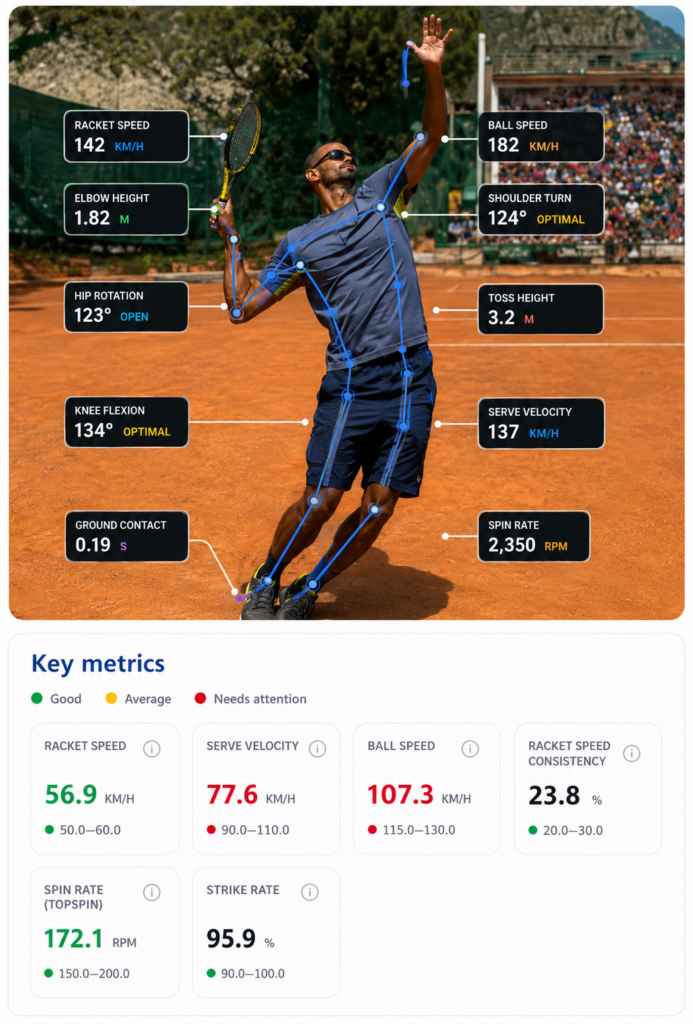
With the US Open currently ongoing, the timing of our next bulletin seems very apt. AiKYNETIX, which has featured in SFS Weekly in the past (see here), has made a breakthrough in the tennis world with its new tennis serve analysis.
The tennis serve is a highly complex movement that requires the coordinated transfer of energy through the entire kinetic chain, from the lower body through the pelvis, trunk and shoulder before eventually reaching the racket. Traditionally, gaining a detailed understanding of this sequence has often required sophisticated biomechanics equipment and expertise.
However, AiKYNETIX’s new tennis serve feature breaks the serve down into different biomechanical phases based on established frameworks. Rather than analysing the serve as one complete movement, the system can examine what is happening at different stages of the serve. This phase-based approach may help coaches better understand how an athlete transfers movement through the kinetic chain. For example, the analysis can examine the transition from lower-body contribution into pelvic and trunk movement, before progressing through the shoulder and upper limb and eventually into racket action and ball contact.
Another interesting development is the ability to generate detailed analysis reports directly from the platform. This could help bridge the gap between collecting biomechanical information and actually using it within the coaching environment.
So, if you are working in the tennis industry, then it is definitely worth checking out AiKYNETIX’s new tennis serve feature. Its real potential may lie in making detailed biomechanical analysis more accessible and practical within everyday coaching environments. And impressively, this can all be done by simply uploading a smartphone video of a tennis serve!
Does Neutonic enhance productivity?
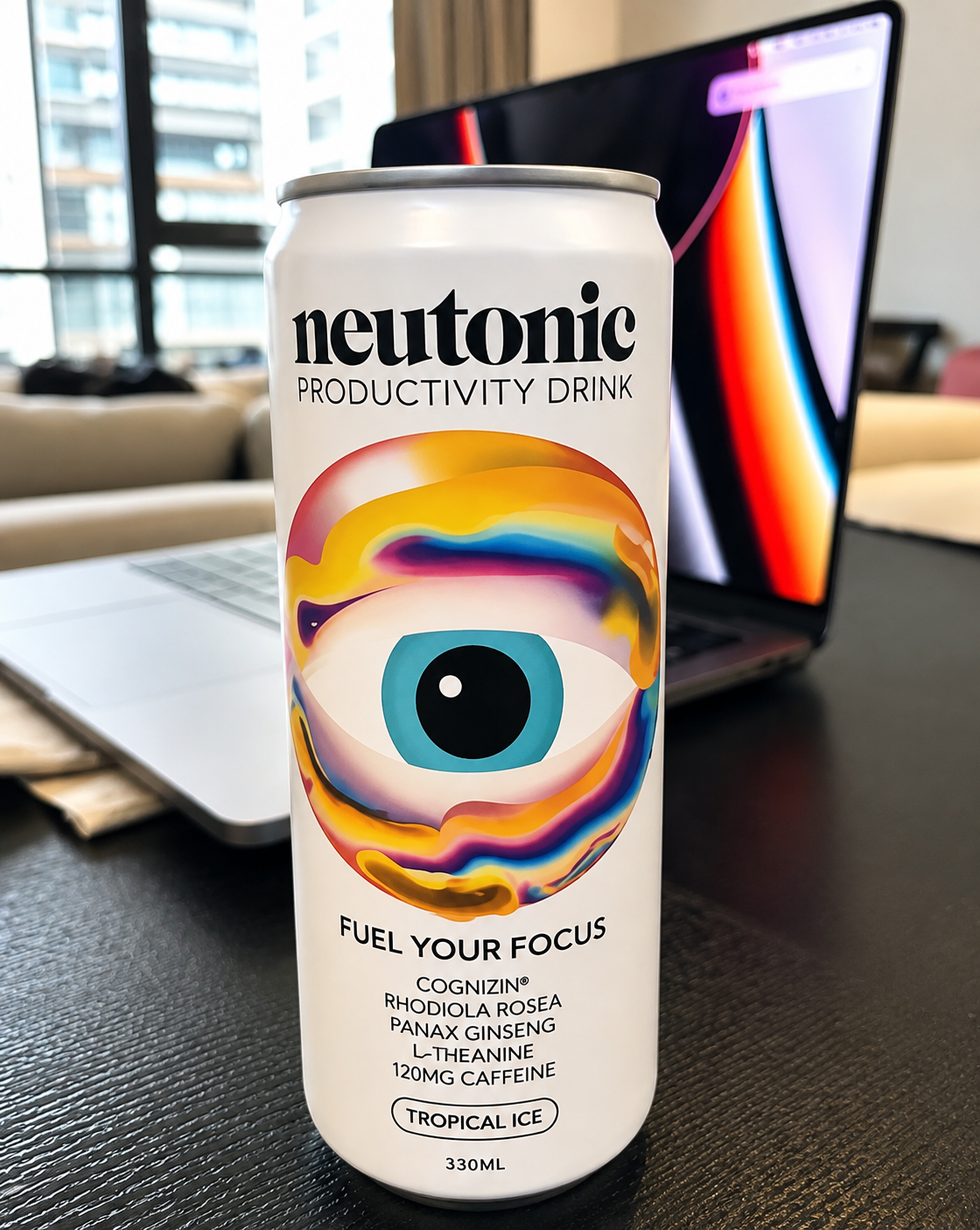
Neutonic, the productivity drink created by influencers Chris Williamson and James Smith, has experienced a remarkable rise in popularity and is quickly becoming a staple on shelves in shops and markets worldwide. But does it truly enhance productivity?
Shortly after its launch, nutritionist and performance coach Adam McDonald shared a well-rounded video review of the drink. Although this video dates back over two years, it remains a hidden gem, offering an expert perspective that many would benefit from revisiting.
In his review, McDonald points out a key advantage of Neutonic: the ingredients list clearly states the exact doses of each component, unlike many products that hide this information in proprietary blends. This transparency allows consumers to understand what they’re consuming. He further dives into each ingredient and the science supporting them. For example, Cognizin may improve memory and attention, but the evidence is limited, particularly among healthy adults aged 20 to 40, the drink’s target market. Rhodiola Rosea shows promising evidence for reducing mental fatigue and boosting cognitive performance under stress. The combination of caffeine and L-Theanine enhances alertness and reaction times while mitigating the jitteriness and anxiety often associated with caffeine alone. Although Panax Ginseng might improve reaction time, the evidence for this is highly inconsistent. Lastly, B Vitamins play a vital role in brain function, but they are unlikely to provide a direct productivity boost unless someone is deficient.
While McDonald acknowledges that Neutonic has some scientific backing for its ingredient selection and is better formulated than many energy drinks, he emphasises that prioritising sleep, improving time management, and managing distractions will likely yield far greater benefits for productivity than consuming Neutonic. Considering that Neutonic comes with a relatively high price tag compared to other energy drinks, and any boosts in focus and attention are likely to be subtle, it may be wiser to explore other strategies for enhancing productivity rather than relying on a can of Neutonic.
In fact, our courses Mental Fatigue in Elite Sport and Coping with Stress and Anxiety provide an excellent into boosting focus and attention and are well worth checking out!
From us this week:
>> New course: Micronutrients for Athletes
>> New podcast: The Three Outcomes That Define High Performance
>> New infographic: Chronological, Biological, and Technical Age
>> New article: Hydrotherapy
Access to a growing library of sports science courses
SFS Academy is an all-access membership to premium sports science education.
With SFS Academy, you’ll learn from some of the best coaches around the world as they teach you how to apply the latest research and practice with your athletes.
The post The Latest Science On HYROX! appeared first on Science for Sport.
Apa Reaksi Anda?
 Suka
0
Suka
0
 Kurang Suka
0
Kurang Suka
0
 Setuju
0
Setuju
0
 Tidak Setuju
0
Tidak Setuju
0
 Bagus
0
Bagus
0
 Berguna
0
Berguna
0
 Hebat
0
Hebat
0