









































%20and%20Batch%20Production%20Records%20(BPR).png)















Everything to consider before implementing AI in dentistry
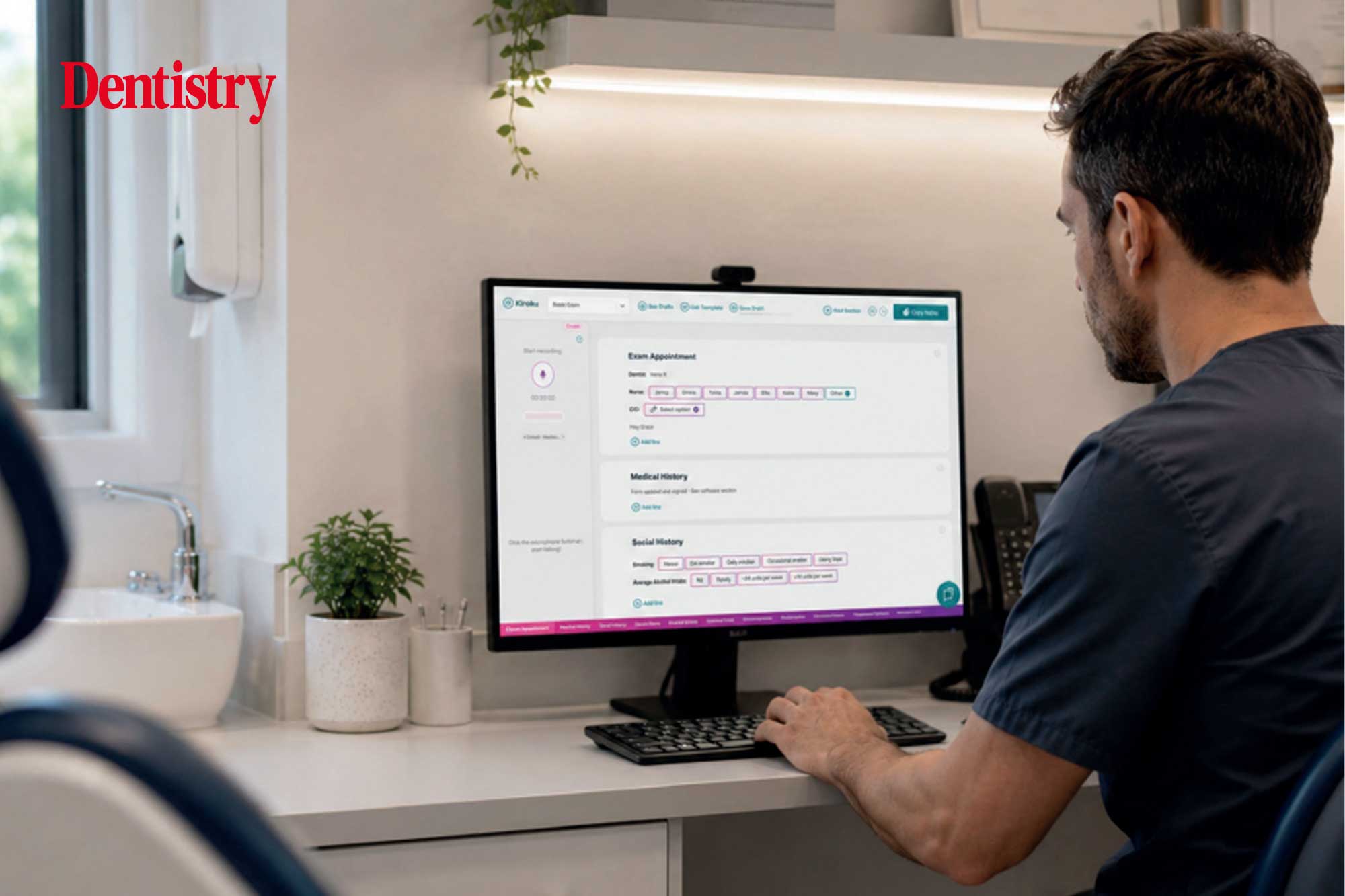
Hannah Burrow shares the six questions to ask before implementing artificial intelligence (AI) in a dental practice.
Artificial intelligence (AI) is moving quickly from something we talked about in the abstract to something dental professionals are using every day, from radiograph interpretation and patient communication to administration and clinical record-keeping. I am hugely optimistic about what this technology can do. But healthcare is not somewhere we should simply sign up for the latest AI tool and see how we get on.
The better question is not: ‘Is AI good or bad?’ It is: ‘Is this particular AI appropriate for this task, and what happens when it gets something wrong?’ That matters because the tolerance for error changes with the task. A poor music recommendation on Spotify is irritating, but an incorrect entry in a patient’s clinical record carries clinical, legal and patient safety implications. Generative AI produces plausible outputs, not necessarily true ones. Something can sound convincing, be beautifully written and still be wrong. That is why human review cannot be optional in a clinical setting.
Implementing AI: checklist for dental practices
Before introducing any AI tool, ask:
- Purpose: do we know exactly what it is, and is not, being used for?
- Data: do we know where patient data goes, how it is stored and whether it is used for training?
- Safety: can the supplier show evidence of appropriate security, clinical safety and regulatory compliance?
- Oversight: does a clinician review and approve anything that becomes part of the clinical record?
- Audit: can we see who created, changed and approved an output?
- Team: does everyone know how the tool should, and should not, be used?
The principle is simple: AI should reduce friction without reducing clinical control.
AI note-taking deserves particular attention
Record-keeping is repetitive and cognitively demanding, and a good system can help create more contemporaneous, complete and structured records.
AI can hallucinate, generating a plausible detail that was never said or done. It can omit information or lose context. And perhaps most importantly, it can create automation bias: a polished, well-structured note looks trustworthy, so we become less inclined to read it critically.
Review therefore cannot become a formality.
AI can capture, structure and draft, but the clinician remains responsible for diagnosis, consent, treatment decisions and the final clinical record.
When comparing AI products, I would encourage practices to spend time on the less glamorous parts of the technology: data protection, cybersecurity, clinical risk management, regulation and auditability.
At Kiroku, we take this side just as seriously as the technology itself. We have built around DCB0129 clinical risk management, cyber essentials, NHS DSPT and MHRA registration as a class I medical device, and DTAC.
These will not be the exact requirements for every AI product, but suppliers handling clinical information should be able to show you their homework, not simply reassure you that their product is secure. Furthermore, they should be making this information extremely accessible, such as in the form of a trust centre on their website.
AI will become a normal part of dentistry, and I think that is positive. Used well, it can reduce administrative burden and give clinicians more time for the person sitting in front of them. Dentists do not need to become AI engineers. We do need to ask sensible questions of companies asking us to trust their technology with our patients.
See Kiroku’s trust centre at trust.trykiroku.com.
This article is sponsored by Kiroku.
Apa Reaksi Anda?
 Suka
0
Suka
0
 Kurang Suka
0
Kurang Suka
0
 Setuju
0
Setuju
0
 Tidak Setuju
0
Tidak Setuju
0
 Bagus
0
Bagus
0
 Berguna
0
Berguna
0
 Hebat
0
Hebat
0