
























































%20and%20Batch%20Production%20Records%20(BPR).png)














Landmark Phase III Trial Finds Cell Therapy Slows Muscle Decline in Advanced DMD
Duchenne muscular dystrophy (DMD) is an X-linked genetic disease that causes the muscles—including the heart—to gradually weaken and waste away. Affecting almost exclusively boys and young men, most patients lose the ability to walk as the disease progresses and come to depend on their arms and hands for everyday tasks and independence. There is no cure.
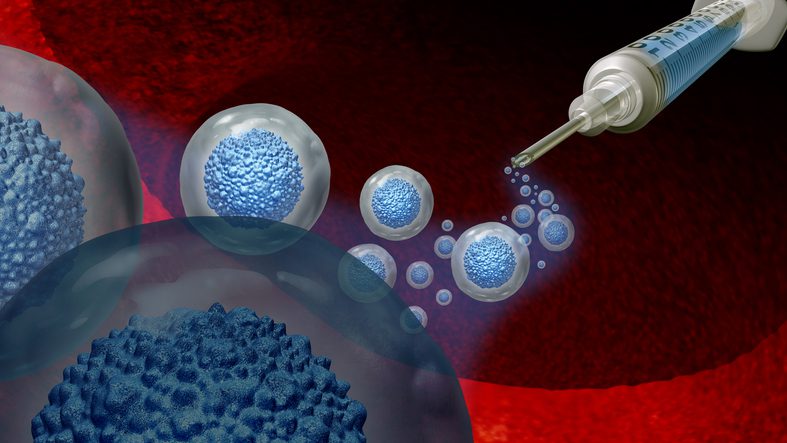
Deramiocel, a heart-derived cellular therapy consisting of human allogeneic cardiosphere-derived cells, improved cardiac and skeletal muscle function in Phase I–II studies of DMD. Now, a new study reporting on Phase III trial data shows that deramiocel could slow muscle weakening in boys and young men with advanced DMD, and may also slow heart damage in those who already have heart muscle disease.
These Phase III clinical trial data are published in The Lancet in the paper, “Deramiocel heart-derived cellular therapy in advanced Duchenne muscular dystrophy (HOPE-3): a phase 3, randomised, double-blind, placebo-controlled trial.”
This report is the first Phase III trial of a cell therapy made from donor cells and administered through the bloodstream to treat a genetic disease, and the first such trial in boys and young men whose DMD is already advanced.
The HOPE-3 trial involves 106 boys and young men aged 10 to 22 with advanced DMD, who were treated at 20 trial sites across the U.S. They were randomly assigned to receive either deramiocel (54 people) or a placebo (52 people), given as a drip into the bloodstream every three months for a year at an outpatient clinic.
After one year, participants given deramiocel were losing the use of their arms more slowly than those given the placebo. Their overall arm movement declined about 54% more slowly than in the placebo group, and their elbow movement about 65% more slowly. Across all participants, the therapy made no clear difference to how well the heart pumped blood. Among the 64 participants who already had heart muscle disease and had suitable heart scans, heart function was better preserved with deramiocel than with placebo. In a smaller group of 22 participants whose scans could be compared before and after treatment, deramiocel was also linked to less spread of heart scarring, but further research is needed to confirm this finding.
The therapy was generally safe, and no deaths were reported during the trial. Allergic-type reactions were more common with deramiocel (42%) than with placebo (15%). Almost all side effects were mild or moderate and cleared up within a day or two. The most common were headache, cough, fever, nausea, and a fast heartbeat.
The authors say deramiocel has the potential to help people with any type of DMD mutation, because it targets the swelling and scarring the disease causes in the muscles rather than the gene mutation itself. Heart problems are a major cause of death in DMD, and the authors call for further studies to find out whether the heart benefits seen in this trial help people live longer.
The U.S. Food and Drug Administration (FDA) is scheduled to discuss deramiocel at an advisory committee meeting on July 29, 2026, with a decision on whether to approve the therapy expected by August 22, 2026.
The post Landmark Phase III Trial Finds Cell Therapy Slows Muscle Decline in Advanced DMD appeared first on GEN - Genetic Engineering and Biotechnology News.
Apa Reaksi Anda?
 Suka
0
Suka
0
 Kurang Suka
0
Kurang Suka
0
 Setuju
0
Setuju
0
 Tidak Setuju
0
Tidak Setuju
0
 Bagus
0
Bagus
0
 Berguna
0
Berguna
0
 Hebat
0
Hebat
0