





















































%20and%20Batch%20Production%20Records%20(BPR).png)
















Tick-Borne Nairoviruses Use OTU Proteases to Evade Human Antiviral Signals
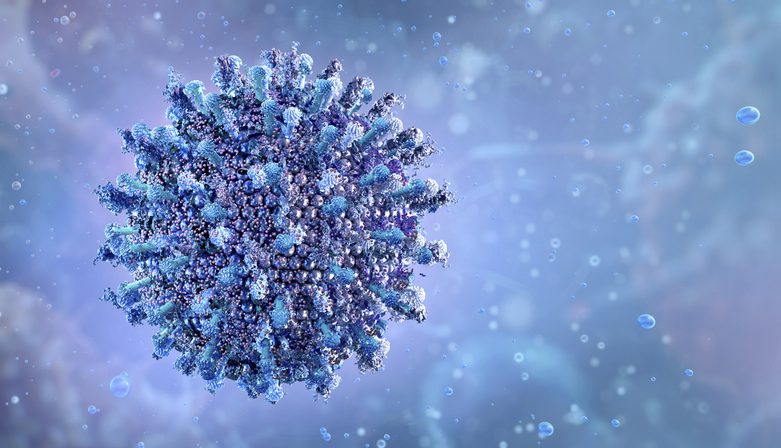
Summer is peak tick season, and with it comes familiar threats like Lyme disease and Rocky Mountain spotted fever. But scientists say another group of tick‑borne pathogens is quietly gaining ground: nairoviruses, a diverse family of negative‑sense RNA viruses carried by ticks across Asia, Europe, Africa—and now the western United States. Several nairoviruses can infect humans, causing high fevers, severe headaches, and, in some cases, organ dysfunction. One member of the family, Crimean‑Congo hemorrhagic fever virus (CCHFV), is often fatal and considered a global‑level threat.
Nairoviruses are found in ticks that feed on wildlife, livestock, and people. Recent human infections have been documented in China and Japan, including Songling virus (SGLV), Tacheng tick virus 1 (TTV1), and Yezo virus (YEZV). A related virus, Beiji virus (BJNV), caused an outbreak involving more than 100 patients in northeastern China. And on the U.S. West Coast, researchers recently identified Pacific Coast Tick nairovirus (PCTNV) in Dermacentor occidentalis, a tick already known to transmit Rocky Mountain spotted fever. As the paper noted, “Pacific Coast Tick nairovirus… was recently identified in Mendocino, California, from tick species known to harbor human pathogens and having a large presence across the state.”
The new study, titled “Insights into the Structure and Function of the OTU Protease Virulence Factors from Emerging Human Nairoviruses,” was published in ACS Infectious Diseases and reveals how these emerging viruses may slip past human immune defenses. All orthonairoviruses encode a specialized enzyme called ovarian tumor protease (OTU), which can remove small protein tags—ubiquitin and ISG15—from human proteins. Those tags normally act as alarm signals that activate immune responses, and removing them effectively evades the immune system. As the paper explained, “OTUs exhibit varying levels of deubiquitinating (DUB) and deISGylating activities that facilitate viral immune evasion, establishing them as key virulence factors.”
In the work, researchers isolated OTU proteases from four emerging nairoviruses—SGLV, TTV1, YEZV, and PCTNV—and compared their ability to strip immune‑signaling proteins. The standout was PCTNV, whose enzyme showed the strongest ability to remove both ubiquitin and ISG15. That suggests PCTNV may be unusually adept at evading human immunity, raising concerns because the virus is carried by a human‑biting tick common along the Pacific Coast.
The team also resolved high‑resolution crystal structures of several OTU proteases. These structural insights allowed the researchers to train computational models that begin to predict which nairoviruses may pose the greatest threat. “The biochemical and structural insights provide a path forward for predicting OTU activity among current and emerging nairoviruses,” the authors wrote.
Such predictive tools could help public‑health agencies monitor new tick‑borne viruses before they spread widely. As corresponding author Scott D. Pegan, PhD, of the University of California, Riverside, noted, “This study reinforces the need to be vigilant about not just tick bites but the type of ticks that an individual has been bitten by, as they may carry diseases beyond what we have been used to looking for.”
The post Tick-Borne Nairoviruses Use OTU Proteases to Evade Human Antiviral Signals appeared first on GEN - Genetic Engineering and Biotechnology News.
Apa Reaksi Anda?
 Suka
0
Suka
0
 Kurang Suka
0
Kurang Suka
0
 Setuju
0
Setuju
0
 Tidak Setuju
0
Tidak Setuju
0
 Bagus
0
Bagus
0
 Berguna
0
Berguna
0
 Hebat
0
Hebat
0