






















































%20and%20Batch%20Production%20Records%20(BPR).png)
















Cross-Reactive T Cells Could Point to Broad Vaccines or Treatments for Measles, Nipah Virus
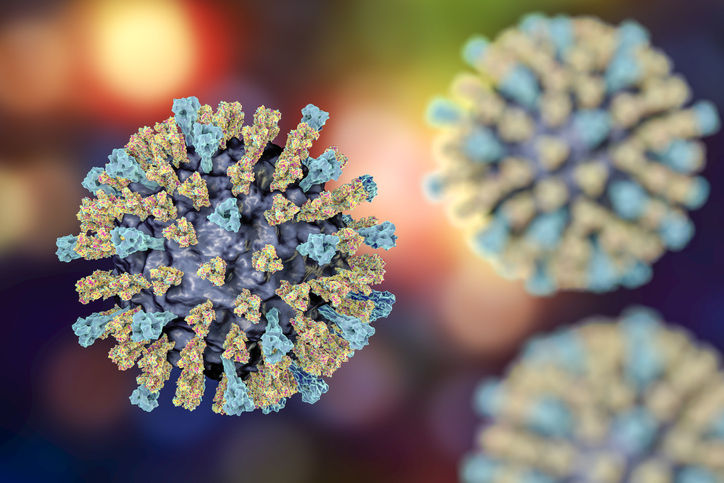
T cells are some of the immune system’s most important fighters. They can stop tumor growth and fight off severe infections. Scientists at La Jolla Institute for Immunology (LJI) have now reported a study indicating how T cells target paramyxoviruses, a viral family that includes measles virus and Nipah virus.
Paramyxoviruses are pathogens of pandemic concern. Measles virus is highly infectious, and Nipah virus has a high mortality rate. The new study shows how we might harness T cells to save lives. Headed by Alessandro Sette, PhD, the team systematically mapped human CD4+ T cell epitopes across Nipah and measles viruses, and analyzed T cells from donors who had previously received the MMR vaccine that protects against measles, and another paramyxovirus, mumps (as well as rubella), and who had not been exposed to Nipah virus. Their experiments showed that the two paramyxoviruses had conserved T cell epitopes (CTERs) in common, and that cross-reactive T cells can recognize multiple paramyxovirus species at once.
Instead of vaccinating against one virus at a time, the researchers found that activating these cross-reactive T cells may protect against the wider paramyxovirus family. This broad protection is essential when you don’t know which virus will strike next.
The discovery may guide the development of new vaccines and therapies that stop measles, Nipah, and other paramyxovirus infections before they turn deadly. “No one knows which particular viral species or strain of a virus might be responsible for an outbreak, as we’ve seen in the recent cases of Andes hantavirus,” Sette said.
Sette and colleagues reported on their findings in Cell Reports Medicine, in a paper titled “Comprehensive mapping of human CD4+ T cell epitopes for Nipah and measles as prototype Paramyxoviruses,” concluding, “Collectively, these findings support the concept that CTER-based immunogen design can both broaden protective coverage and strategically harness existing population immunity while complementing neutralizing antibody-based vaccine approaches.”
![LJI Professor Alessandro Sette, Dr.Biol.Sci. [La Jolla Institute for Immunology]](https://www.genengnews.com/wp-content/uploads/2026/06/Low-Res_Alessandro-Sette-233x300.jpg)
A part of the adaptive immune system T cells learn to target a specific threat. A T cell might respond to influenza virus infection but not malaria parasite infection. To do this T cells recognize specific epitopes on the pathogen. In general, T cell epitopes on one pathogen look very different from T cell epitopes on another pathogen.
![LJI Research Assistant Professor Alba Grifoni, Ph.D. [La Jolla Institute for Immunology]](https://www.genengnews.com/wp-content/uploads/2026/06/Low-Res_2024-05-Picture-Day-Alba-Grifoni-3-200x300.jpg)
More recently, Sette and Grifoni demonstrated that cross-reactive T cells may offer broad protection against the deadly Lassa virus and the wider viral family of arenaviruses. Their findings suggested that future vaccines and therapies could activate these cross-reactive T cells to protect against many dangerous viruses at once. Each study makes it clear that cross-reactive T cells are key to stopping emerging viruses.
Measles is a threat worldwide, and while an effective vaccine is available, the authors cited figures indicating that there were over 10 million estimated infections worldwide in 2023. “Measles remains one of the main causes of morbidity and mortality in children, due to secondary infections from measles-induced immune suppression,” they noted. People in Southeast Asia also have to keep watch for a related paramyxovirus threat, Nipah virus, which is spread by bats. Cases are rare but can be deadly. “Nipah virus is another Paramyxovirus of concern due to high mortality rates, often mediated by fatal encephalitis,” the investigators wrote. Nipah virus has a fatality rate of 40-75%, which is much higher than measles. “Outbreaks are becoming more and more frequent, especially in the Malaysian region,” said Grifoni.
The new LJI study suggests cross-reactive T cells may be just the weapons we need to combat the dangerous paramyxovirus family. The scientists worked with LJI’s John and Susan Major Center for Clinical Investigation to collect and analyze T cells from the blood of 31 study participants. These study participants had received their MMR vaccines, which protect against severe infection from the measles and mumps viruses (both are paramyxoviruses) and the rubella virus. As a result, the blood samples contained T cells that were ready to fight measles infection.
LJI postdoctoral fellow Alison Tarke, PhD, and LJI senior staff scientist Ricardo Da Silva Antunes, PhD, led experiments to map the T cell epitopes on measles virus. These findings were important on their own. “Even though measles has been studied for quite some time, and there is a vaccine for measles, there was not a lot known about the specific T-cell response elicited by the measles vaccine,” Sette commented.
Tarke and the LJI team then tested how these same T cells reacted to Nipah virus. From blood tests, the scientists knew that the study participants had never been infected with Nipah virus, yet they found that measles-fighting T cells could cross-react and also recognize Nipah virus. The two paramyxoviruses had conserved T cell epitope regions (CTERs) in common. “Focusing immune responses on these conserved regions could have a broad, protective capacity for the whole viral family,” says Sette. The authors added,
The new study is the first to map T cell epitopes on Nipah virus. The researchers were able to zero in on a specific epitope shared between measles and Nipah viruses: a region of the viral fusion or “F” protein. A large number of cross-reactive T cells targeted this relatively small, conserved viral structure. “It appears that if someone is vaccinated against measles, their T cells will have some degree of cross-reactivity to Nipah,” said Sette. “That raises the possibility that during a Nipah outbreak, one could perhaps vaccinate people with a measles vaccine, and this cross-reactivity could potentially offer some benefit.”
The authors further noted, “In light of these findings, current Nipah vaccine candidates, many of which focus primarily on whole-protein antigens selected to maximize neutralizing antibody responses, particularly F and G glycoproteins, could potentially be optimized by incorporating conserved T cell epitope regions.” Added Grifoni, “Activating T cells can be your first line of defense when you don’t know what’s going to be thrown at you.”
In their paper the team concluded “With specific regard to vaccine strategies targeting Nipah or other paramyxoviruses, one anticipated outcome of focusing on CTERs, particularly those shared with measles and mumps viruses, is the potential to boost preexisting cross-reactive memory T cell responses in populations where MMR vaccination is widespread.”
The post Cross-Reactive T Cells Could Point to Broad Vaccines or Treatments for Measles, Nipah Virus appeared first on GEN - Genetic Engineering and Biotechnology News.
Apa Reaksi Anda?
 Suka
0
Suka
0
 Kurang Suka
0
Kurang Suka
0
 Setuju
0
Setuju
0
 Tidak Setuju
0
Tidak Setuju
0
 Bagus
0
Bagus
0
 Berguna
0
Berguna
0
 Hebat
0
Hebat
0