


















































%20and%20Batch%20Production%20Records%20(BPR).png)
















Policy has changed, practice has not: building systems in dental therapy
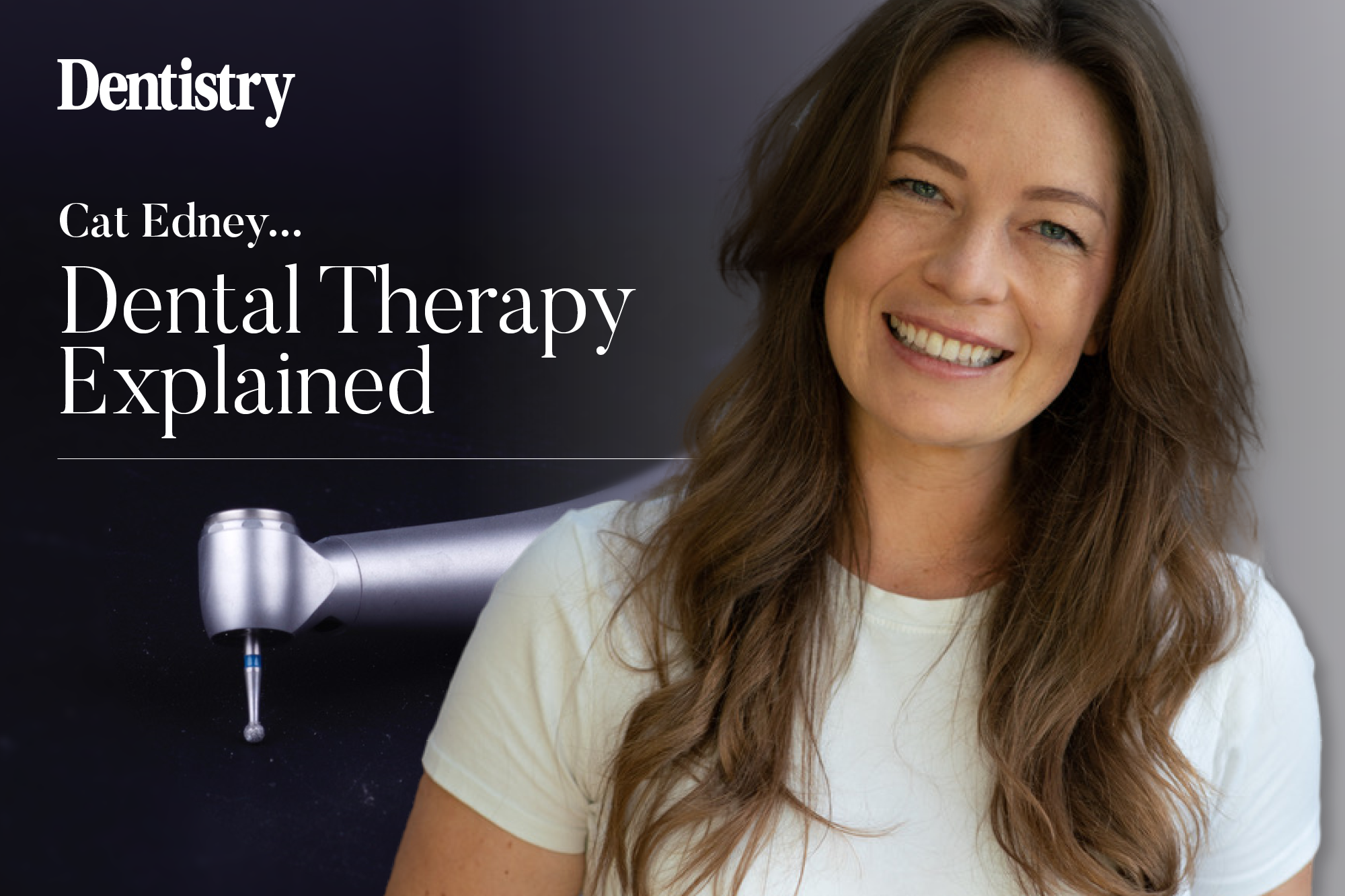
Despite policy changes slowly recognising the full potential of dental therapists, many practices continue to rely on outdated ways of working. Cat Edney and Bradley Wilson explain why meaningful change demands systems that allow dental therapy to thrive.
One of my favourite things about writing Dental Therapy Explained is the conversations it starts. Every month I hear from dental therapists working in completely different environments, all experiencing the profession in slightly different ways. Sometimes those conversations reinforce something I’ve been thinking for a while, and sometimes they make me look at things from a completely different perspective.
Recently I sat down with fellow dental therapist Bradley Wilson to talk about where we think our profession is heading. Bradley works in an NHS mixed corporate practice and is thriving as a direct access dental therapist. He has carved out a role for himself where there once was only dental hygiene work available. I was interested to hear his thoughts on how the profession could grow like he has.
We started by discussing the recent NHS changes affecting dental therapists, but very quickly found ourselves talking about something much bigger than policy. We found ourselves talking about systems.
The systems we inherit
Cat Edney (CE): Bradley, one thing I’ve been speaking about for a while is how few therapists actually walk into a practice and build their own way of working. Most of us qualify, arrive in practice, and inherit whatever system already exists. The diary template is already there, the appointment lengths have already been decided, referral pathways already exist and everyone simply carries on doing what the previous clinician did. We accept those systems because we assume they’re normal. Do you think that’s part of the challenge?
Bradley Wilson (BW): I do. I think most dental hygienists and therapists have spent years developing themselves inside a framework that somebody else created. Regardless of our individual skills, that framework inevitably shapes the contribution we’re able to make. Over time that has pushed many therapists towards the edge of patient care rather than placing them where they could have much more influence.
The interesting thing is that therapists have become exceptionally good at working within those systems. We’ve adapted to them. We’ve mastered them. But that doesn’t necessarily mean they’re the best systems for either clinicians or patients.
CE: I think that’s an important distinction because these conversations sometimes become quite divisive. This isn’t about suggesting every therapist should suddenly be carrying out every aspect of their scope every day. There are therapists who absolutely love providing prevention-focused care all day and they do it brilliantly.
Ambition beyond existing systems
CE: The concern for me is the therapist who qualified wanting to use restorative skills, wanting to work collaboratively with dentists, wanting to practise through direct access, but never really finding an environment that allows those skills to develop. They haven’t consciously chosen that path. They’ve simply adapted to the system they found themselves working within.
BW: Exactly. I don’t think the profession lacks ambition. I think opportunity has been inconsistent.
If somebody spends years carrying out the same appointment repeatedly, it’s only natural that confidence in other areas starts to diminish. That doesn’t mean the ability has disappeared. It simply means those skills haven’t been exercised often enough.
CE: That’s something I hear all the time. Therapists often tell me they don’t feel confident restoring teeth anymore, but when we explore that further, what they really mean is they haven’t restored many teeth recently. Confidence isn’t something you either have or don’t have. It’s usually the product of repetition, support and opportunity.
Progress driven by policy
CE: What I also find fascinating is how much momentum there seems to have been over the last few years. For a long time progress felt slow, then suddenly we’ve seen direct access become established, provider numbers introduced, exemptions legislation passed and therapists increasingly opening NHS courses of treatment independently. What do you think has driven that change?
BW: Looking back over the last twenty years, representative organisations, educators and therapists have all worked incredibly hard to move the profession forwards. Sometimes it felt frustrating because slow progress happened one small step at a time.
Over the last few years though, we’ve seen several policy changes happen in relatively quick succession. Therapists can now hold NHS PIN numbers, open and manage their own courses of treatment within scope, and exemptions legislation has removed barriers that previously prevented therapists from providing complete care independently. More recently we’ve also seen NHS contract reforms continue to recognise the wider dental team and encourage greater utilisation of skills mix.
When you stand back and look at those changes together, they represent a significant shift in how therapists can contribute within primary care.
Making full use of the workforce
CE: What strikes me most is that therapists themselves didn’t suddenly become different clinicians.
BW: I think that’s probably the biggest lesson we’ve learned.
The COVID-19 pandemic accelerated the dental access crisis and forced policymakers to think differently about how the workforce could be used. Therapists became part of that conversation because the skills were already there. Policy didn’t create new clinicians. It simply removed some of the barriers that had prevented existing clinicians from contributing more fully.
CE: That’s where I think practice owners can learn something really valuable: if changing national policy unlocked the potential of therapists across the NHS, could changing practice policy achieve exactly the same thing inside an individual practice?
BW: We often think about policy as something that only happens nationally, but every practice has its own operating system. Because every practice already has its own policies. It decides appointment lengths. It decides referral pathways. It decides who sees which patients. It decides how clinicians communicate and what information should accompany referrals. Those decisions shape the contribution every clinician can make.
Well-designed systems remove uncertainty. When uncertainty disappears, clinicians naturally become more confident because everybody understands where they fit within the patient journey.
Confidence follows systems
CE: This is what I find when I’m working with practices. People often assume I’m there to teach composite techniques or discuss direct access legislation. In reality, much of my work happens before anyone even picks up a handpiece. We’re discussing how examinations should be standardised, agreeing referral criteria. We’re deciding what information should accompany every referral. We’re creating communication pathways between therapists, dentists, reception teams and nurses so that everyone understands the patient journey.
What’s interesting is that once those systems exist, the clinical confidence tends to follow surprisingly quickly. Dentists become more confident referring because they know exactly what information they’re going to receive. Therapists become more confident because expectations are clear and support is visible. Patients simply experience one joined-up team rather than individual clinicians working independently.
BW: Which perhaps means we’ve been asking the wrong question all these years.
Rather than asking whether therapists are ready to work differently, perhaps we should be asking whether our practices are ready to support therapists differently.
Measuring the impact of dental therapists
CE: That is a really interesting way of looking at it: because it also changes how we measure success. Historically we’ve spoken about the value therapists bring to patient care, but we’ve often struggled to demonstrate that contribution in a meaningful way. Do you think that’s beginning to change?
BW: I do. The introduction of NHS PIN numbers gives us opportunities we’ve never really had before. Through General Provider Reports, Compass reporting and practice-level data, practices can begin understanding not only how active therapists are, but the type of care they’re providing and the impact they’re having on access, prevention and patient outcomes.
Rather than relying on assumptions, we can begin having conversations based on measurable data. That creates opportunities for identifying development needs, refining patient pathways and demonstrating the value therapists bring within the wider dental team.
Leadership unlocks potential
CE: What really stands out for me is that this conversation has become much less about therapists themselves and much more about the environments we ask them to work within.
If we can create practices where referral pathways are clear, communication is consistent, education is valued and therapists are supported to grow gradually rather than expected to change overnight, then everyone benefits. Dentists spend more time delivering the treatments they enjoy most. Therapists develop fulfilling and varied careers. Practices become more efficient. Most importantly, patients receive care from the right clinician at the right time.
Perhaps that’s the real lesson from the last few years. Policy can open the door, but it’s thoughtful leadership within practices that determines whether anyone walks through it.
Catch up with Cat’s previous columns:
- Communication as care: the role of the modern dental therapist
- Dental therapy at a turning point: entering the new era
- How is dental therapy utilised differently around the world?
- Building a shared care model for the modern dental practice
- Dental therapy in 2026: a profession coming into its own.
Follow Dentistry.co.uk on Instagram to keep up with all the latest dental news and trends.
Apa Reaksi Anda?
 Suka
0
Suka
0
 Kurang Suka
0
Kurang Suka
0
 Setuju
0
Setuju
0
 Tidak Setuju
0
Tidak Setuju
0
 Bagus
0
Bagus
0
 Berguna
0
Berguna
0
 Hebat
0
Hebat
0