

















































%20and%20Batch%20Production%20Records%20(BPR).png)















StockWatch: Liquidia Rebounds After Settling Legal Wrangle with United Therapeutics
Two weeks after its stock lost more than half its value following a setback in a seven-year legal wrangle, Liquidia (Nasdaq: LQDA) shares finally began bouncing back this past week thanks to a settlement with United Therapeutics (Nasdaq: UTHR) that drew mixed conclusions from four analysts about which company won out long-term.
The settlement ended six lawsuits that encompassed patent infringement, trade secret, and antitrust claims between the companies. Short-term, Liquidia agreed to pay $380.7 million to United Therapeutics and parties to settle antitrust litigation launched in 2019. Back then, Sandoz Group (SIX Swiss: SDZ) and its marketing partner RareGen (since merged into Liquidia) accused United Therapeutics of carrying out anticompetitive actions by blocking the launch of a generic version of United’s injectable treprostinil, which first won FDA approval in 2002 and is marketed as Remodulin®.
Liquidia also agreed to remove pulmonary hypertension associated with interstitial lung disease (PH-ILD) as an indication from the label of its sole commercial product Yutrepia® (treprostinil) inhaled powder and no longer promote the prostacyclin mimetic for PH-ILD to new patients. In doing so, Liquidia opted not to challenge a U.S. District Court for the District of Delaware decision finding the company to have infringed claims 1 and 14 of U.S. Patent No. 11,826,327, which is owned by United. That decision sent Liquidia shares plummeting 57% from $70.69 to $30.26 on September 30.
The settlement allows Liquidia to continue selling Yutrepia for pulmonary arterial hypertension (PAH) while continuing other ongoing development programs for the drug outside of PH-ILD. That includes Raynaud’s phenomenon associated with systemic sclerosis (SSc-RP). The FDA last month granted its Fast Track designation to Yutrepia in SSc-RP, a disease for which no therapy is currently approved by the agency.
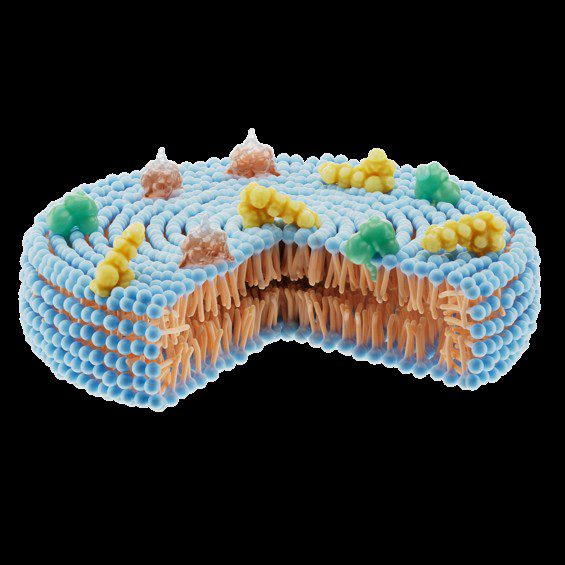
Also, the settlement allows Liquidia to continue developing L606 (liposomal treprostinil inhalation suspension), an extended-release formulation of treprostinil administered twice daily with a next-generation nebulizer. Liquidia is partnering with Pharmosa Biopharm to develop L606 in PH-ILD as well as PAH.
“Very favorable outcome” for Liquidia
“We view this as a very favorable outcome for LQDA and broadly in line w/ the base case we previously outlined,” Manoj Eradath, PhD, a senior biotechnology equity researcher with Jefferies, wrote in a research note.
Eradath wrote that investors were concerned about a potential interruption in Yutrepia sales following the decision by District Court Judge Richard G. Andrews, who was appointed in 2011 by President Barack Obama: “The settlement removes that overhang.” Eradath added that the decision also created uncertainty around the PH-ILD development pathway for L606 that is resolved by the settlement.
“Overall, w/ the legal overhang removed, we now view LQDA primarily as a Yutrepia growth story in PAH w/ upside from label expansion + significant pipeline opportunities from L606,” Eradath commented. He raised Jefferies’ 12-month price target on Liquidia stock 22%, from $45 to $55.
Also agreeing that Liquidia won out through the settlement was Serge Belanger, a senior analyst covering the biotechnology sector for Needham & Co.: “The agreement removes legal overhangs around Yutrepia and allows LQDA to build the [drug’s] blockbuster presence in PAH,” Belanger wrote in a research note, as reported by Investor’s Business Daily.
25% stock surge
Investors appeared to side with Belanger and Eradath, as news of the settlement sparked a 25% five-day surge in Liquidia’s share price. On Wednesday, the first trading day after the settlement was announced, Liquidia shares soared nearly 27% from $26.81 to $33.94. Shares climbed another 2.5% Thursday, reaching $34.78 before dipping 1% Friday to $34.35.
United Therapeutics shares, in contrast, slipped 0.6% Wednesday from $543.40 to $540.03, but inched up 0.3% Thursday to $541.51. United’s shares dipped nearly 2% Friday, finishing the week at $533.12 and a 3% decline for the week.
Yutrepia finished the first six months of this year with $300.263 million in net product sales, multiples above the $6.517 million reported for January–June 2025. That is because Yutrepia reached the U.S. market on June 2, 2025, following final FDA approval on May 23 of last year.
During a conference call with analysts, Liquidia CEO Roger Jeffs, PhD, and Michael Kaseta, COO and CFO, disclosed that Yutrepia racked up unaudited Q3 net product sales of $222.7 million—a 31% or roughly $52 million leap above second quarter net product sales of $170.382 million, a jump the company attributed primarily to PAH prescriptions. Those sales, according to Liquidia, contributed to the company’s total cash and cash equivalents of $396.1 million as of September 30.
The Liquidia executives said Yutrepia’s sales were split 60/40 between PAH and PH-ILD, with PAH sales trending toward 70%. That trend, Eradath observed, “suggest[s] the commercial impact from removal of PH-ILD may be lower than initially expected.”
By 2028, Liquidia expects Yutrepia to reach blockbuster status with more than $1 billion in annual sales.
Close to blockbuster status is United Therapeutics’ two inhalable forms of treprostinil called Tyvaso®, which generated generated a combined $910.1 million in January–June 2026, with Tyvaso DPI the top-seller at $656.9 million. The company has marketed an oral inhalation solution of Tyvaso for PAH since initial FDA approval in 2009. The agency approved a nebulizer for the drug in 2017, an additional indication of PH-ILD in 2021, followed a year later by approval of Tyvaso DPI® inhalation powder for PAH and PH-ILD.
“Clearcut win” for United Therapeutics
Two other analysts, however, pegged United Therapeutics as the winner in the litigation with Liquidia. Jessica Fye, a managing director and senior equity research analyst with J.P. Morgan, observed that United stands to gain significant sales as people with PH-ILD shift to its Tyvaso from Liquidia’s Yutrepia.
“We see a framework in place that should allow for a substantial proportion of current PH-ILD patients on Yutrepia to transition to Tyvaso, and we think much of this process could occur over the next two quarters (i.e., 4Q and 1Q),” Fye wrote in a research note.
Fye added that the increased sales offer a timely lift to Tyvaso’s sales as United Therapeutics awaits FDA review on a new indication for Tyvason, idiopathic pulmonary fibrosis (IPF). The company has said it expects the FDA to complete its review on the IPF indication in late April.
“We continue to see Tyvaso’s IPF launch making UTHR a stock to own as we see a very large market opportunity in that setting,” Fye concluded, without quantifying that opportunity.
And unlike his colleague Eradath, Jefferies equity analyst Roger Song, MD, declared the settlement a “clearcut win for near-/mid-term” and a “decisive win” for United Therapeutics, since United preserved its exclusivity in treating PH-ILD through treprostinil, and “extracted meaningful economics from LQDA.”
“We view the outcome as a clear win for UTHR: Protecting the PH-ILD franchise and avoiding the delays and uncertainty associated with a multi-year appellate process,” Song wrote in a research note. “Importantly, the settlement should improve visibility into future Tyvaso growth in PH-ILD while allowing investors to refocus on continued PH-ILD/ DPI ramp, emerging IPF/ ralinepag opportunity, and broader pipeline development.”
Ralinepag is a once-daily oral prostacyclin (IP) receptor agonist being developed by United Therapeutics for PAH and under FDA review with a Prescription Drug User Fee Act (PDUFA) target action date of June 24, 2027.
$175M due by October 30
United Therapeutics will see the bulk of the settlement money, starting with $175 million that Liquidia agreed to pay the biotech giant by October 30, though that date can be extended up to six 30-day periods according to a regulatory filing. The payment is intended to resolve United’s antitrust litigation against Liquidia tied to treprostinil injection.
Liquidia also agreed to pay United Therapeutics $145.4 million in two equal installments of $72.7 million due on or before January 31, 2027, and April 30, 2027. In addition, Liquidia agreed to shell out another $60.3 million this month to parties with interests in the treprostinil injection antitrust lawsuit, including United and ICU Medical, which acquired cartridge manufacturer Smiths Medical ASD in 2022.
At the same time, Liquidia terminated its promotional agreement tied to treprostinil Injection and will no longer commercially support the product.
Despite the millions it stands to receive from Liquidia through the settlement, United Therapeutics shied away from declaring outright victory in its statement about the end of litigation—though it sought to offer an explanation for why it challenged Liquidia in court, stating that Liquidia used United’s clinical trial data for Tyvaso in PH-ILD to build its development case for Yutrepia.
“We are grateful that our significant investments in research and development brought nebulized Tyvaso® and Tyvaso DPI® to people living with PH-ILD after previous therapies failed to effectively treat this challenging disease. The U.S. Patent and Trademark Office awarded us a patent for our innovative PH-ILD treatment in November 2023,” United Therapeutics stated. “Liquidia disregarded our patent and the pending patent litigation and began marketing Yutrepia for PH-ILD in 2025, knowing that a ruling like the federal court’s recent decision could require it to remove the PH-ILD indication from its approved product label.”
United Therapeutics also stated that before the September federal district court ruling, it offered Liquidia a settlement that would have kept Yutrepia available for PAH and PH-ILD patients: “Liquidia chose not to accept our proposal and instead let the court proceedings play out.”
The company also cited its history; it was founded in 1996 as LungRx by chairperson and CEO Martine Rothblatt, PhD, with the aim of discovering a cure for her daughter’s PAH: “Our deep connection to patients and families desperate for life-saving treatment drives our longstanding commitment to ensuring that they receive them.”
Leaders and laggards
- Generate: Biomedicines (Nasdaq: GENB) shares tumbled 11% from $13.84 to $12.26 Wednesday after the artificial intelligence (AI)-based drug developer launched an up-to-$1.265 billion collaboration with Zealand Pharma (Nasdaq: ZEAL). The companies agreed to design and develop multi-specific protein therapeutics for obesity and other metabolic diseases using Generate’s platform, which integrates generative AI with high-throughput experimental validation. The collaboration aims to combine Zealand’s expertise in metabolic health with Generate’s ability to engineer proteins with AI and refine those designs using experimental data toward desired biological functions. Generate agreed to lead research through lead-candidate selection, after which Zealand agreed to oversee subsequent clinical development, regulatory submissions, and worldwide commercialization. Zealand agreed to pay Generate $30 million upfront and up to $35 million in early preclinical milestones for two initial programs (a third may also be developed), plus up to nearly $1.2 billion tied to achieving development, regulatory, and commercial milestones, plus tiered royalties on worldwide net sales of any commercialized products resulting from the collaboration.
- Recursion (Nasdaq: RXRX) shares jumped 11% from $3.74 to $4.16 Thursday on two announcements: Sanofi (Euronext Paris: SAN) optioned the first development candidate from the companies’ multi-program research collaboration, a dual-targeting inflammatory disease candidate expected to enter Phase I trials in 2027. The decision triggered a $10 million milestone payment to Recursion, bringing to $144 million the total upfront and milestone payments Sanofi has paid the AI-based drug developer since the companies launched their partnership in 2022. Recursion is eligible for $300 million-plus in additional milestones plus double-digit royalties on net sales of approved products. Recursion also priced a $200 million stock offering: 61.54 million shares of its Class A common stock at $3.25 per share. The offering was expected to close on or about Friday. Investors participating in the financing included Janus Henderson Investors, Invus, Longaeva Partners, ARK Invest, Driehaus Capital Management, and “other prominent healthcare specialists and mutual funds.”
The post StockWatch: Liquidia Rebounds After Settling Legal Wrangle with United Therapeutics appeared first on GEN - Genetic Engineering and Biotechnology News.
Apa Reaksi Anda?
 Suka
0
Suka
0
 Kurang Suka
0
Kurang Suka
0
 Setuju
0
Setuju
0
 Tidak Setuju
0
Tidak Setuju
0
 Bagus
0
Bagus
0
 Berguna
0
Berguna
0
 Hebat
0
Hebat
0