




















































%20and%20Batch%20Production%20Records%20(BPR).png)
















The World Cup: Heat, Science, & Technology

This week in the world of sports science, here’s what happened…
- The concern of playing in the heat
- The science behind the secret star of the World Cup
- The ball that needs to be charged as well as pumped!
The concern of playing in the heat
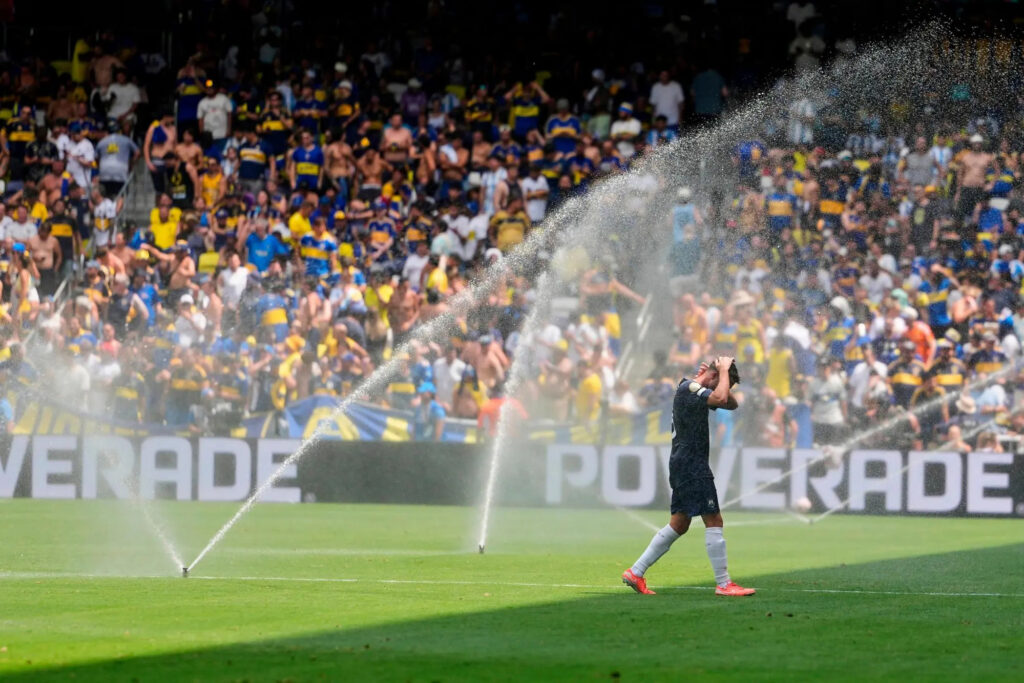
There have been growing concerns regarding the heat during the upcoming World Cup. A recent article by Reuters highlighted some significant worries about this issue. It references an analysis by the climate research group World Weather Attribution, which suggests that approximately a quarter of the 104 matches at the World Cup are likely to be played in conditions that exceed the safety limits. It’s also worth noting that over a third of matches are scheduled in stadiums lacking air conditioning. Some researchers even predict that up to five matches could take place under unsafe conditions where postponement is recommended.
In response, FIFA has assured fans that they are implementing various mitigation strategies to safeguard the players. These measures include three-minute hydration breaks during each half, cooling facilities for both fans and players, and heightened medical readiness.
Interestingly, experts quoted in the article suggest that widespread medical emergencies from heat exposure are unlikely, as the players are elite athletes generally acclimated to warmer temperatures. However, what fans might notice is a more conservative tactical approach, potentially leading to less thrilling matches.
It will be fascinating to see how the heat affects this World Cup and the tactical approaches teams adopt.
The science behind the secret star of the World Cup

A fascinating YouTube video recently unveiled the unsung hero of the World Cup: the grass! The video highlights FIFA’s impressive investment of 5 million US dollars and the involvement of expert Dr John Sorochan, who was brought in to ensure that the grass across all 16 stadiums in three different countries performs consistently.
Dr Sorochan and his team dedicated five years to researching and developing the perfect grass surfaces. Once cultivated and harvested, the grass was transported in refrigerated trucks to each stadium. It was then meticulously installed on a combination of soil, peat, and a plastic structure, along with a waterproof liner to protect the stadium floors. Sensors placed in the root zones allow stadiums to saturate and drain the fields in just three minutes. Additionally, the grass must be kept precisely at 22 millimetres in height; cutting it any shorter can put unnecessary stress on it.
So, when you’re watching the World Cup, take a moment to appreciate the incredible science behind the pitch. Without this finely-tuned grass, superstar players might struggle to showcase their remarkable football skills!
If you are interested in pitch surfaces, be sure to check out our blog Natural grass vs. artificial turf: which surface poses an increased injury risk? and our previous newsletter edition, Artificial Turf And Injuries!
The ball that needs to be charged as well as pumped!

The Adidas official World Cup ball, named “The Trionda,” cleverly blends the prefix “tri” (representing the three host nations) with “onda,” the Spanish word for “wave.” This reflects the unique hosting of the tournament by the United States, Canada, and Mexico.
According to a recent video from “The Sports Geek” YouTube channel, this ball will be a game-changer, and as the video puts it, it will be the first ball that will be required to be “charged as well as pumped”. Inside the ball, there is a motion sensor capable of tracking the ball’s movements an impressive 500 times per second! This innovative tracking technology is expected to assist VAR and referees in making quicker offside and handball decisions.
Additionally, the ball’s design boasts the fewest panels in World Cup history, resulting in less stitching. This streamlined construction aims to give players greater control and allow for a smoother flight through the air.
It will certainly be interesting to see how The Trionda performs in this World Cup and whether its advanced technology positively influences referee and VAR decisions. However, it is worth noting that thinner air may change ball flight characteristics, so the Trionda ball could travel faster and more unpredictably in matches played in high altitude locations like Mexico City.
If you are looking forward to the World Cup, check out our podcast episodes Preparing for the World Cup: Physical Performance Under Extreme Pressure and The Performance Demands of a World Cup with Dr Dave Hancock.
From us this week:
>> New course: Socially Supporting Athletes
>> New podcast: The Unseen Work of S&C and Sports Science
>> New infographic: Stretch Shortening Cycle
>> New article: Hydrotherapy
Access to a growing library of sports science courses
SFS Academy is an all-access membership to premium sports science education.
With SFS Academy, you’ll learn from some of the best coaches around the world as they teach you how to apply the latest research and practice with your athletes.
The post The World Cup: Heat, Science, & Technology appeared first on Science for Sport.
Apa Reaksi Anda?
 Suka
0
Suka
0
 Kurang Suka
0
Kurang Suka
0
 Setuju
0
Setuju
0
 Tidak Setuju
0
Tidak Setuju
0
 Bagus
0
Bagus
0
 Berguna
0
Berguna
0
 Hebat
0
Hebat
0