

















































%20and%20Batch%20Production%20Records%20(BPR).png)















Tigerlily Foundation joining conversation at PACE

The Tigerlily Foundation was born from a promise made in a moment of profound vulnerability.
In 2006, Maimah Karmo was a 32-year-old mother to an infant daughter, Noelle, when she was diagnosed with an aggressive form of breast cancer. While undergoing chemotherapy, she made a promise: if she survived, she would create a world where no young woman would face that journey alone.
This year marks Tigerlily’s 20th anniversary.
While their legacy and heart remain in breast cancer, their scope now addresses broader health disparities. Tigerlily now focuses on women’s health and oncology. The impact of this evolution is tangible.
Over the past 19 years, their network of ANGEL Advocates has expanded to all 50 states and across three continents, training hundreds of women in advocacy, clinical trial literacy, and policy. In the past two years alone, they’ve reached more than 7 million Black and Brown patients nationwide, ensuring their voices and lived experiences are not afterthoughts but central to how we define and achieve equitable care.
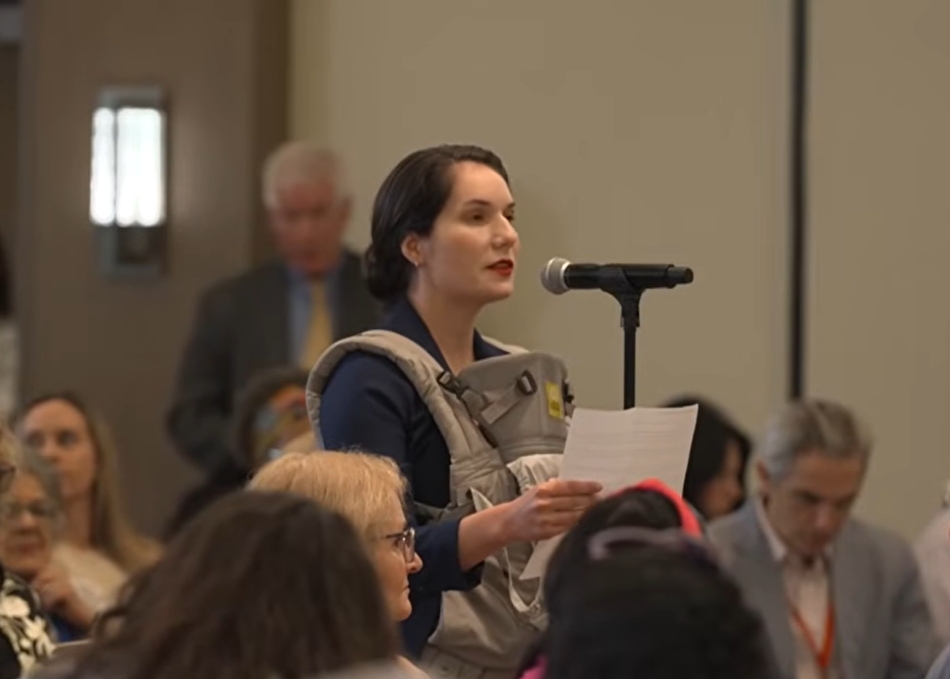
In the lead up to the Biotechnology Innovation Organization’s (BIO) Patient Advocacy Changemakers Event (PACE), taking place on October 22–23, Bio.News sat down with Maimah Karmo to talk about Tigerlily’s work. Karmo will participate in PACE’s panel, In the Wrong Ballpark: Why PDABs Don’t Work on Oct. 22.
Bio.News: Patient access to treatments is deeply personal to the organization. How does this translate into your work?
For Tigerlily, access isn’t an abstract policy concept; it’s the difference between life and death, and it is deeply personal. When I was diagnosed, I was dismissed multiple times because of my age. I had to fight to get a mammogram, fight to get a biopsy, and fight to be taken seriously. That experience shaped everything we do. Our work, from the exam room to Capitol Hill, is informed by patients and designed for patients.
We believe that true access is about more than just a price tag. As I often say, what is the point of a drug that I can afford financially if I can’t even get it in the first place? Our policy work, therefore, is dedicated to redefining “affordability” to include timely access. Through our HEAL Policy Center of Excellence, we equip patients with the tools to speak directly to power. Whether it’s fighting for coverage of biomarker testing or ensuring insurance doesn’t delay care through prior authorization or step therapy, our goal is to remove the barriers that stand between a patient and their prescribed treatment.
Bio.News: Tigerlily has been a champion for patient access in state legislatures. Your work in Virginia was highlighted in Bio.News earlier this year. Can you tell us more about the impact you have had across the country this year?
Our work on Prescription Drug Affordability Boards (PDABs) is a perfect example of how we translate patient concern into policy advocacy. We’ve been deeply engaged in states across the country on this issue because PDABs are often sold as a silver bullet for high drug costs, but the reality for patients is far different.
First, almost no one outside of the policy world knows these boards exist, especially the communities most impacted. Second, the discussions around them are often misleading. They are framed as a lever to make drugs more affordable for patients, but in reality, they are designed to save money for the state, and there is zero evidence of patient cost savings. Recent studies confirmed that upper payment limits set by PDABs have not delivered a single dollar in savings to patients.
For Tigerlily, this is unacceptable. We are not saying we don’t want more affordable drugs; we absolutely do! But we want them without creating new access barriers. Our efforts have been focused on educating our community to serve as a catalyst, amplifying their voices to ensure they can engage in these conversations and share their personal stories. We were proud that our work in Virginia resulted in a veto of harmful PDAB legislation, and we will continue to fight to ensure that patient concerns are heard and that affordability policies actually prioritize patient access.
Bio.News: What other policies are a priority for Tigerlily?
Our policy priorities are patient-centered and cover a broad range of issues at both the federal and state levels.
On drug pricing, beyond PDABs, we are advocating for 340B program reform to ensure that discounts go to supporting vulnerable patients as intended, and we are engaging on Medicare Drug Price Negotiation Program (MDPNP) implementation to ensure that efforts to lower prices don’t inadvertently slow innovation or create new barriers to access for patients.
We are also prioritizing utilization management reform, including prior authorization and step therapy. These “fail first” protocols delay patients from accessing the treatments their providers prescribe, and we support the Safe Step Act as a crucial interim fix. We are also engaging in policies to ensure access to diverse clinical trials for all, including the Clinical Trial Modernization Act to allow trial sponsors to cover costs like travel and childcare, which are major barriers for underrepresented groups. And with access to clinical trials for innovative therapies as well as already-existing therapies, biomarker testing is a high priority to ensure every patient has access to the current gold standards to receive the best treatment for them and their specific disease markers.
While our mission has expanded, we remain steadfast in our legacy breast cancer priorities. We continue to support and engage in reauthorization for the SCREENS for Cancer Act to protect funding for safety-net screening programs, the Access to Breast Cancer Diagnosis Act to ensure coverage for diagnostic tests, and the EARLY Act to educate young women and their doctors about breast cancer risks.
Bio.News: Your fourth annual BEACON Symposium takes place this October. What themes will be explored? What does this milestone mean to the organization?
The BEACON Symposium has become a cornerstone of our work because it’s where we shift from dialogue to action. This year’s theme is “From Access to Action: Scaling Patient-Led Solutions for an Equitable Future”. It perfectly captures the moment we are in as an organization and as a community.
The panels will tackle some of the most critical issues facing patients today. One panel, “Bridging the Trial Gap: From Equitable Access to Community-Centered Trials,” will explore how we move beyond simply enrolling more diverse patients to designing trials that are truly centered on community needs.
The second panel, “The Cost Conundrum: When Drug Pricing Policies Create More Problems Than Solutions,” will dig into drug pricing policy issues and how well-intentioned policies can sometimes backfire and create new hurdles for the very people they aim to help. And most importantly, how advocates can engage and amplify the patient voice to ensure good policies are made that actually lower prices for patients.
For us, the Fourth Annual BEACON Symposium is a milestone that reflects how much this movement has grown. It’s no longer just Tigerlily’s event; it’s a gathering place for the entire patient advocacy community to co-create solutions. It’s where we, together, become the beacon of hope and light that drives us forward to health equity.
Bio.News: Maimah will be speaking on behalf of Tigerlily Foundation later this month at PACE. What are you most excited to share with the patient advocacy community?
I am most excited to share that Tigerlily’s patient advocacy is not standing still but rather is expanding in new and powerful ways. I’ll be sharing how we are building a bigger table and bringing more voices into the conversation.
I’ll be highlighting our new programs, which embody this growth. EmPOWER Her is our peer navigation program that connects newly diagnosed patients with trained survivor navigators, providing the compassionate, one-on-one support that I wish I had when I was diagnosed. SheLEADS is a community-led initiative piloting in North Carolina designed to transform the systems of care for Black women by combining peer navigation with provider engagement and policy change. Our BLISS Brunch series is creating joyful, culturally responsive spaces for education and connection, bringing clinical trial literacy directly into trusted community settings. And our newly created IGNITE Center of Excellence is turning community engagement from simple outreach into an evidence-based discipline, ensuring that the trust we build translates into measurable health outcomes.
What I’m most excited to share is that after 20 years, our commitment to our work is the same: to lead with love, legacy, and unstoppable faith. But our reach and our impact are greater than ever. We are proving that when you center patients and give them the power to lead, you don’t just create change, you build a movement.
You can still register for PACE! Visit https://pace.bio.org/registration
The post Tigerlily Foundation joining conversation at PACE appeared first on Bio.News.
Apa Reaksi Anda?
 Suka
0
Suka
0
 Kurang Suka
0
Kurang Suka
0
 Setuju
0
Setuju
0
 Tidak Setuju
0
Tidak Setuju
0
 Bagus
0
Bagus
0
 Berguna
0
Berguna
0
 Hebat
0
Hebat
0