




































Everything You Ever Wanted to Know About Catnip

It’s a rare, strong-willed person who can resist the internet’s endless scroll of videos showing cats loopy on catnip—rolling around, yowling, drooling, purring, sniffing, frantically grooming—but what is this mysterious plant, and why does it have such a powerful effect on felines? Is it harmful or beneficial? Are any cats immune to it? And why do so many scientists keep studying it? We have the answers to these questions and more.
What Is Catnip?
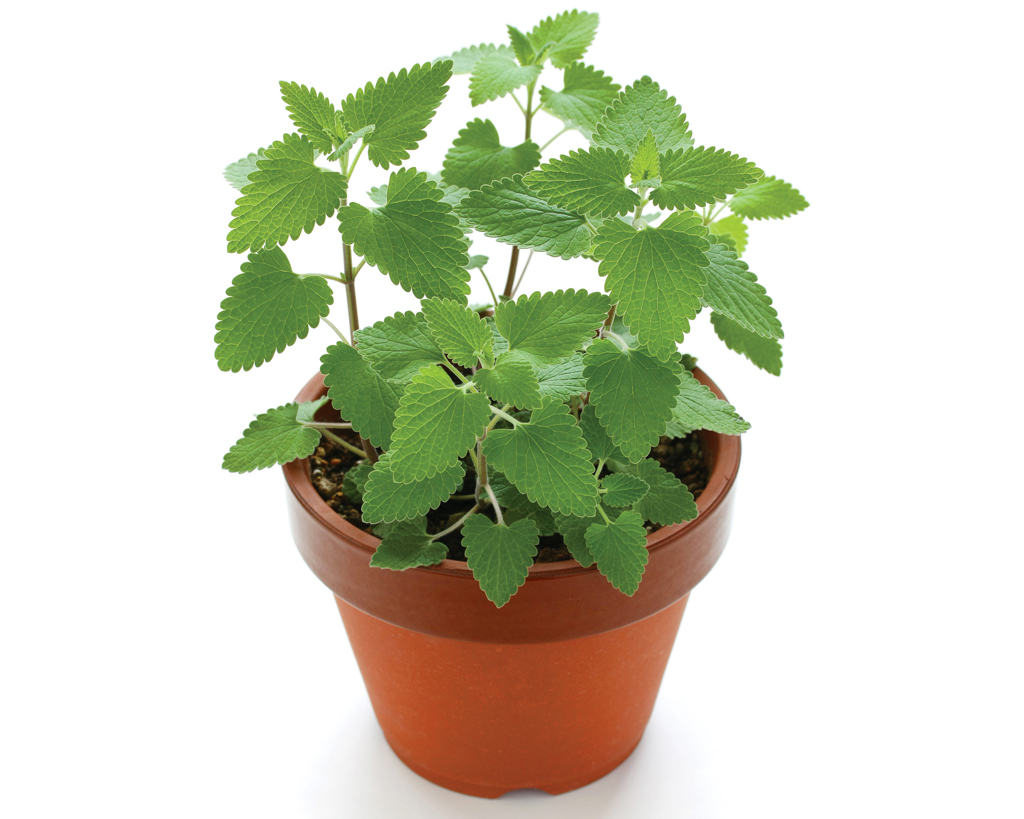
Nepeta cataria, better known as catnip, is a perennial herb that’s part of the mint family. Grown throughout temperate regions of North America, Europe, Asia, and New Zealand, catnip can easily be cultivated in backyard gardens or in small pots on apartment balconies. This drought-tolerant herb can reach up to three feet tall, blooming from late spring to autumn, and it has square stems, lavender flowers, and light-green or gray-green foliage.
oysy/Bigstock
What Causes Catnip’s Effect on Cats?
The key to how catnip drives kitties crazy is an iridoid chemical compound called nepetalactone. “When cats smell catnip, nepetalactone binds to receptors in their nasal tissue and stimulates sensory neurons that trigger a response in the brain—particularly the amygdala and hypothalamus, which control emotion and behaviour,” explains Nita Vasudevan, a veterinarian at Embrace Pet Insurance who is based in Orlando, FL. “This causes rolling, rubbing, vocalizing and bursts of energy that last about 10 to 15 minutes.”

Kym MacKinnon/Shutterstock
The effects of nepetalactone go beyond TikTok-friendly feline antics. “Nepetalactone has been shown to have mosquito-repelling properties, which may even make it helpful for cats to rub in,” says Dr. Mikel Maria Delgado, a scientist and cat behaviour expert at Feline Minds, from her home in Sacramento, CA. She points out that “mosquitoes can carry heartworm, which can be deadly to cats.” From a hunting standpoint, annoying mosquitoes can also make it challenging for a cat to stay motionless and silent while tracking prey. By ecstatically rolling around in catnip, a cat gets covered in the plant’s oils, which act as a natural insect repellent.
A study published in Science Advances in January 2021 showed that cats’ rubbing behaviour with both catnip and silvervine, a catnip alternative, gives them a chemical defense against mosquito bites. Various other studies over the years have examined catnip’s efficacy at repelling not just mosquitoes but also flies, termites, cockroaches, ticks, and mites.
Are All Cats Affected by Catnip?
It may surprise some pet owners—particularly those whose felines regularly bliss out on catnip—to learn that not all kitties react to the herb. “Sensitivity to catnip is genetic, and studies show that around 30% to 50% of cats have little to no response to it,” says Josh Wiesenfeld, a pet expert in Santa Monica, CA, and the founder of Boxiecat. “This genetic trait is inherited in an autosomal dominant pattern, meaning a kitten only needs one copy of the ‘catnip gene’ to be responsive.”
“Sensitivity to catnip is genetic, and studies show that around 30% to 50% of cats have little to no response to it.”
And it’s not just house cats who experience the herbal hijinks. Staff at the Big Cat Rescue Centre in Arkansas report that the majority of their tigers, lions, mountain lions, lynx, and bobcats have a euphoric reaction to their weekly catnip treat. Visit the organization’s website (bigcatrescue.org) and look for the videos of big cats ripping apart paper bags of catnip and rolling around in obvious delight.
Kittens, on the other hand—whether big cats or house cats—tend to show no reaction to catnip. Most kittens don’t respond to catnip until they are between three and six months old—and some senior cats don’t respond either. “If a cat doesn’t respond to catnip, it’s not a cause for concern,” says Wiesenfeld. “It just means they don’t have the genetic sensitivity or they’re in a non-responsive life stage.”

Scalia Media/Shutterstock
Are Other Animals or Humans Affected by Catnip?
How catnip affects humans is unclear. Historically, catnip tea has been used to help with digestion, ease congestion, soothe anxiety, and promote sleep, but the herb’s effectiveness has not been scientifically proven. Some intrepid souls have even tried smoking catnip, but this is not recommended (and is more likely to cause drowsiness than a buzz).
Though catnip acts as a stimulant for cats, it has the opposite effect on dogs. Ingesting the herb causes a mild sedative effect in dogs, while other animals show no reaction whatsoever.
How Long Do the Effects of Catnip Last?
The euphoria from catnip doesn’t last very long. “Cats experience the effects for about 10 to 15 minutes, after which they enter a refractory period where they’re temporarily immune to its effects,” Wiesenfeld explains. “During this time—usually about 30 minutes—they won’t react even if exposed to more catnip. This natural reset mechanism helps prevent overstimulation.”
Employing catnip too often can be counterproductive. “Cats who use it too frequently may have a decreased response over time,” says Stephen Quandt, a cat behaviour specialist in New York City. “I like to think of giving catnip as a treat, once, maybe twice a day at most.”
Is Catnip Beneficial?
For cats with the “catnip gene,” the plant can elicit several different positive reactions. Some cats “may become euphoric and playful, others mellow and relaxed,” says London-based Aimee Warner, the resident veterinarian at UK pet-insurance company Waggel. But the benefits of catnip extend further than mere enjoyment. Warner recommends using catnip for enrichment. “Sprinkle it on scratching posts or toys or use it in refillable pouches to promote play and exercise.”
Sprinkle it on scratching posts or toys or use it in refillable pouches to promote play and exercise.

Olga Kazanovskaia/AdobeStock
Catnip can be a useful tool to promote desired behaviours. As if by magic, an unfamiliar scratching post, litter box or carrier becomes more appealing and less intimidating by being rubbed, sprayed or sprinkled with catnip. The herb can also help alleviate boredom, a common problem with domestic cats.
Another worthy use of catnip is in providing comfort to anxious animals. “It’s handy for convincing shy or sedentary cats to venture to parts unknown or to play with new toys,” says Warner. “In shelters, it’s commonly used to alleviate stress and promote natural activity in cats that may be anxious or depressed.”

 Yeowww’s Mo Betta Fish cat toy comes stuffed with organically grown catnip to bring playtime to new heights. Crinkle fabric adds to the fun. ($8, yeowww.com)
Is Catnip Safe?
To a casual observer, the effects of catnip can look disconcertingly like a drug-induced high. However, the herb is natural, non-toxic, and safe for cats, with no known long-term side effects. “Catnip is not addictive in the clinical or behavioural sense. Their brains generally don’t become dependent on it, and they don’t experience withdrawal if it’s taken away,” Vasudevan explains. “That said, some cats may appear to crave it or seek it out frequently, especially if it’s part of their routine or enrichment. But this is more of a learned behaviour or preference, not true addiction.” She does caution that supervision is advised for the first few times catnip is offered, since it may cause some cats to become overstimulated or aggressive.

Photobret2014/Shutterstock
Joey Lusvardi is a cat behaviour consultant at Class Act Cats in Minneapolis, MN, who often deals with feline aggression issues. He points out that “just because your cat behaves aggressively or seems a little more wild doesn’t necessarily mean you can’t give them catnip. You need to be extra careful with it but depending on the underlying reason for the aggressive behaviour, it may actually help in some cases.” For example, the catnip might help to improve the mood of a cat experiencing fear or stress. He emphasizes, “It’s worth checking with your veterinarian or a qualified cat behaviour professional to get their take in these situations.”
With catnip, moderation is key. “While cats don’t technically overdose on catnip in a toxicological sense, eating large quantities—such as chewing through a sachet or licking up a large pile—can cause mild gastrointestinal upset, like vomiting or diarrhea,” Wiesenfeld says. “These effects are temporary and self-limiting, but I always recommend keeping catnip stored securely when not in use and observing your cat during and after play.” To ensure that the wiliest felines don’t help themselves to too much of the tempting herb, it’s best to keep it safely tucked away in a sturdy airtight container.
Warner mentions a particular instance in which catnip might not be a good idea: “I tend to suggest playing it safe and avoiding it in cats that have a history of seizures, or with other neurological conditions, even as a precaution.”
This article originally appeared in the award-winning Modern Cat magazine. Subscribe today!
The post Everything You Ever Wanted to Know About Catnip appeared first on Modern Cat.
Apa Reaksi Anda?
 Suka
0
Suka
0
 Kurang Suka
0
Kurang Suka
0
 Setuju
0
Setuju
0
 Tidak Setuju
0
Tidak Setuju
0
 Bagus
0
Bagus
0
 Berguna
0
Berguna
0
 Hebat
0
Hebat
0