
























Impacts of fear, anxiety and environment on fast- and slow-growing broilers

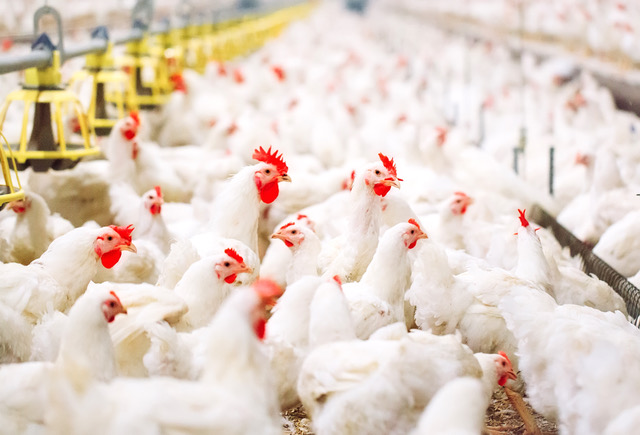
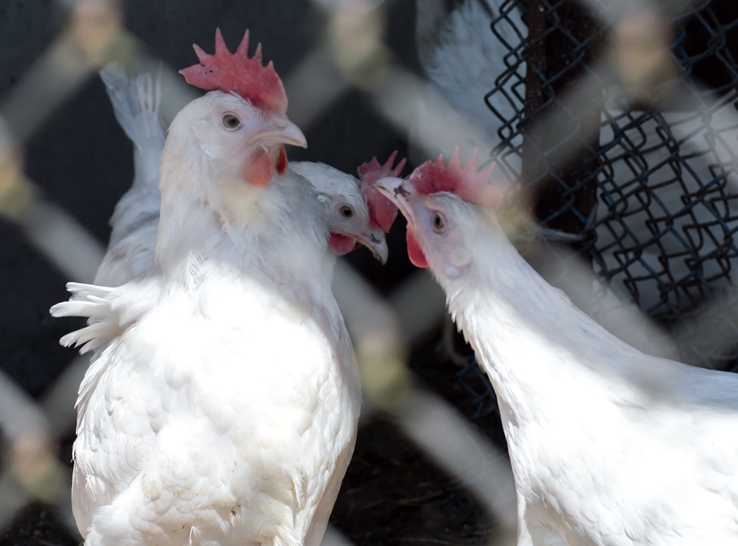
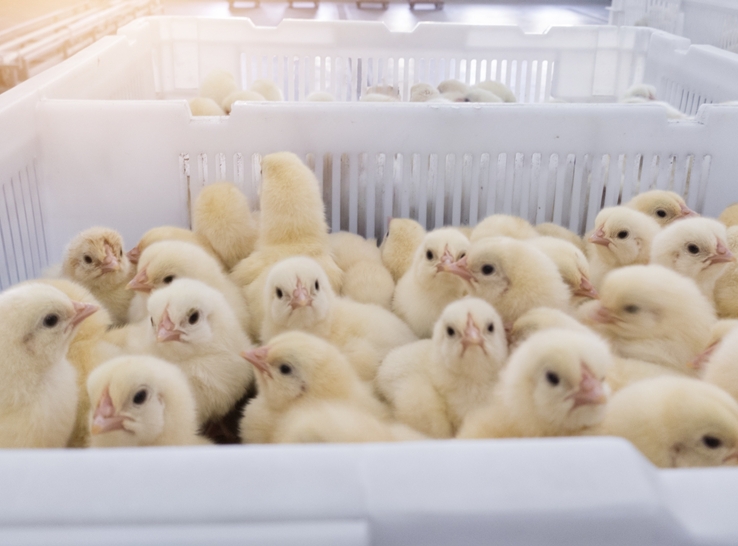
Research has uncovered much about how welfare impacts broilers’ physical and functional traits, but less is known about their mental state. “By measuring mental state, we can have the most precise view of the birds’ welfare status,” said Alexandra Ulans, PhD, postdoctoral research scholar at North Carolina State University.
As a doctoral student at Virginia Tech, Ulans studied fear and anxiety in fast- and slow-growing broilers, as well as the impact of environmental complexities. She presented the results during a 2025 Poultry Extension Collaborative webinar.
“Regarding welfare, fast-growing broilers show substantially worse welfare than slow-growing broilers,” she said. “We know that fast-growing broilers have more contact dermatitis and higher lameness, inactivity and mortality levels.”
But there is less insight into the birds’ affective state. “Fear has shown inconsistent results, and anxiety has not been assessed between the two broiler types,” Ulans noted.
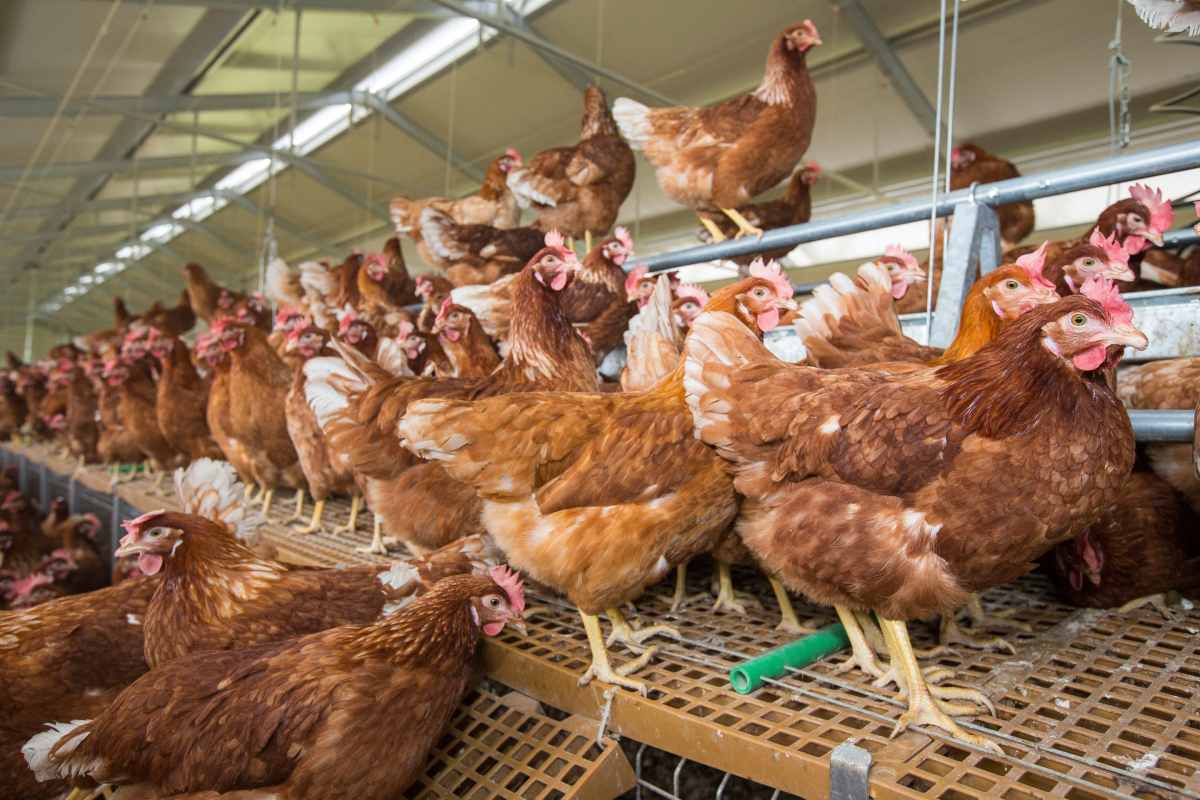
The potential impact is vast, with the US producing 95 billion broilers in 2024, 95% of which are fast-growing, meat-production types. “Those birds are typically raised in barren environments with litter, feeders, drinkers and not much else,” she said. “This is associated with higher anxiety and stress.”
The alternative is to provide a more complex environment, but such studies have shown inconsistent results, likely due to the wide variation of enrichments used. For her study, Ulans used ramps, which have been shown to reduce contact dermatitis and leg disease and improve locomotion. She also looked at huts, “which can reduce stress but have been greatly understudied,” she noted.
Experiment #1
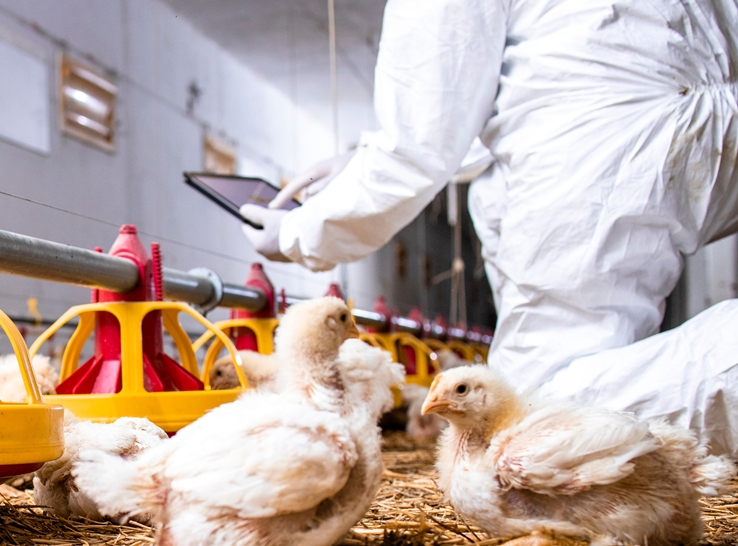
For the first study, Ulans used 1,200 male broilers, 600 of each strain — fast-growing (Ross 708, 68 g per day) and slow-growing (Redbro M, 53 g per day) — placed into 24 pens at 50 birds per pen. She conducted six replicates per treatment.
For environmental complexity, she created a simple environment with feeders, drinkers and litter. The complex environment included those same elements, plus dust pads, perches and other enrichments.
She collected data at 1 kg, 2 kg and 3 kg of bodyweight and at 4, 5 and 6 weeks of age to measure how welfare changed over time. The fast-growing broilers were culled at 45 days and the slow-growing at 67 days.
“To assess anxiety, we used the attention bias test,” Ulans said. “It measures the birds’ tendency to pay attention to negative stimulus while ignoring others around them.”
The bird is exposed to a negative stimulus, such as an alarm, and a positive stimulus, such as feed and meal worms. “We measure the time birds focus on the negative stimulus and then turn to the positive stimulus. Did the bird start eating during the test?” she noted. “The longer it is anxious, the longer it will focus on the negative stimulus.”
She also measured vigilance behavior, which is associated with watching for danger or threats. “How vigilant a bird was during the test provides insight into its anxiety,” Ulans added. She tested birds in groups of three to avoid the stress of social isolation.
The results: Experiment #1
The study showed some differences between strains in the simple environment, with fast-growing broilers less likely to begin feeding during the test. For both strains, birds in the complex environment weighing 1 kg were more likely to begin feeding than birds weighing 2 kg or 3 kg.
“Slow-growing birds showed less anxiety overall, but anxiety increased for both strains as birds gained weight,” Ulans noted.
Vigilance behavior was determined by the bird spending more than 80% of its time being vigilant during the test. “Vigilance increased as the broilers gained weight, which means anxiety increased,” she said. “Fast-growing broilers showed more anxiety overall but especially in the simple environment.”
To measure fear, Ulans used the tonic immobility test, which reflects a “play dead” state to evade predators. The research team placed the bird on its back in a cradle, covered its eyes and applied gentle pressure to its sternum for 15 seconds to induce tonic immobility.
“The duration that the bird remains in this state indicates its fearfulness,” she noted.
Fast-growing broilers generally recorded 100 seconds, while slow-growing broilers recorded 78 seconds. At all ages, fast-growing birds were more fearful than slow-growing birds.
For both strains, heavier birds showed more fear than lighter-weight birds, and the results were linear. The greatest difference was between 3 kg birds and 1 kg birds.
Environmental complexity had no impact on the birds’ fearfulness, Ulans added.
Discussion points: Experiment #1
The fast-growing broilers’ increased anxiety may be due to their body composition and heavier breast muscle, making it more difficult to walk or escape, Ulans noted. They also have more low-level lameness, with less ability to flee.
Slow-growing broilers showed less fear at the same ages than fast-growing, but fear increased with weight gain. “This may indicate that losing the ability to flee by gaining weight, and increased lameness, which happens to both strains at heavier weights, causes more fearfulness than does genetics,” she added.
As for the environment, broilers from complex environments were less anxious at the lighter weights. “The environment likely slowed the onset of anxiety, but welfare still declined, especially in fast-growing broilers,” Ulans said.
Overall, the study demonstrated that environmental complexity had no impact on the birds’ fear levels. “However, a lack of a negative effect does not mean a lack of a positive effect,” she said.
Experiment #2
Ulans and her research team wanted to dig deeper into how anxiety differed between genetic strains and impacted growth rate. For this experiment, she used 1,582 mixed sex broilers, 264 birds per strain. The fast-growing strains were Cobb 500 (85 g per day), Ross 308 (80 g per day) and Ross 708 (78 g per day). The slow-growing strains included Ja57 NH (38 g per day), Redbro M (48 g per day) and Redbro Yield (51 g per day). There were 72 pens, with 22 birds per pen and six replicates per treatment.
Each pen included either a ramp or a hut. They again used the attention bias test to measure anxiety.
“We found differences in strains, with Ja57 NH the most likely to feed and Redbro M close behind. The Ross 708 or Cobb 500 were the least likely to feed,” Ulans said.
Ross 308 and Redbro Yield responded similarly to each other. There was no difference in the feeding response of birds raised with ramps or huts.
Overall, fast-growing strains showed higher anxiety levels than their counterparts.
Regarding the percentage of time the birds spent vigilant, Ross 308 recorded the most time at 57%. Redbro M had the least at 34%. The Cobb 500, Ross 708 and Redbro Yield birds were similar at 40%, and Ja57 NH was at 38%.
“The strains tended to differ in time spent being vigilant. Slow-growing broilers were less vigilant than fast-growing birds,” she added. “There was no difference between enrichments.”
Discussion points: Experiment #2
Slow-growing broilers generally showed less anxiety than fast-growing birds, but there are exceptions (Redbro M and Ja57 NH). “This may be influenced by slow-growing birds’ better body composition and lower lameness and pain levels,” Ulans said.
Genetic selection for growth may have resulted in differences in anxiety levels, causing an unintended consequence.
Enrichment types had no impact on anxiety and provided similar benefits, such as a safe place for birds to perch or sit. “It’s hard to know the impact on anxiety because the bird is removed from the home pen for the test, yet it may benefit from enrichment while in the home pen,” she added.
The take-home messages
Wrapping up the conclusions for both experiments, Ulans shared these thoughts:
- Weight gain decreases broiler welfare;
- Slow-growing broilers show better welfare than fast-growing birds;
- Complex environments can improve a bird’s early life welfare;
- Huts and ramps showed similar effects on anxiety.
To improve broiler welfare, she said producers could process broilers at lighter weights than currently; use slow-growing genetics; and create complex environments, including providing huts or ramps in pens.
Ulans also said more research is needed to determine the status of broiler anxiety and fear, and to find solutions.
The post Impacts of fear, anxiety and environment on fast- and slow-growing broilers appeared first on Modern Poultry.
Apa Reaksi Anda?
 Suka
0
Suka
0
 Kurang Suka
0
Kurang Suka
0
 Setuju
0
Setuju
0
 Tidak Setuju
0
Tidak Setuju
0
 Bagus
0
Bagus
0
 Berguna
0
Berguna
0
 Hebat
0
Hebat
0