






















































%20and%20Batch%20Production%20Records%20(BPR).png)
















10x Clinical Expansion Advances with CLIA Lab Plans, Cleveland Clinic Partnership
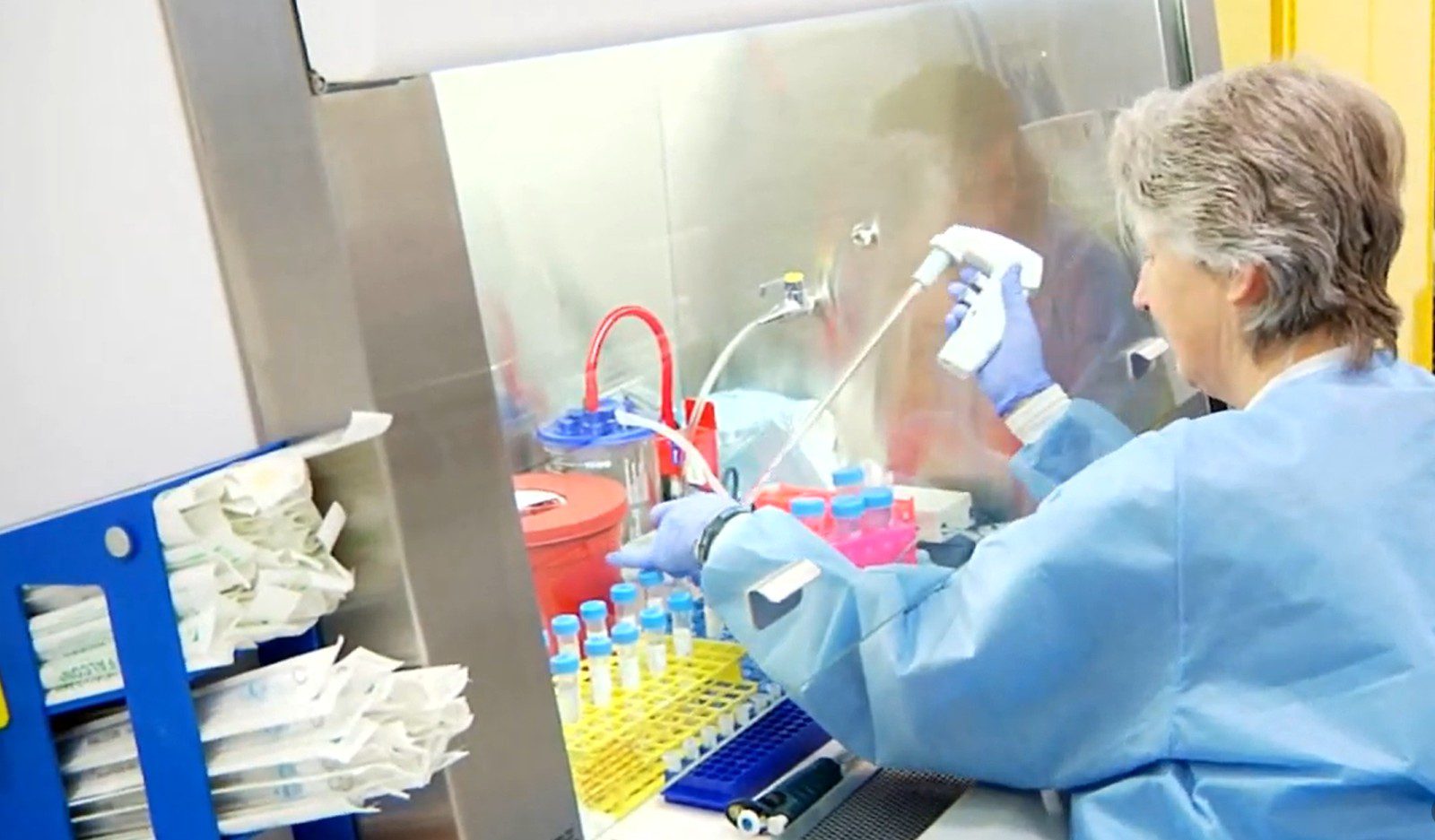
10x Genomics says it is on track to build out a CLIA-certified laboratory set to open next year, part of the spatial and single-cell tools developer’s expansion into clinical diagnostics launched earlier this year.
The lab will open within 10x’s headquarters campus in Pleasanton, CA, 10x co-founder and CEO Serge Saxonov, PhD, told GEN.

“This is one great benefit that we have from the fact that we’ve got all the infrastructure here, and that’s why we feel like we can really accelerate some of these kinds of applications: Because we have the space, we have the expertise with the technology, we have the people who really know all the ins and outs of it, and we can very quickly, validate, new assays, test them, refine them, optimize them,” Saxonov said. “We have been seeing that already, in the time that we have been standing up some of these pieces, how enabling it is to have it all under one roof at this stage.
“Building a CLIA lab is definitely not a trivial undertaking, but we’ve been making really great progress,” he added. “The team has been standing up these capabilities, and definitely on track for early next year. So, very much looking forward to that.”
The CLIA lab is a key component of 10x’s move into clinical diagnostics, announced in January. Traditionally focused on research tools for academic, government, and industry customers, 10x has moved this year to launch clinical collaborations with top-tier institutions—the most recent of which was announced last month with Cleveland Clinic.
The nonprofit multispecialty academic medical center is partnering with 10x in a multi-year collaboration aimed at advancing research in novel diagnostics for bladder cancer. Cleveland Clinic has agreed to contribute patient samples with appropriate phenotypes for analysis on 10x’s Flex Apex single cell sequencing and Xenium spatial biology platforms.
“They have great access to patients and the right kinds of clinical trials and therapies that are going through their system,” Saxonov said. “We are working together to run single-cell and spatial analyses on them, collaborating on those and correlating the biology that we learn from single cell and spatial with therapeutic outcomes.”
Bladder cancer biomarkers
10x and Cleveland Clinic aim to identify biomarkers that predict how bladder cancer patients will respond to emerging therapies, such as immunotherapies and antibody-drug conjugates (ADCs).
“Those biomarkers are definitionally known already, but the actual context of their expression isn’t really that well known in terms of being able to predict response,” Saxonov explained. “The question is, if you see their expression in the context of the cancer cells, or the tumor microenvironment, or the immune compartment, it will then also inform response to therapy. And there’s plenty of evidence from scientific literature that there’s a lot of signal there, a really, really powerful signal there. What hasn’t been done is run rigorous, well-powered, clinically, really carefully well-defined studies to measure and evaluate those kinds of biomarkers.”
Oncology is one of two therapeutic areas viewed as priorities for pursuing translational applications with an eye toward potential clinical diagnostics that address therapy selection and monitoring. The other area is autoimmune disease.
Saxonov asserted that 10x’s clinical push was unrelated to its established research business, which shrank last year as its traditional base of academic and government (A&G) customers reeled from cuts in research funding. The cut prompted 10x to announce plans to eliminate about 100 jobs—8% of its workforce—though the workforce appears to have only shrunk by 18 jobs or about 4% last year, from 491 full-time employees as of December 31, 2024, to 473 at the end of last year, according to the company’s form 10-K annual filings.
“We feel our research business gives us an awesome foundation to now invest in this future of clinical applications. It is a very, very much an enabling thing,” Saxonov said. “It gives us a great foundation from which to go forward. It was always our plan, always our mission, always the strategy of the company that over time, as we develop our technologies, we want most naturally to make them actually have a direct clinical impact.”
Several recent trends have combined to support clinical expansion, Saxonov said:
- An increasing number of therapies whose effectiveness in patients, and in what combination, remains unknown to many doctors.
- A growing body of single-cell spatial signals, such as gene and protein expression, mapped to the exact physical coordinates of individual cells within a tissue.
- Increased maturing of single cell, spatial, and multiomics technologies, resulting in more data and higher quality insights that enable their use in the clinic.
‘A really nice position’
“Investments around workflow, investments around logistics, being able to work with distributed collected samples, and also being able to drive the costs down and scale up these technologies—all of that progress now puts us in a really nice position to lean into, first, generating clinical evidence for all these different, therapeutic areas, then taking the resulting information and deploying that in the context of diagnostic tests in the future,” Saxonov said.
“Independent of whatever might be happening in terms of the research market, which will fluctuate over time, is that several large-scale trends have been converging.”
Is 2026 shaping up as an up year or a down year for A&G? Saxonov said he’ll offer insights when 10x releases its second quarter earnings in August.
10x announced its clinical ambitions in January during the J.P. Morgan 44th Healthcare Conference in San Francisco. The company unveiled clinical collaborations with two Boston-based institutions, Brigham and Women’s Hospital and Dana-Farber Cancer Institute, as well as the New York-based Cancer Research Institute.
The Cancer Research Institute collaboration focuses on generating “very large, AI-ready” data sets for immunotherapy, Saxonov said, while the Dana-Farber and Brigham and Women’s partnerships center more, like the Cleveland Clinic alliance, on generating clinical evidence for future diagnostics applications. Patient flows have been established, and analysis is underway in the collaborations with both Boston institutions.
“At the appropriate time, we’ll be updating the world about what we’re learning,” Saxonov added.
The post 10x Clinical Expansion Advances with CLIA Lab Plans, Cleveland Clinic Partnership appeared first on GEN - Genetic Engineering and Biotechnology News.
Apa Reaksi Anda?
 Suka
0
Suka
0
 Kurang Suka
0
Kurang Suka
0
 Setuju
0
Setuju
0
 Tidak Setuju
0
Tidak Setuju
0
 Bagus
0
Bagus
0
 Berguna
0
Berguna
0
 Hebat
0
Hebat
0