
















































%20and%20Batch%20Production%20Records%20(BPR).png)
















AI Could Give CGT Sector Deeper Manufacturing Insights and Greater Control

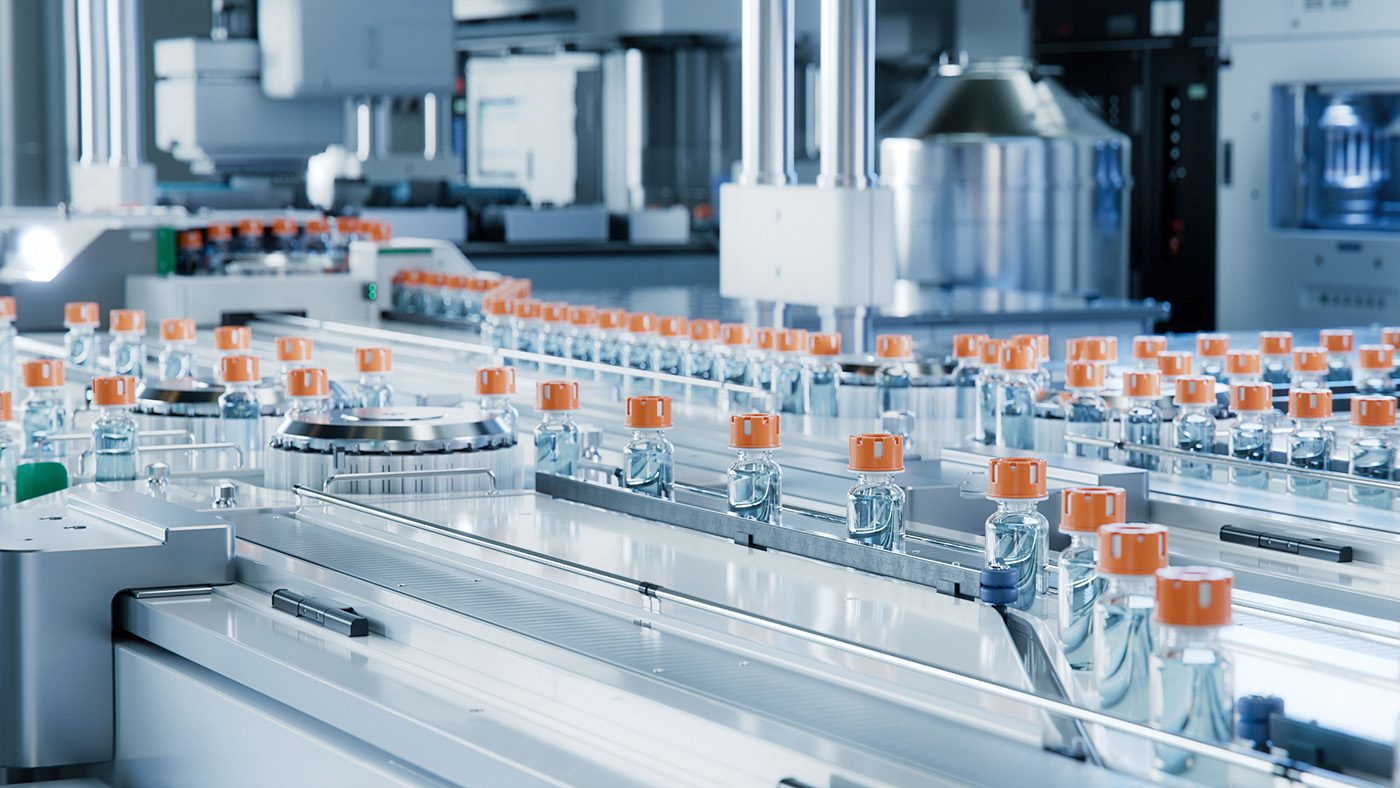
AI could help cell and gene therapy manufacturers gain a deeper understanding of the complex production processes used to make their products and predict problems before they occur.
A team led by researchers at Northeastern University College of Science in Boston made the case for AI use in a recent paper, arguing that the variability inherent in cell and gene therapy production can be difficult to manage using conventional tech.
Lead author, Jared Auclair, PhD, dean of the College of Professional Studies at Northeastern, tells GEN, “Unlike monoclonal antibodies or recombinant proteins, cell and gene therapies are living or highly complex biological products, making them inherently more variable and difficult to manufacture consistently.
“Every step, from sourcing starting material to manufacturing, analytical testing, storage, and delivery, can influence the final product,” he adds.
Understanding complex, multi-parameter interactions is exactly the sort of challenge at which AI excels, Auclair says, citing the ability to identify critical process attributes as an example.
“AI has the potential to transform cell and gene therapy manufacturing by moving from reactive to predictive manufacturing. Machine learning can optimize process parameters, predict batch failures before they occur, enable digital twins to simulate manufacturing changes, and strengthen quality control through real-time monitoring and anomaly detection,” he adds.
“At Northeastern, our research at the intersection of the Bioanalytical Training Laboratory (BATL), the Center for Bioinnovation and Regulatory Sciences, and AI is exploring how AI can accelerate the development, manufacturing, and regulation of advanced therapies,” Auclair says.
Not plug-and-play
AI’s potential to spot patterns in data is attractive.
However, biopharmaceutical companies looking to adopt the technology are likely to encounter challenges, according to Auclair, who cautions that setting up an AI-driven manufacturing operation is about more than simply buying the right software.
“The technology is advancing rapidly, but successful implementation depends on having high-quality, well-curated data, digital manufacturing infrastructure, and multidisciplinary expertise spanning biology, engineering, data science, and regulatory science.
“AI is not a plug-and-play solution; organizations must build integrated data ecosystems and governance frameworks that regulators can trust,” Auclair says.
AI adoption is a multidisciplinary challenge and should involve people with expertise in all parts of drug development and production, according to study co-author Rominder Singh, PhD, professor of practice, regulatory sciences, & AI at Northeastern.
“Research conducted through the BATL and the Center for Bioinnovation, led by Professor Auclair, has focused on addressing many of these scientific and manufacturing challenges that are unique to advanced therapies.
“This is precisely why Northeastern’s pioneering work in RegSciAI is so important: it brings together regulatory science and AI to ensure these technologies are both innovative and deployable in real-world biomanufacturing,” Singh says.
The post AI Could Give CGT Sector Deeper Manufacturing Insights and Greater Control appeared first on GEN - Genetic Engineering and Biotechnology News.
Apa Reaksi Anda?
 Suka
0
Suka
0
 Kurang Suka
0
Kurang Suka
0
 Setuju
0
Setuju
0
 Tidak Setuju
0
Tidak Setuju
0
 Bagus
0
Bagus
0
 Berguna
0
Berguna
0
 Hebat
0
Hebat
0