











































%20and%20Batch%20Production%20Records%20(BPR).png)




















CAR T Manufacturing Innovation Expands Patient Access

As the next generation of CAR T therapies moves closer to broader commercialization, industry leaders say the future will depend less on choosing between ex vivo and in vivo approaches and more on advancing both in parallel. Improvements in manufacturing, automation, and vector engineering are expected to expand patient access while addressing long-standing challenges around scalability, cost, and consistency.
Speaking to GEN, experts from VIVEbiotech, Terumo Blood and Cell Technologies, and Bracco describe an industry transitioning from demonstrating scientific feasibility to building robust manufacturing systems capable of delivering life-changing therapies to many more patients.
Parallel paths for CAR T innovation
“Ex vivo CAR T therapies will continue to play a critical role, while in vivo approaches are rapidly advancing and have the potential to broaden patient access by simplifying treatment pathways,” Natalia Elizalde, PhD, chief business development officer at VIVEbiotech, says.
Rather than viewing the two technologies as competitors, she expects them to develop side by side, each serving different clinical and operational needs. According to Elizalde, the industry’s priorities are shifting beyond proof-of-concept toward making therapies more widely available and economically sustainable.
She identifies advances in lentiviral vector engineering and targeted delivery technologies as major drivers of future progress. Improvements in manufacturing scalability and process robustness will also be crucial as commercial demand grows.
“The future of CAR T will not be defined by a single technological approach,” Elizalde says. “It will be defined by the ability of different platforms to address unmet patient needs while improving scalability, accessibility, and sustainability.”
Automation tackles manufacturing variability
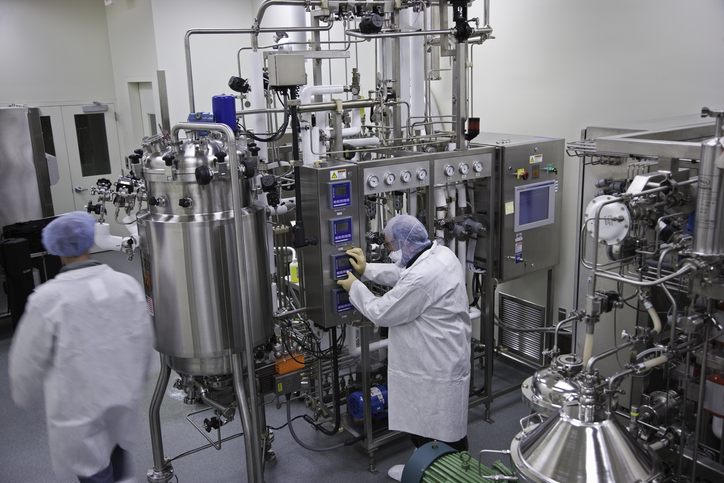
While scientific innovation continues, manufacturing remains one of the biggest barriers to broader adoption. According to Wenyan Leong, PhD, director, APAC commercial, cell and gene therapies at Terumo Blood and Cell Technologies, the greatest challenge in ex vivo CAR T production is not any individual manufacturing step but the cumulative variability created throughout the workflow.
“Every manual intervention, open manipulation, operator-dependent activity, and process handoff introduces opportunities for variability, deviation, and operational complexity,” Leong says.
That variability extends from cell collection through processing, expansion, quality control, and final-product release. As manufacturers scale production, maintaining consistent product quality becomes increasingly difficult and expensive.
Leong believes automation offers a practical solution, although implementation should be tailored to each developer’s manufacturing strategy rather than applied universally.
“A useful framework is to automate where risk is highest, where variability has the greatest impact on product quality, and where scaling creates the most operational burden,” she explains.
For many manufacturers, cell expansion represents the most logical place to automate because it is labor-intensive, highly dependent on operator expertise, and difficult to reproduce consistently across multiple sites. By reducing manual processes and simplifying operations, manufacturers can lower costs while improving reproducibility and expanding patient access, Leong says.
Integrated manufacturing supports industrialization
Sophie He, PhD, vice president, cell therapy at Bracco, points to additional manufacturing bottlenecks that continue to slow commercialization. For example, she says ex vivo CAR T manufacturing must overcome complex supply chains, logistical challenges, and significant analytical demands that increase both timelines and production costs.
“In autologous manufacturing, patient-to-patient variability and poor starting-cell quality lead to inconsistent transfection and expansion,” He says. “In allogeneic approaches, the priority is obtaining highly pure starting material before stem cell differentiation into T cells.”
He also highlights fragmented cell selection and activation workflows as major contributors to cellular stress, inconsistent yields, and reduced product quality across both therapy modalities.
“Integrating multiple processing steps, such as cell selection and activation, into a single closed, continuous workflow reduces handling, washing, production time, and cost while improving cell viability and consistency,” He says.
According to He, combining workflow integration with automation and flexible manufacturing models, including point-of-care production, will enable reliable, high-throughput, and cost-effective CAR T manufacturing.
Taken together, these experts see the future of CAR T therapies resting on a combination of scientific advances and manufacturing innovation. As vector technologies mature and automated production becomes more sophisticated, both ex vivo and in vivo approaches are expected to complement one another, creating a more scalable and accessible ecosystem capable of bringing advanced cell therapies to far more patients.
The post CAR T Manufacturing Innovation Expands Patient Access appeared first on GEN - Genetic Engineering and Biotechnology News.
Apa Reaksi Anda?
 Suka
0
Suka
0
 Kurang Suka
0
Kurang Suka
0
 Setuju
0
Setuju
0
 Tidak Setuju
0
Tidak Setuju
0
 Bagus
0
Bagus
0
 Berguna
0
Berguna
0
 Hebat
0
Hebat
0