



















































%20and%20Batch%20Production%20Records%20(BPR).png)














Cutting Costs in Serum-Free FGF2 Processing With Recycled Media
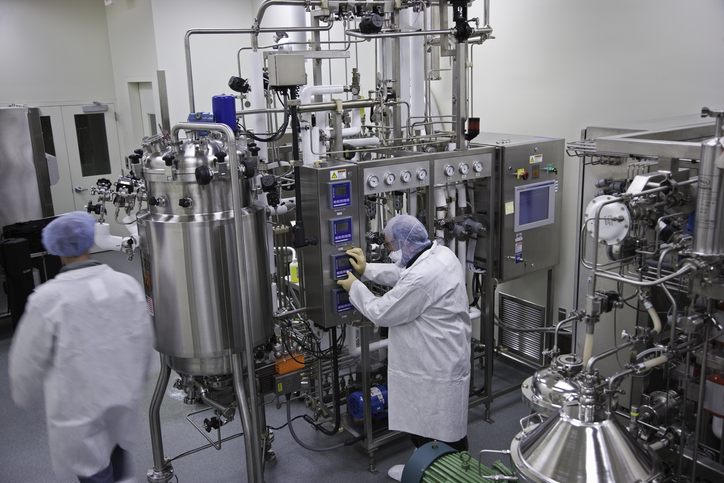
Producing fibroblast growth factor 2 (FGF2) using fortified spent cell culture media from Lactococcus lactis can cut the costs of serum-free cell culture media while maintaining high production titers, according to recent research from Singapore’s Agency for Science, Technology and Research (A*STAR). This approach helps overcome some of the barriers associated with serum-free media and eventually may even eliminate the need for the vast quantities of fetal bovine serum used today.
“This project establishes a high-value circular manufacturing framework by capturing nutrient-rich spent media side-streams generated during biopharmaceutical cell culture and repurposing them as low-cost feedstock for precision microbial fermentation,” Dave Ow, PhD, a principal scientist and group leader, microbial cell bioprocessing at Bioprocessing Technology Institute (BTI), A*STAR, tells GEN.
The Singaporean team led by Ow and Prashant Mainali, PhD, a bioprocess scientist and researcher at the BTI, A*STAR, chose L. lactis as the production cell because it has a doubling time of 35−60 minutes and can secrete recombinant proteins, thus minimizing downstream purification steps. Because the spent fermentation media still contains nutrients, reusing and fortifying it lowers the cost of formulating fresh media, thereby enhancing productivity and lowering FGF2’s cost per gram.
For further gains, the team adapted this approach for a continuing manufacturing process for both intracellular production and secretion of FGF2, optimizing process conditions and integrating that model with downstream purification. Using it, they achieved 16 mg/L titers for intracellular forms and 396 µg/L titers for secreted forms of FGF2. Optimal conditions, they report, are 10 g/L glucose, 35°C cultivation temperature, and 100 ng/mL nisin.
Optimization focused around glucose concentration, temperature, and nisin concentration. “The interaction between glucose concentration and temperature was statistically significant,” they note. The glucose/nisin interaction was not. Increasing dilution rates increased FGF2 production to a point, after which washout occurred. Therefore, balancing the tradeoffs—for example, minimizing nutrient loss or maximizing FGF2 concentration or total output—is critical.
The scientists used a chemostat process, which enables continuous bioprocessing under steady-state culture conditions, to simulate process outcomes under varying conditions. The results, they report, “captured overall trends…[and] accurately predict the final concentrations of cells, glucose, lactate, and total intracellular FGF2 at the end of the chemostat run.” It underpredicts FGF2 concentrations, however.
Then they added depth filtration and crossflow filtration to the chemostat process, mimicking typical purification steps used in Escherichia coli, showing that such integration and streamlining is feasible. The FGF2 from this process was used without further purification to supplement cell cultures. When applied to a culture of Anguilla japonica (Japanese eel) cells, “Their growth was comparable to cells cultured with commercially available FGF2 and FBS-supplemented media,” Mainali and colleagues note.
“Our findings demonstrate that fortified spent cell culture media can support the growth of L. lactis and the secretion of FGF2,” Ow, Mainali, and colleagues conclude. Secretion simplified downstream purification, and the reuse of spent media is both cost-effective and environmentally sound, “potentially lower[ing] the cost of FGF2”…and “helping to overcome one of the principal economic barriers to serum-free media.”
Already, Ow says, “There is interest from biopharma manufacturers to potentially use this approach to upcycle spent media for their cell culture production processes to reduce media waste toward a more sustainable biomanufacturing future.”
The post Cutting Costs in Serum-Free FGF2 Processing With Recycled Media appeared first on GEN - Genetic Engineering and Biotechnology News.
Apa Reaksi Anda?
 Suka
0
Suka
0
 Kurang Suka
0
Kurang Suka
0
 Setuju
0
Setuju
0
 Tidak Setuju
0
Tidak Setuju
0
 Bagus
0
Bagus
0
 Berguna
0
Berguna
0
 Hebat
0
Hebat
0