






















































%20and%20Batch%20Production%20Records%20(BPR).png)
















Digital platform to improve musculoskeletal care and reduce wait times

Musculoskeletal (MSK) conditions are among the most common reasons people seek medical care and a major contributor to long waits to see specialists. To improve how patients with MSK conditions are referred and assessed, the McGill University Health Centre (MUHC) is launching CareChain, a digital platform developed by MultiCIM Technologies Inc. that helps physiotherapists perform advanced assessments and determine which patients may need to see a surgeon, helping ensure people get the right care sooner.
“Improving access starts with getting patients to the right pathway earlier,” said Dr. Alan Forster, Director of Innovation, Transformation and Clinical Performance at the MUHC. “CareChain supports a more consistent and coordinated approach to MSK triage—helping our teams prioritize appropriately and reduce delays for patients who need timely specialist care.”
In many cases, patients wait months for an assessment, only to learn they do not need surgery and could have started other treatments much earlier. These delays can prolong pain and disability, lead to unnecessary repeat visits and tests, and place additional pressure on already limited specialist resources.
CareChain helps physiotherapists carry out advanced assessments and determine which patients may need surgery. The platform guides clinicians through a structured process to collect the right information, support consistent decision-making and quickly refer patients to a specialist when surgery may be needed.
By supporting earlier assessments and better referral information, CareChain aims to help the MUHC reduce wait times for specialists, connect patients to the right treatment sooner, avoid unnecessary visits and tests, and improve coordination between care teams.
The MUHC will monitor how CareChain performs over time by tracking factors such as triage decisions, patient pathways, wait times and how efficiently resources are used, using existing clinical and administrative data.
The initiative is supported through OBIO’s Early Adopter Health Network (EAHN®), a program that connects healthcare organizations with innovative Canadian companies to test and evaluate new technologies in real clinical settings. Through this collaboration, the MUHC will assess the impact of CareChain on patient access, wait times and care coordination, helping generate evidence to inform broader adoption.
Risk of congenital anomalies higher in babies born to mothers with endometriosis
For babies born to people with endometriosis, there is a small but significant increased risk of congenital anomalies, often called birth defects, according to new research in CMAJ (Canadian Medical Association Journal).
VIEW EMBARGOED ARTICLE
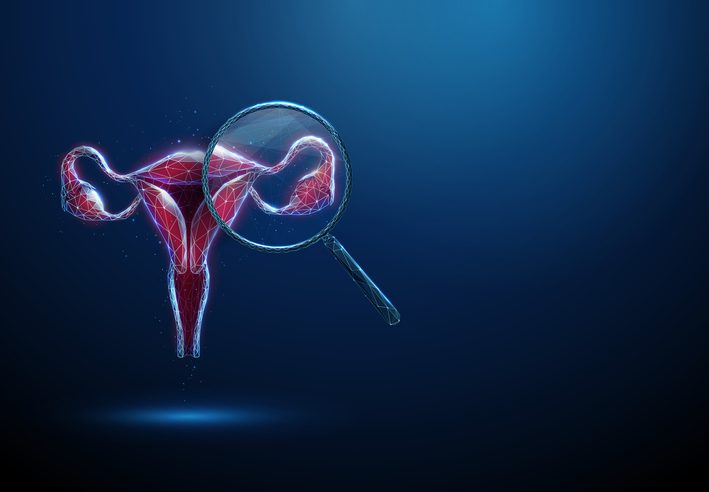
Endometriosis is an often-painful chronic inflammatory condition where endometrial-like tissue grows outside the uterus. It affects 1 in 10 females of reproductive age and can affect fertility.
The study included data from ICES on more than 1.4 million births in Ontario, of which 33 619 were infants of patients with endometriosis. A total of 2120 (6.3%) infants with any type of congenital anomaly were born to a patient with endometriosis compared with 77 094 (5.4%) born to people without the condition.
Endometriosis was associated with an increased risk of cardiovascular, gastrointestinal, genital, and musculoskeletal anomalies as well as neoplasms and tumours, which could be only partially attributed to fertility treatment.
The authors note that the risk is still small.
“Although we observed modest relative increases in risk, the absolute risk of congenital anomalies for infants born to patients with endometriosis remained low, because congenital anomalies are uncommon,” writes Bailey Milne, Queen’s University, Kingston, Ontario, with coauthors.
A practice article published in the same issue of CMAJ describes a patient with chronic endometriosis that caused severe organ damage. The editorial calls for a community-of-practice model for endometriosis care, with support for primary care physicians to diagnose and manage uncomplicated cases.
“Addressing these challenges requires a fundamental shift toward coordinated, evidence-based, and patient-centred care,” the authors write.
For clinical guidance on endometriosis, CMAJ published a review article, Diagnosis and management of endometriosis, in 2023.
“Risk of congenital anomalies among infants of patients with endometriosis: a population-based cohort study,” “Renal atrophy, bowel obstruction, and sciatic nerve impingement secondary to deep endometriosis,” and “Often delayed and fractured, endometriosis care needs an overhaul” were published May 11, 2026.
The post Digital platform to improve musculoskeletal care and reduce wait times appeared first on Hospital News.
Apa Reaksi Anda?
 Suka
0
Suka
0
 Kurang Suka
0
Kurang Suka
0
 Setuju
0
Setuju
0
 Tidak Setuju
0
Tidak Setuju
0
 Bagus
0
Bagus
0
 Berguna
0
Berguna
0
 Hebat
0
Hebat
0