















































%20and%20Batch%20Production%20Records%20(BPR).png)













Drug Product Loss: Understanding Yield
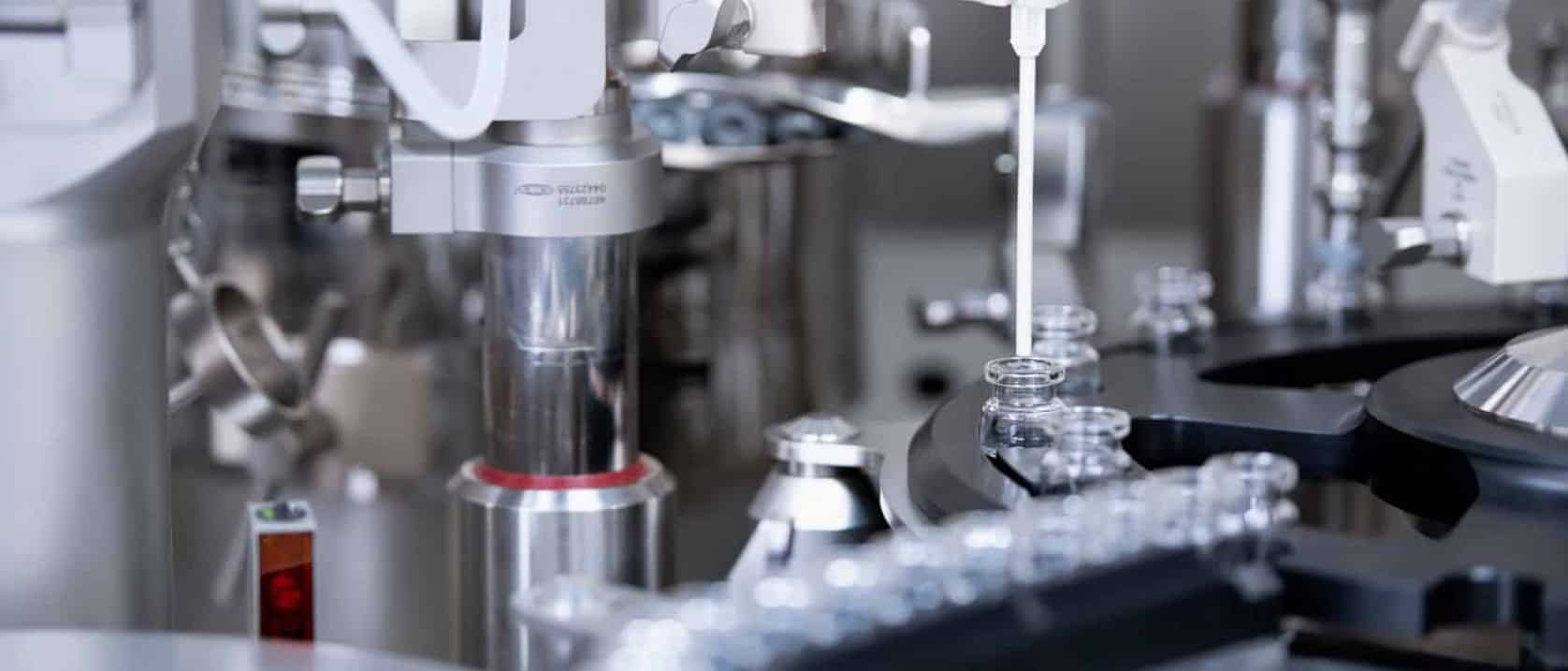
How much drug product loss should you expect in fill-finish?
Drug product loss is unavoidable in aseptic fill-finish, with key loss points across formulation, filtration, filling, and inspection. In this article, we highlight where loss occurs and what is typically expected for a 5 L batch with a 1 mL fill volume.
Formulation & Compounding
Loss begins during formulation due to product adhering to vessel surfaces and fluid contact components (e.g., tubing, connectors). This is more pronounced in glass vessels, where product must be siphoned rather than drained from the bottom (as with single-use systems).
Sampling also contributes to loss. Some formulations will require in-process testing, including some that inform formulation and allow them to make corrections to achieve the target profile of the drug.
For a visual overview of where loss occurs across the process, view our infographic: Where drug product is lost in fill-finish
Sterile Filtration
Sterile filtration is typically the largest source of unrecoverable drug product loss. Filter holdup—product trapped within the filter after processing—is inherent and worsened if filters are oversized.
Additional loss occurs in tubing (referred to as line loss) especially between sterile filters in dual-filter assemblies. Since most filter assemblies use two filters, line loss is often the greatest in sterile filtration even if less tubing is used in sterile filtration compared to sterile filling.
Sterile Filling
Several losses occur during filling. The first is line priming, which takes place before filling begins. During this step, product is pumped through the sterile filling assembly —the tubing connecting the bulk solution to each fill needle—to ensure the system is fully filled with product and a designated volume is collected from each fill needle that is ultimately discarded.
Another significant source of drug product loss, depending on the CDMO, is destructive weight checks. Throughout fill-finish, dispensed volumes must be verified to ensure they meet target specifications. With non-destructive weight checks, the container is weighed before and after filling, and the difference is used to calculate fill volume. However, if this capability is not built into the filling line, operators will typically remove a filled unit every 50 to 100 containers, weigh it, empty it, and weigh it again to perform the same calculation. This process destroys the unit and contributes directly to product loss.
If fill volume rejects do occur, they are removed from the batch unless they can be rescue dosed (a process discussed in our whitepaper). While this is typically rare due to frequent in-process checks and pump adjustments, any rejected units still contribute to overall drug product loss.
Finally, end-of-line emptying is another source of loss. Filling typically stops once air reaches the pump, as this leads to inconsistent fill volumes. Any remaining product downstream of the pump is typically dispensed into a container and discarded, contributing to product loss. This loss is compounded for each additional fill needle used.
Visual Inspection
100% visual inspection follows filling, and even the most precise, high-quality CDMOs will experience visual inspection rejects in every batch. An average reject rate in the industry is around 2%.
Below we detail typical drug product loss (based on our professional opinion) for a 5 L batch of a low-viscosity product is filled into 2R vials at a 1 mL fill volume.
| Process Step | Loss Location | Baseline | Optimized |
| Formulation & Compounding | Product adhering to vessel & components | 80 mL | 15 mL |
| Sampling | 30 mL | 5 mL | |
| Sterile Filtration | Filter holdup | 50 mL | 10 mL |
| Line Loss | 40 mL | 20 mL | |
| Sterile Filling | Line prime | 20 mL | 0 mL |
| Weight checks | 100 mL | 0 mL | |
| End of fill emptying | 80 mL | <1 mL | |
| Visual Inspection | Visual inspection rejects | 100 mL
(2% reject rate) |
50 mL
(1% reject rate) |
| Total volume loss: | 500 mL | 100 mL | |
| Total units lost: | 500 vials | 100 vials | |
| % Yield | 90% | 98% |
Table 1: Product Loss by Fill-Finish Step: Baseline vs. Optimized Process
Loss accumulates across each step, but optimization can make a significant difference. As you can see in Table 1, optimizing performance at each stage can help recover an additional 400 units from a 5 L batch.
While product loss is inherent to fill-finish, it can be minimized through thoughtful process design, proper equipment selection, and advanced technologies. To learn how to reduce loss and achieve up to 99% theoretical yield, explore our whitepaper.
Apa Reaksi Anda?
 Suka
0
Suka
0
 Kurang Suka
0
Kurang Suka
0
 Setuju
0
Setuju
0
 Tidak Setuju
0
Tidak Setuju
0
 Bagus
0
Bagus
0
 Berguna
0
Berguna
0
 Hebat
0
Hebat
0