










































%20and%20Batch%20Production%20Records%20(BPR).png)














Cystic Fibrosis Awareness Month: A patient advocate’s story
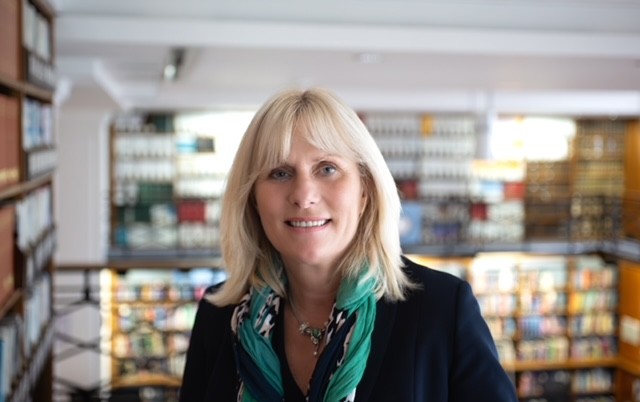
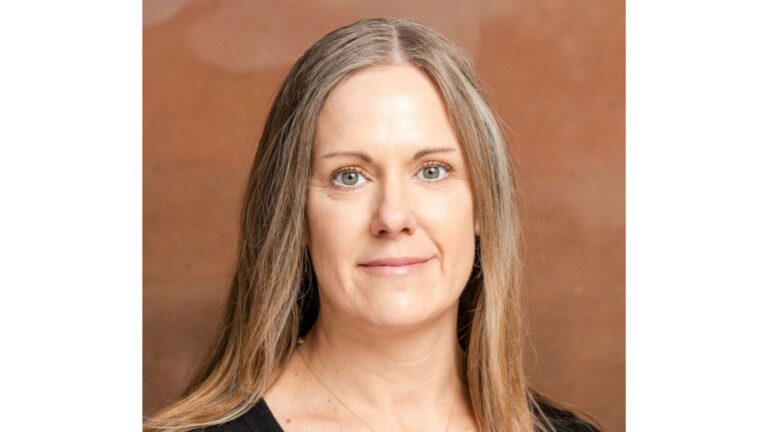
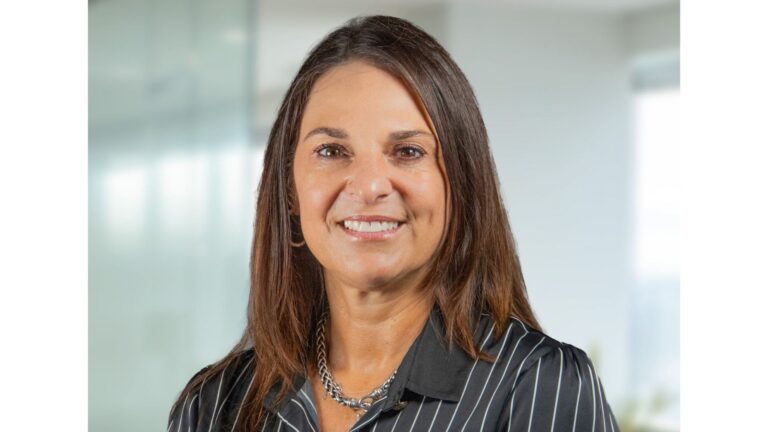
Laura Bonnell always knew she wanted to be a news reporter.
And throughout her entire career she was always on the hunt for answers. Little did she know, her investigative skills would have another use—as she navigated life as a mother to two daughters with cystic fibrosis (CF).
May is both Cystic Fibrosis Awareness Month and Women’s Health Month. In observance of both campaigns, Bio.News sat down with Laura Bonnell, mother, patient advocate, and founder of the Bonnell Foundation: Living with Cystic Fibrosis, to discuss her experiences as a caregiver and advocate, and what more still needs to be done.
Something is not right: Diagnosing CF
“When Molly was born,” Bonnell recalled, “her pediatrician did not diagnose her. It was me saying, Something’s not right.”
Initially, Bonnell’s pediatrician told Laura to go back to work, that she was an over-concerned full-time mom, but Bonnell couldn’t ignore the signs. Salty skin, greasy poop, distended stomach, failure to thrive, sinus issues—these were not the normal signs of a healthy baby.
CF is a genetic disease that causes chronic and fatal lung infections, and interferes with digestion and every organ. The current life expectancy is about 56 years old. That’s a huge increase since Laura’s daughters were born in 1994 and 1997. Their life expectancy was 19 years old, which they have outlived. CF impacts about 40,000 people in the U.S. but that number is most likely low as many patients, in particular people of color, are underdiagnosed.
Bonnell insisted Molly get tested. When the results came back positive, Bonnell was not surprised.
Bonnell’s second daughter Emily was also born two and a half years later with CF. There is a one in four chance (or 25 percent) with each pregnancy that your child will have CF, if you’re a carrier. In 1989 scientists discovered the gene that causes CF through the Genome Project.
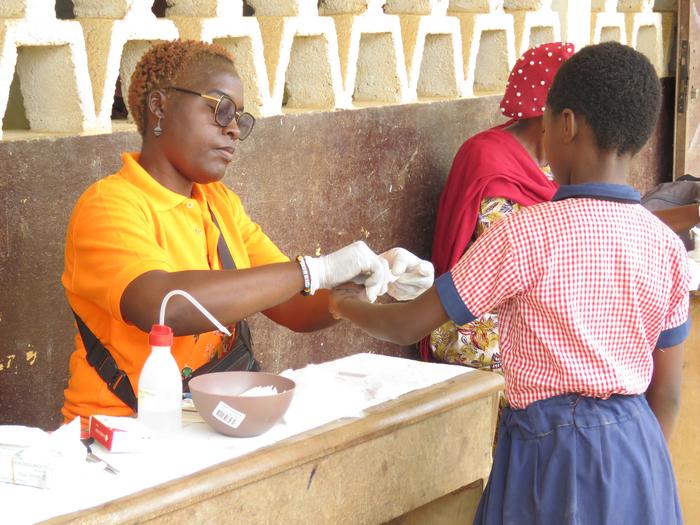
When the Bonnell girls were diagnosed the sweat chloride test was the standard, and it still is today. The test measures the amount of salt produced on the skin during the test. If a patient tests 60 mmol/L or higher, then they have CF. Early diagnosis is important because it directly correlates to life expectancy, the sooner CF patients get on the proper medications, usually, the healthier they will be.
“My husband Joe and I diagnosed Molly within three months of being born, but for some people it could be years,” Bonnell said. “The delay in diagnosis usually impacts the patients’ health and life expectancy negatively because medications don’t begin early enough.”
Motherhood and CF advocacy
The first pilot newborn screening programs for CF began in the early 1980s, and the screening process was dramatically improved in the 1990s by the inclusion of genetic tests that reduced false-positive results. The Centers for Disease Control and Prevention recommended universal screening for CF in 2004, but adoption still took a number of years.
“I started advocating that CF be on the newborn screening panel almost immediately because University of Michigan pediatric pulmonologist Dr. Samya Nasr reached out to me,” Bonnell said. “In 2007, CF was finally added to newborn screening in my home state of Michigan.”
Even though CF was included on the newborn screening panel in Michigan, Bonnell recognized the persistent challenges across the country.
“There are more than 2,000 CF variants,” Bonnell explained. “If you’re testing for the more common variants, it tends to be white people. People of color generally have rare variants that often aren’t tested for in newborn screening which is part of the reason for late diagnosis. Michigan does a great job compared to other states—the fact that there is no consistency state by state, makes me crazy; your access to testing depends where you’re born. Last I checked, Mississippi tested for four different variants out of some 2,000, and Michigan tested for 66.”
Ensuring newborns were screened for CF was just the start for Bonnell.
Experiencing the challenges of navigating insurance claims, new treatment options, clinical trials, everything firsthand, soon led Bonnell to create the Bonnell Foundation. CF advocacy grew beyond a mother advocating for her daughters; it became a family affair—and a life mission. And yet again, Bonnell’s journalism background was a potent tool in her advocacy toolbelt.
This came into sharp focus when Bonnell took her grown daughter Emily to Michigan’s Medicaid board as they decided whether or not to cover a new CF treatment.
“It wasn’t a drug Emily was ever going to be on; it didn’t work for her CF variant, but we went to the Medicaid review board anyway so she could see how the system worked,” Bonnell recalled. “The room was packed. Doctors making the decision about whether or not to pay for the drug were not even facing the audience. They sat with their backs to the room at a U-shaped table. There was not one doctor on the board with any CF knowledge. I had hoped my daughter would witness the beauty of public advocacy and a Board that listened, but we were all disappointed.”
Instead, Bonnell recalls Emily crying silently next to her as they listened to the board talk about CF patients as if they were little more than statistics.
“We heard the board saying, Well, if they don’t take this medication, can we take it away from them?” Bonnell recalled. “It was the sickest, saddest thing I’ve witnessed. You’re talking about people’s lives and life-changing medication.”
At the time of the hearing, Bonnell was working as a news reporter at WWJ Newsradio in Detroit. She asked her news director if he thought it was a legitimate story. When he said yes, Bonnell went back as a news reporter and asked the Board representative why they would not pay for this CF medication.
“I truly believe the only reason the Board agreed to pay for the medication was because of all the media attention the hearing received. They felt pressure to pass it.”
Who cares for the caregiver?
Despite Bonnell’s tenacity, the strain of motherhood and caregiving for two children with a chronic disease had taken its toll. And when it comes to the impact on caregivers for CF patients, Bonnell’s experience was unique to the space.
“When Molly and Emily were diagnosed, we were told they must be on a high fat diet because people with CF only digest about half the protein and fat they eat,” Bonnell explained. “We were told to throw butter in everything. And Joe and I were eating the same food. I gained a lot of weight over the years, partly because of the high fat foods, and partly because food was my drug to deal with every emotion.”
It wasn’t until both Molly and Emily had grown that Bonnell started prioritizing herself.
Spurred on by the onset of COVID, Bonnell began her journey to good health. “It seemed that overweight people were dying from COVID, and that scared me enough to start my weight loss.” Bonnell said.
After three years of work, Bonnell lost more than 100 pounds and could recognize herself again.
Bonnell says she wishes she would have asked for help, or got into mental health therapy sooner, and recommends this to parents with newly diagnosed kids.
“Surround yourself with friends you can talk to and other CF parents who can relate,” she said.
This is especially important given the fact that many caregivers are doing a full-time, highly specialized job for free—and then going on to work another, money-making job on top of that. So when it comes to CF caregiving, advocacy, and anything in between, Bonnell reminds that the old adage It takes a village, is important to remember.
When asked what she wanted those outside of the CF community to know, Bonnell responded, “I think it is just to remember to have some basic human compassion. You never know what someone is going through at the grocery store. They could have the weight of the world on their shoulders.”
Luckily, the Bonnell Foundation also facilitates a number of ways to get involved, from advocacy to grantmaking to education and beyond. If you are interested in learning more, visit: https://thebonnellfoundation.org/
The post Cystic Fibrosis Awareness Month: A patient advocate’s story appeared first on Bio.News.
Apa Reaksi Anda?
 Suka
0
Suka
0
 Kurang Suka
0
Kurang Suka
0
 Setuju
0
Setuju
0
 Tidak Setuju
0
Tidak Setuju
0
 Bagus
0
Bagus
0
 Berguna
0
Berguna
0
 Hebat
0
Hebat
0