





































%20and%20Batch%20Production%20Records%20(BPR).png)












Endocrine Pathway Trailblazer: Q&A with Katrin Svensson, PhD
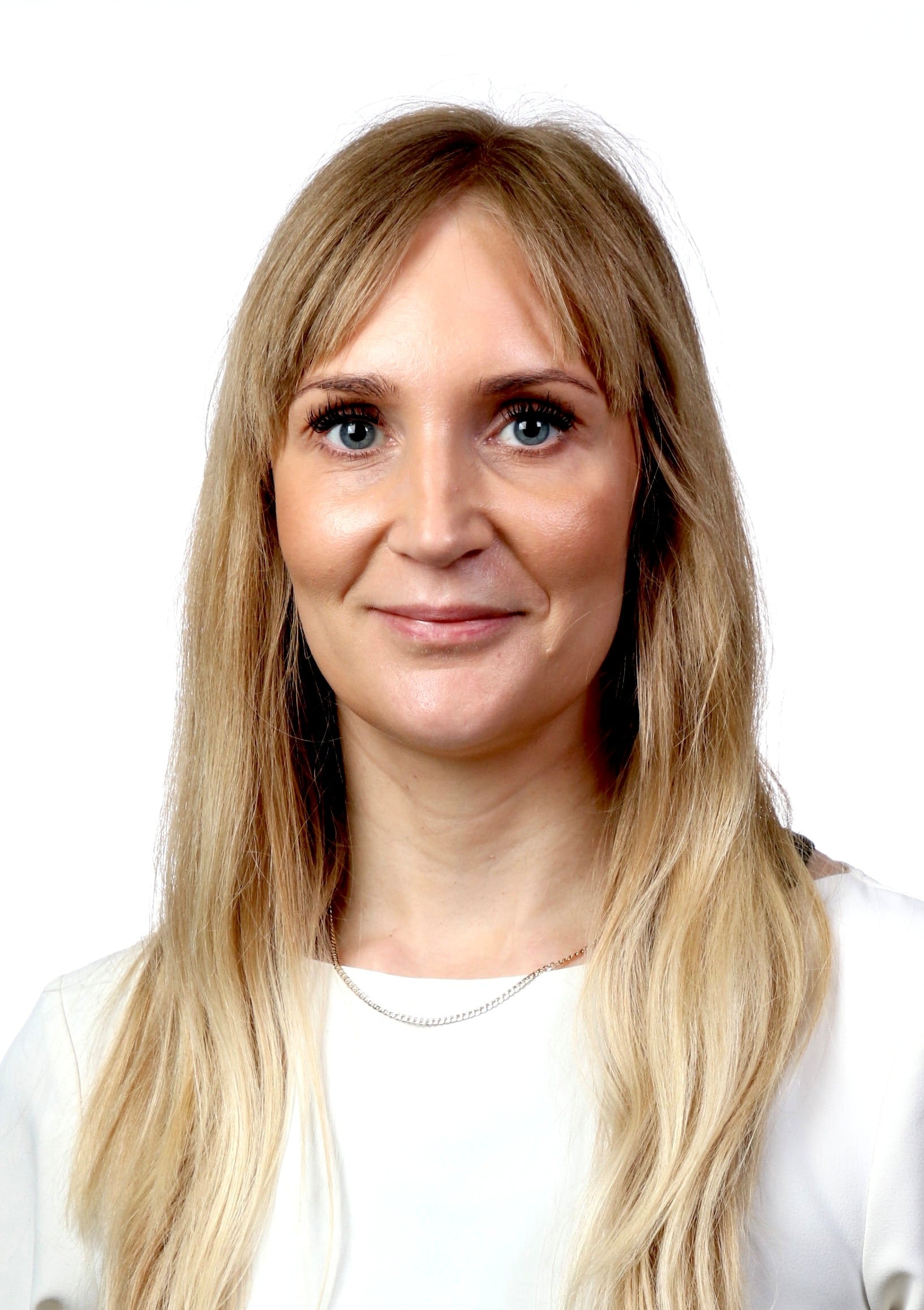
The Endocrine Society’s 2026 Laureate Richard E. Weitzman Outstanding Early Career Investigator Award recipient, Katrin Svensson, PhD, talks to Endocrine News about her research, her mentor’s influence, her advice to young investigators, and why she feels there’s so much more to be discovered in endocrine signaling pathways.
Every second, cells throughout the body are sending signals that help regulate hunger, energy use, and blood sugar. Understanding those hidden conversations has become the life’s work of Katrin Svensson, PhD, whose research is opening new doors in the fight against obesity and diabetes.
The Endocrine Society recognized Svensson as one of its 2026 Laureates, honoring her with the Richard E. Weitzman Outstanding Early-Career Investigator Award. The annual award recognizes an exceptionally promising young clinical or basic investigator whose work is poised to make a lasting impact on the field.
Svensson is an associate professor in the Department of Pathology at Stanford University, as well as the Metabolic Core Director and Affinity Group Leader at the Stanford Diabetes Research Center. She earned both her MS and PhD from Sweden’s Lund University and completed her postdoctoral training at Harvard Medical School, before joining the Stanford faculty in 2018.
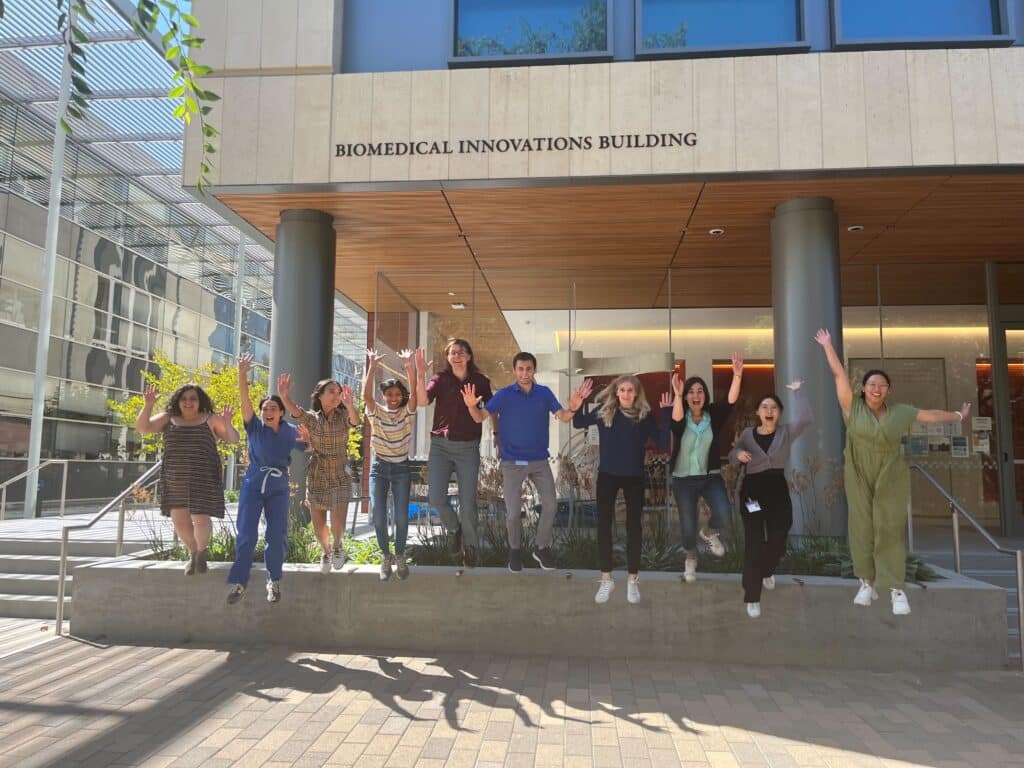
Her research focuses on how cells communicate to maintain metabolic homeostasis. Svensson’s laboratory discovered Isthmin-1, a secreted protein that regulates glucose uptake and lipid metabolism independently of insulin, as well as the non-incretin anti-obesity BRINP2-related peptide (BRP). Her group has also developed computational methods to predict new peptides and ligand-receptor pairs, advancing the discovery of novel endocrine pathways. She has two patents licensed to Merrifield Therapeutics, a biotech startup company she co-founded that focuses on translating biological endocrinology discoveries into therapeutic targets for obesity and diabetes.
Svensson recently spoke with Endocrine News about the promise of intercellular communication research and what continues to drive her scientific curiosity.
Endocrine News: What did hearing the news of winning the Early Investigator Award mean to you?
Svensson: It’s really a tremendous honor because I’ve been working with the Endocrine Society for a long time and this award really recognizes the overall body of work rather than a single study. Since I started at Stanford, much of my work has focused on identifying endocrine signaling systems that were not previously identified, which requires pursuing biology that is poorly understood. It’s hard to get funding and it’s hard to get traction for this kind of work because of that. So, receiving this award is quite meaningful for me because it reflects the efforts of many trainees and collaborators, and it’s encouraging to see that the field really values curiosity-driven discovery and fundamental mechanistic science.
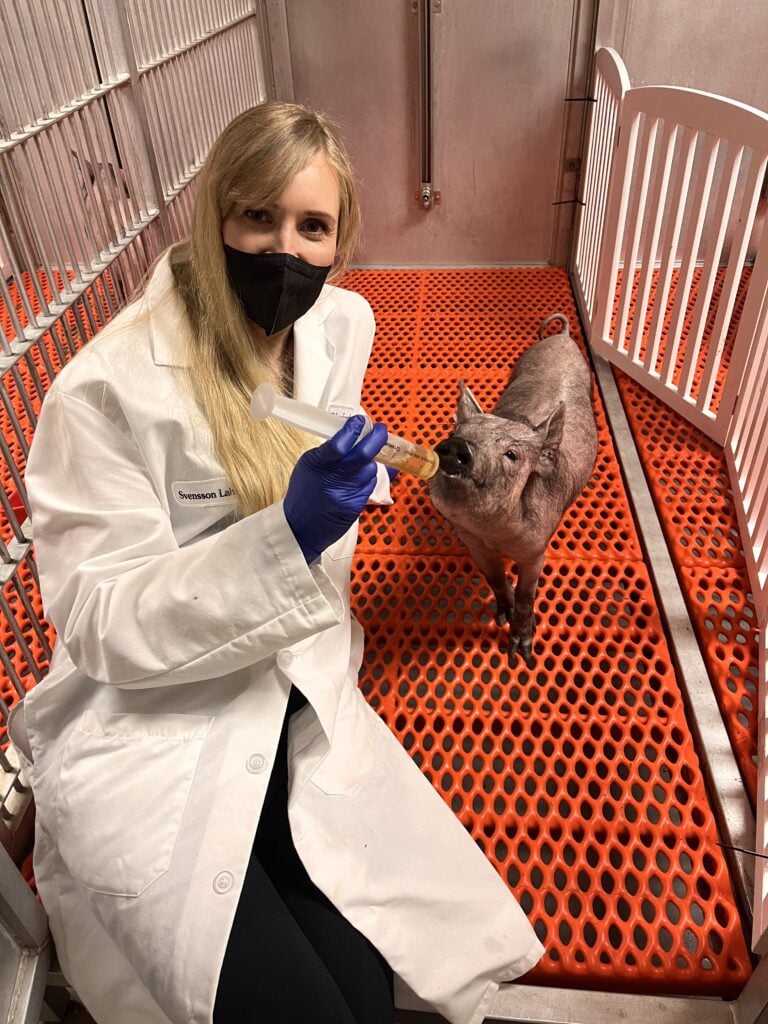
EN: Your research program is built around understanding how cells communicate with one another. What first sparked your fascination with the intercellular communication and metabolism?
Svensson: I have been studying cell communication in a tumor microenvironment since I started my PhD in 2007. So, I looked at angiogenesis and how cells are communicating within a tumor. That led me to be more interested in how these molecules are regulated physiologically within the body. Different organs are communicating with each other all the time and while much is known about the classic hormones, biology is full of secreted peptides, signaling molecules, and metabolites, where we know extremely little about their functions.
When I moved to my postdoc in 2013 at Harvard with Bruce Spiegelman, PhD, I was interested in understanding how these peptides and hormones regulate physiology across the entire body. So, I became interested in the idea that there are “hidden” endocrine systems that can regulate metabolism and feed inter-organ communication. Finding these pathways could fundamentally change how we think about disease and therapy and physiology in general.
EN: Looking back on your career so far, who has been the biggest influence on you as a scientist and a leader?
Svensson: I’ve been very supported by many, many people in my field as an early-career scientist, but I would say the biggest influence has been Bruce Spiegelman, my mentor as a postdoctoral fellow at Harvard. He really inspired me in thinking about novel biology and discovering something new. That is what I learned in his lab and that’s what I’ve continued to build on since then. I don’t think I could have done it if I hadn’t been in his lab.
EN: Now that you’ve received this Early Career Investigator Award, what do you think is the biggest scientific question that you’re hoping to answer in the next 10 years?
Svensson: I think that there’s a lot still to be discovered in endocrine signaling pathways. There are many peptides, not just the ones that we have identified. But the field, in general, has recognized peptide therapeutics with the GLPs and the different variants that are coming along now. It is now generally understood that peptides are useful for regulating many different types of physiological functions.
“You can organize, not just practically, but in your thinking. What is the most interesting and critical biological question? What are the critical experiments to answer those questions? Is this really what you need to do, or are you just doing it because you can? If you’re organized in your thinking, everything else will follow.” – Katrin Svensson, PhD, associate professor, Department of Pathology, Stanford University; Metabolic Core Director and Affinity Group Leader, Stanford Diabetes Research Center, Stanford, Calif.
We are really on a good path to understanding how they are physiologically regulated and how we can try to use them therapeutically to target various diseases. I think that there are many other types of endocrine system issues where these peptides could prove to be therapeutically useful.
EN: Looking at your lab website, I see you lead a very diverse team of postdocs, graduate students, and undergrads. What keeps you motivated when experiments fail or when progress comes more slowly than expected, and what do you impart to your team about this to keep them motivated as well?
Svensson: I talk with them a lot about this because our projects are so exploratory, and I think it’s important to be excited about discovering something genuinely new and be willing to pursue questions that are not fully validated by the field, and not being too focused on working on safe or already validated problems, although you know it’s going to work out.
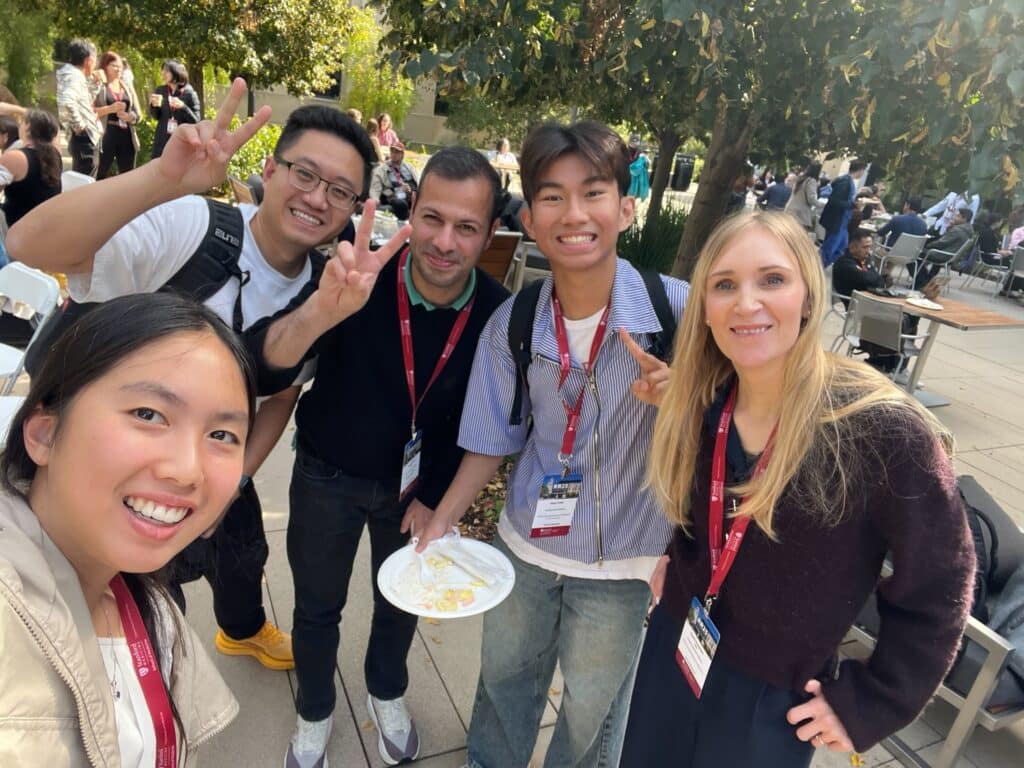
People have different interests, so the people who are joining my lab are very aware of this and they know that pursuing this exploratory project can really open new directions. I’ve been very fortunate to work with trainees and collaborators who are very dedicated, and we talk a lot about persistence, which is super important to keep following the path that you believe in without being stubborn.
Sometimes it works differently than you expect. So, follow the data honestly and be willing to adapt when the biology tells you something unexpected, which often happens, and just keep going. You know, there’s a lot of things to be found and if you follow the science, it’s going to be fun! It’s very fun and that is what I’m trying to instill in my trainees.
EN: Is there any advice you give your team that you wish someone had told you when you first started your lab?
Svensson: I’ve been very lucky to work with great trainees, and I would say there are pretty much two things. First, find people who are interested in the science and are dedicated and want to do this. You don’t need to have a huge lab, necessarily, in the beginning. You need a few trainees who are really dedicated in trying to solve the problems.
“Receiving this award is quite meaningful for me because it reflects the efforts of many trainees and collaborators, and it’s encouraging to see that the field really values curiosity-driven discovery and fundamental mechanistic science.” – Katrin Svensson, PhD, associate professor, Department of Pathology, Stanford University; Metabolic Core Director and Affinity Group Leader, Stanford Diabetes Research Center, Stanford, Calif.
The second thing, I think, is very boring, but it’s being organized. I think all these other things about what you need to do in your career and publishing and getting grants, all these things will follow if you have good ideas. You can design great experiments and then being organized is really the key to pretty much everything. We talk about this in the lab. You can organize, not just practically, but in your thinking. What is the most interesting and critical biological question? What are the critical experiments to answer those questions? Is this really what you need to do, or are you just doing it because you can? If you’re organized in your thinking, everything else will follow.
—Shaw is a freelance writer based in Carmel, Ind. She is a regular contributor to Endocrine News and writes the monthly Laboratory Notes column.

The post Endocrine Pathway Trailblazer: Q&A with Katrin Svensson, PhD appeared first on Endocrine News.
Apa Reaksi Anda?
 Suka
0
Suka
0
 Kurang Suka
0
Kurang Suka
0
 Setuju
0
Setuju
0
 Tidak Setuju
0
Tidak Setuju
0
 Bagus
0
Bagus
0
 Berguna
0
Berguna
0
 Hebat
0
Hebat
0