

































%20and%20Batch%20Production%20Records%20(BPR).png)







Five lessons for getting started in implant dentistry
For dentists getting started in implant dentistry, supervised clinical experience can teach what textbooks cannot – Patric Aria Saraby shares his insights.
When I enrolled on my implant master’s programme, I knew there would be a steep learning curve. However, nothing prepares you for placing multiple implants over consecutive days in a busy setting.
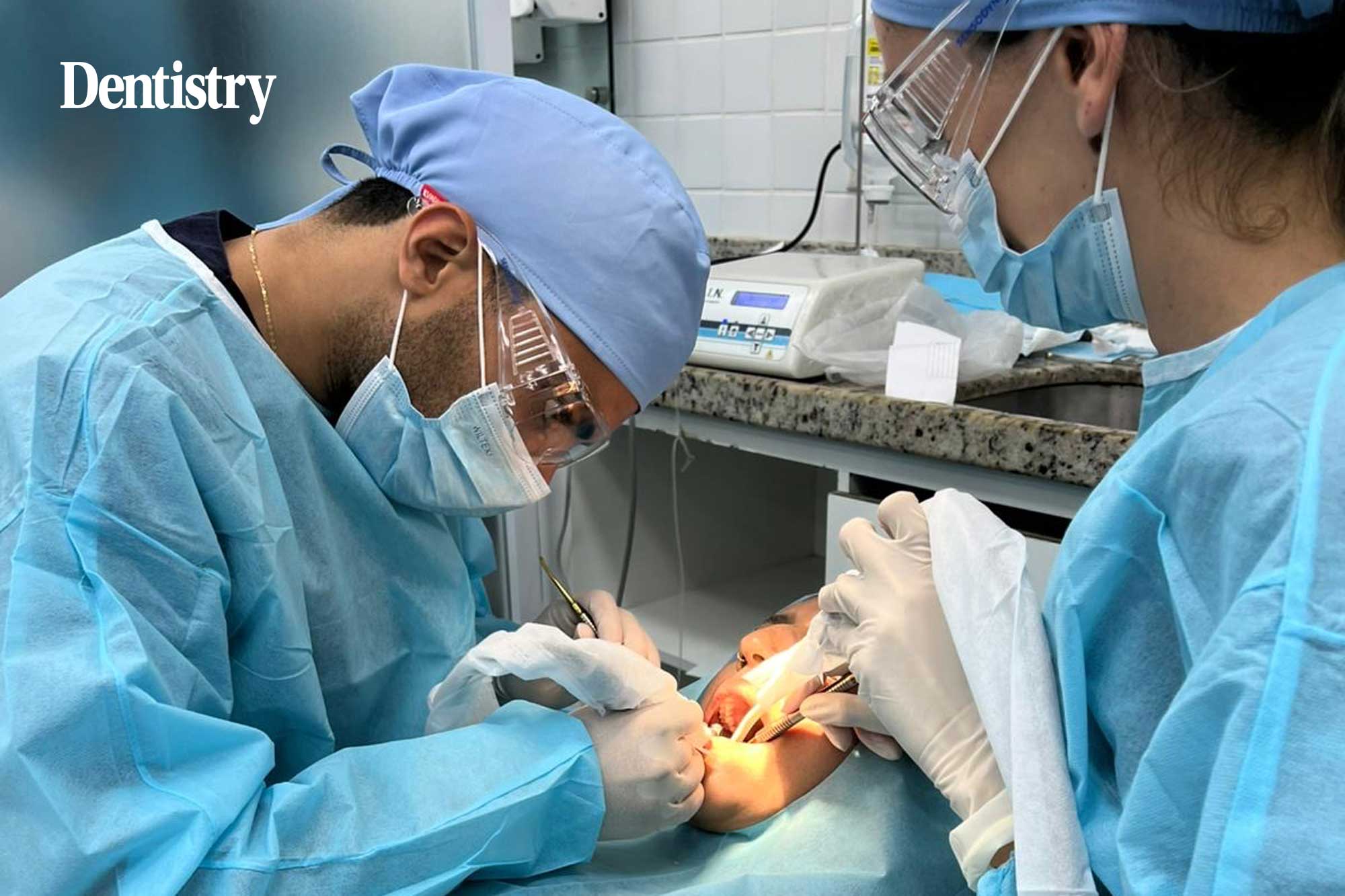
Earlier this year, I joined a dental mission in Fortaleza, Brazil, at ICEO, where I had the opportunity to place 20 implants under the supervision of experienced implant surgeons. Although I had spent countless hours studying CBCTs, drilling protocols and prosthetic principles, the clinical experience taught me lessons that textbooks simply cannot.
These are the five lessons that changed the way I think about implant dentistry.
1. Implant placement is far more about soft tissue than drilling bone
Before my first case, I was focused almost entirely on the osteotomy.
- Implant diameter
- Implant length
- Insertion torque
- Primary stability.
What surprised me was how much of the procedure depended on flap management.
A poorly reflected flap immediately reduces visibility, increases tension and makes every subsequent step more difficult. Conversely, a well-designed full-thickness flap with careful tissue handling transforms the surgery.
I quickly realised that experienced implant surgeons often appear ‘fast’ not because they drill quickly, but because they manage soft tissue exceptionally well.
The implant is only one part of the surgery, the flap determines how smoothly everything else proceeds.
2. Bone has a personality
On paper, drilling protocols look identical. In reality, every patient feels completely different.
Some osteotomies almost guide the drill naturally. Others require constant tactile feedback.
The difference between dense cortical bone and softer cancellous bone becomes obvious within seconds.
One of the biggest surprises was learning to trust tactile sensation rather than relying solely on depth markings or drilling sequences.
Primary stability isn’t simply measured by insertion torque, it’s something you begin to feel. That tactile confidence only develops through repeated clinical exposure.
3. Guided surgery cannot replace surgical judgement
Planning software is remarkable. CBCT planning allows accurate implant positioning before the patient even enters the surgery.
However, once the flap is reflected, reality doesn’t always match the virtual plan.
Bone contours vary. Extraction sockets appear different. Soft tissue thickness changes perception.
The surgical guide remains valuable, but it is exactly that – a guide.
Clinical judgement is still essential for deciding whether small adjustments are necessary while maintaining restorative principles.
The digital workflow enhances decision-making; it doesn’t replace it.
4. Grafting is not the difficult part – knowing when to graft is
Before the mission, bone grafting seemed intimidating.
Mixing particulate graft, placing collagen membranes and stabilising the material looked technically demanding.
In practice, the mechanics are relatively straightforward.
The real challenge is recognising when grafting is required and understanding what outcome you’re trying to achieve.
Sometimes the objective is contour preservation. Sometimes it’s filling a dehiscence. While sometimes it’s simply protecting exposed implant threads.
The indication is far more important than the technique itself.
5. Implant dentistry is a team sport
One of the biggest lessons had nothing to do with implants.
Watching experienced surgeons work alongside assistants, nurses and mentors highlighted how much good implant dentistry depends on teamwork.
The assistant anticipates every instrument, the supervisor notices details you have missed, and the nursing team maintains efficiency throughout the procedure.
As the operator, you remain responsible for every decision, but successful implant surgery is rarely an individual achievement.
Learning from clinicians with decades of experience accelerated my own learning far more than practising in isolation ever could.
Final thoughts
Leaving Fortaleza, I realised I hadn’t simply placed 20 implants.
I had learned to respect the complexity of implant surgery.
The experience reinforced that implant dentistry is not about placing fixtures into bone, it is about careful planning, precise execution, biological understanding and continual learning.
Perhaps the biggest lesson was also the simplest.
The more implants I placed, the more I appreciated how much there is still to learn.
That, in my view, is exactly what makes implant dentistry such a rewarding career.
Follow Dentistry.co.uk on Instagram to keep up with all the latest dental news and trends.
Apa Reaksi Anda?
 Suka
0
Suka
0
 Kurang Suka
0
Kurang Suka
0
 Setuju
0
Setuju
0
 Tidak Setuju
0
Tidak Setuju
0
 Bagus
0
Bagus
0
 Berguna
0
Berguna
0
 Hebat
0
Hebat
0