



















































%20and%20Batch%20Production%20Records%20(BPR).png)













In Huntington’s Mouse, Optogenetic Activation of VIP Neurons Restores Brain Function
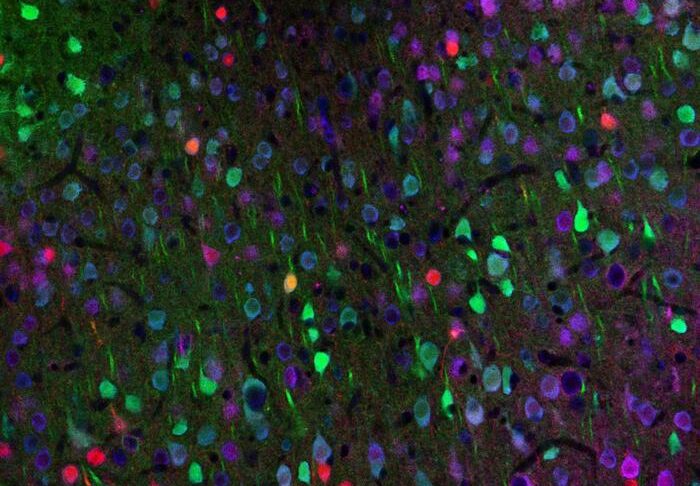
Huntington’s disease is a devastating brain disorder in which damage to nerve cells leads to progressively worsening cognitive and movement abilities. While the genetic mutation responsible for the condition is well known, the details of how the disease disrupts brain circuits have not been clearly understood. Now, researchers have identified and tracked neurons involved in Huntington’s disease progression and used optogenetics to selectively activate these neurons and improve the debilitating deficits of the condition.
The study is published in Nature in the paper, “Restoring cortical disinhibition improves Huntington’s disease phenotypes.”
“This work shows that correcting specific imbalances in brain circuits can restore function, even in a complex neurodegenerative condition, and highlights the potential of targeting defined cell types to promote recovery,” said Takaki Komiyama, PhD, professor in the UC San Diego Departments of Neurobiology (School of Biological Sciences) and Neurosciences (School of Medicine).
Huntington’s disease is caused by a trinucleotide repeat mutation in the Huntingtin (HTT) gene. While the mutation is well known, the neural networks connected with the disease progression have been more elusive.
This work aimed to map the neural circuits that expose the networks involved at the onset and spread of the disease’s debilitating symptoms. In transgenic mice carrying the same mutation as human patients, the researchers evaluated how different types of brain cells in the motor cortex are affected in Huntington’s disease. Advanced imaging techniques allowed the researchers to track the activity of these cortical neurons as the disorder progressed.
The researchers found that the disease disrupts the balance of activity across different cell types, including cortical inhibitory neurons.
“Cortical inhibitory cells have received little attention in Huntington’s disease, as for a long time they were considered to be spared from neurodegeneration,” said Irina Dudanova, PhD, previously based at the Max Planck Institute for Biological Intelligence, now at the University of Würzburg in Germany. “Surprisingly, we detected profound changes in their activity, with some cell types being overactive and some nearly silent.”
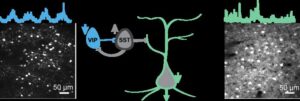
In particular, a class of inhibitory neurons known as vasoactive intestinal peptide (VIP) neurons, exhibited significantly reduced activity. VIP neuron activity is essential for normal learning, as these cells enable the brain to adapt and refine brain circuits during learning.
Reduced VIP neuron activity, the researchers reasoned, could be impairing the brain’s ability to function and learn properly. They sought to activate these cells to re-engage brain states that support learning. They tested this idea using optogenetics to stimulate VIP neurons.
“By activating the VIP inhibitory cell type, we gradually restored more normal activity patterns, and, very importantly, we also saw an improvement in the ability of the mouse to learn a motor task,” said Sonja Blumenstock, PhD, assistant project scientist at UC San Diego.
The results confirm VIP neurons as a key point of vulnerability in Huntington’s disease as well as a promising target for therapy. As to how this process works, the results suggest that modulating VIP neurons opens a “gate” that enables learning-related brain plasticity.
“This intervention restored more normal patterns of activity in the brain and improved movement in affected mice,” said Komiyama. “Importantly, the improvements persisted for days after stimulation ended, suggesting that the treatment triggered lasting beneficial changes in brain circuits rather than only temporary effects.”
The study provides important indications of where research could focus to normalize human brain function and facilitate brain recovery. Komiyama envisions a future scenario in which scientists could non-invasively activate the brain from outside the skull using novel approaches.
“Our study shows that despite the genetic defect, a precise intervention into the brain circuitry can lead to significant improvements in motor symptoms,” said Dudanova. “If we know which cells to target, we can retune the brain’s abnormal activity patterns. This gives hope for future therapies.”
The research also shows that corrections to specific brain circuit imbalances can restore function in a highly complex neurodegenerative condition, with similar potential in other disorders.
“We have come up with a way to allow the diseased brain to learn better,” said Komiyama. “The approach can improve behavior in diseased mice, and our hope is that a related approach will help people with impairment in their learning abilities.”
The post In Huntington’s Mouse, Optogenetic Activation of VIP Neurons Restores Brain Function appeared first on GEN - Genetic Engineering and Biotechnology News.
Apa Reaksi Anda?
 Suka
0
Suka
0
 Kurang Suka
0
Kurang Suka
0
 Setuju
0
Setuju
0
 Tidak Setuju
0
Tidak Setuju
0
 Bagus
0
Bagus
0
 Berguna
0
Berguna
0
 Hebat
0
Hebat
0