
















































%20and%20Batch%20Production%20Records%20(BPR).png)
















Novel Intracellular Pathway Identified That Protects Against Viral and Bacterial Infection
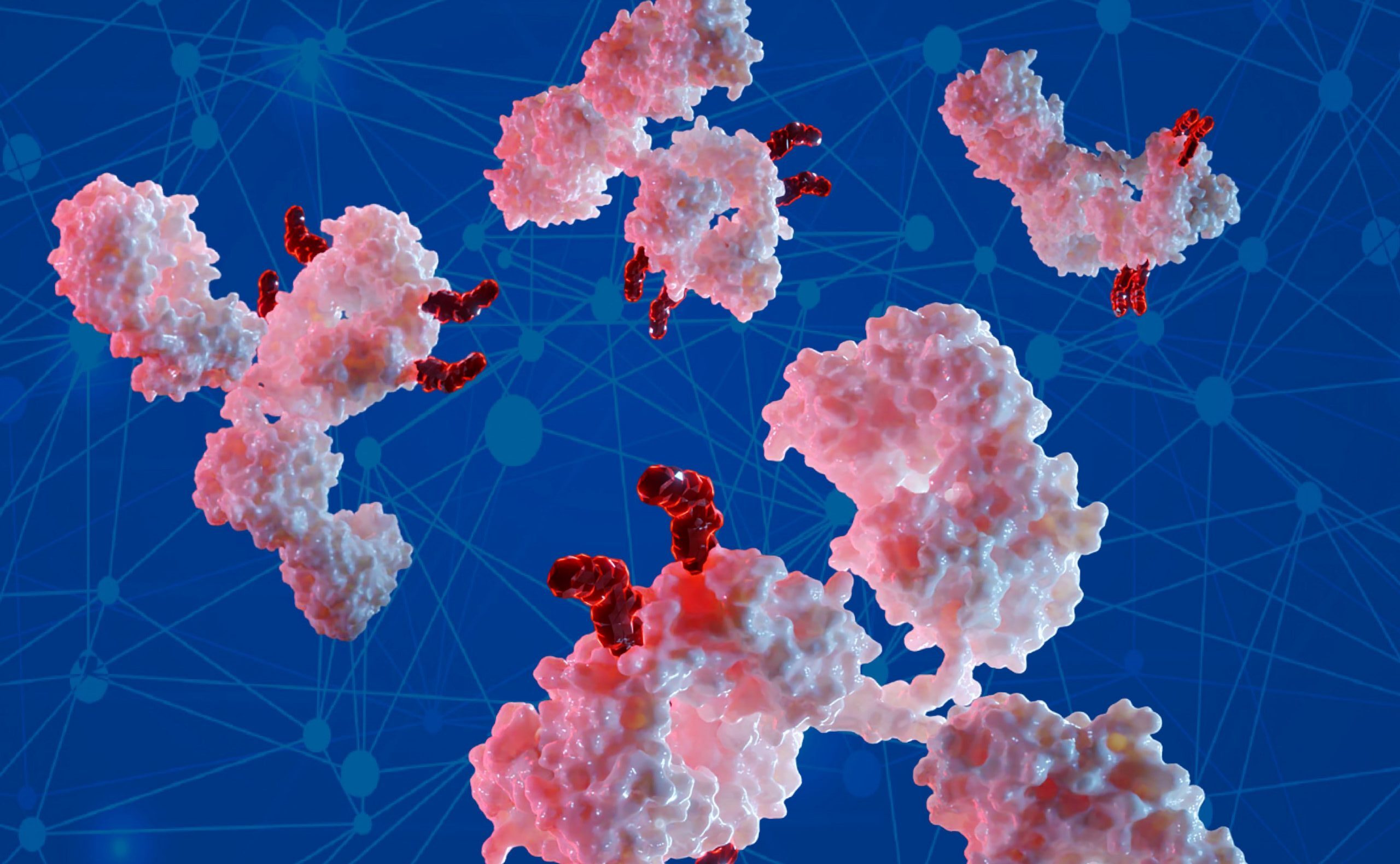
A common concept of the immune system is that of white blood cells putting up a fight against invading pathogens in the bloodstream. Researchers have now detailed a separate but equally important route by which our bodies fight infection—directly inside already infected cells. The team, co-led by Leo James, PhD, and Tyler Rhinesmith, PhD, at MRC Laboratory of Molecular Biology, defined a previously undescribed method of fighting pathogen invaders—and which they called “antibody-directed xenophagy” (ADX)—where cells can digest bacteria and viruses, including Salmonella and adenoviruses, that cross the cell membrane. The scientists found that regulation of ADX is dependent on the intracellular protein, TRIM21, which James’s lab had previously shown protects from viral infection by binding to antibody-coated viruses in the cell cytosol, triggering virus degradation.
“People have talked about viral xenophagy before as a sort of concept, but if you look in literature, there aren’t any good examples where people have shown this operating to potently block infection,” said James. “In our single study, we’ve gone from the discovery of something completely unknown [ADX], all the way through molecular mechanism, its function in cells into animals, and demonstrated physiological importance.”
The discovery of the ADX pathway may have potential future medical implications. While far more study is needed, the research points to the feasibility that antibody or small molecule therapeutics could be used to treat infections by marking pathogens in the blood so TRIM21 can recognize and jumpstart ADX once they enter cells.
James, Rhinesmith, and colleagues reported on their findings in Molecular Cell, in a paper titled “TRIM21 induces selective autophagy of viruses and bacteria,” stating, “We propose that TRIM21 evolved through competition with pathogens to induce autophagy of diverse and complex substrates, potentially explaining its versatility for targeted protein degradation.”
Typically, the body will respond to an infection by creating antibodies that latch onto the invaders in the blood to alert immune cells, such as white blood cells, to destroy them. Sometimes, those antibody-bound pathogens evade the immune cells and infect healthy cells. This is where antibody-directed xenophagy becomes involved.
Using CRISPR-Cas9 and quantitative imaging, the team determined that once an antibody-labeled pathogen enters a cell, ADX begins with the specialized protein TRIM21, which flags the pathogen with a ubiquitin marker that signals to the cell that it has been invaded.
TRIM21 is an intracellular E3 ubiquitin ligase protein that binds to antibodies and catalyzes ubiquitination. Prior work by James’s group had found that TRIM protects against viral infection by binding to antibody-coated viruses in the cell, triggering ubiquitination and viral degradation.
“Recently, we and others have shown that the degradative adaptability of TRIM21 extends to a wide range of additional substrates beyond viral capsid proteins,” the team further pointed out. “TRIM21 is an exceptionally versatile ubiquitin ligase that can be directed by antibodies to target oligomeric protein scaffolds, viral capsids, and proteopathic aggregates for intracellular degradation.”
However, the mechanism used by cells to degrade the tagged viruses wasn’t known. “… how such a large and complex substrate is quickly and efficiently degraded remains unclear.”
Rhinesmith, a post-doc in James’s group, conducted a genome-wide CRISPR-Cas9 knockout screen, individually removing every gene across the human genome and testing how its deletion impacted TRIM21-triggered degradation of viruses. The results were striking, revealing a previously undescribed process by which TRIM21 is able to trigger autophagy of cell-invading viruses.
Autophagy is a conserved cellular process through which damaged or toxic cellular components are delivered to specialist acidic organelles to be degraded and recycled. While this process plays a key role in maintaining cellular health, its ability to protect against invading viral pathogens hasn’t been well studied.
Staff scientist Anna Albecka developed a high-fidelity confocal microscopy platform that allowed the team to visualize previously unidentified events in the TRIM21 restriction mechanism. The team observed binding of TRIM21 to antibody-coated viruses inside cells, in real time. The microscopy results showed that after TRIM21 ubiquitinates the invading virus complex, ubiquitin stimulates the assembly of autophagy components around viruses, including LC3, a marker for membranous compartments called autophagosomes.
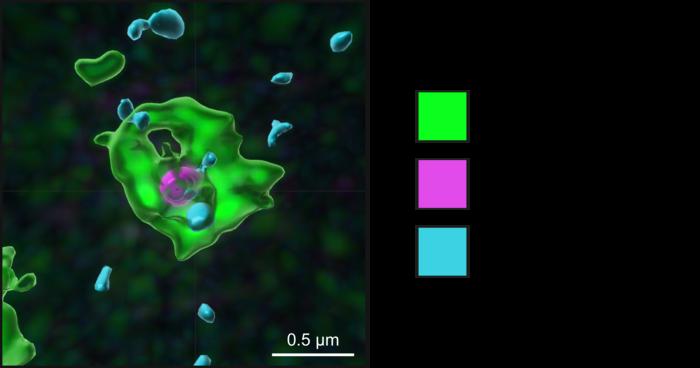
Working with Claudia Puri and David C. Rubinsztein at the U.K. Dementia Research Institute, Cambridge, the team used super-resolution microscopy to visualize the assembly of these autophagosome membranes around individual viral particles coated in antibodies and TRIM21. Together, these observations revealed the stepwise process by which incoming virions are incarcerated inside sealed, LC3-positive autophagosomes.
Albecka was further able to show that these virus-containing autophagosomes are ultimately delivered to acidic lysosomes, resulting in the degradation of each virus into harmless peptides and nucleotides. Significantly, the study suggests that antiviral autophagy is a highly effective strategy deployed by cells to protect themselves from infection, and provides new tools for investigating this process.
Inspired by the ability of TRIM21 to activate by clustering around clients of very different architectures, the team next sought to understand whether it could also intercept a completely different type of pathogen: bacteria. The team used antibodies and a novel live cell microscopy method to track bacterial growth inside mouse cells. They observed the same ADX pathway that intercepts viral infection also potently restricts the growth of intracellular Salmonella. This discovery is significant because it explains how TRIM21 is able to intercept and trigger the degradation of invading pathogens of many complex structures and diverse lineages. “Importantly, our data explain how TRIM21 can degrade large and highly complex substrates,” the authors stated. “The need to intercept and destroy phylogenetically and structurally diverse pathogens may have driven the evolution of TRIM21’s very broad substrate versatility.”
By leveraging the intrinsic flexibility of the autophagy pathway, ADX can adapt to and degrade a variety of large and difficult targets. The findings indicate that the cell does not require a bespoke defense strategy for every individual pathogen. Instead, it employs a universal strategy, reliant on TRIM21, to redirect the cell’s existing autophagy machinery to any harmful material tagged with antibodies. This adaptability makes ADX clinically important for human immunity and, excitingly, a potential target for therapeutic enhancement.
“TRIM21 is unique because it uses the antibodies attached to the invading virus or bacteria to alert the cell,” said James. Rhinesmith added, “We show in the paper that on top of non-enveloped viruses, it’s also able to target bacteria along the same pathway. It seems that you trigger ubiquitination of whatever pathogen has antibodies around it through TRIM21, and this is the key step that leads to autophagy of the bacteria or the virus.”
This ability for cells to fight back from the inside doesn’t appear limited to specific cells within our body. The research team tested for the presence and action of TRIM21 against adenovirus in a range of human cell lines, as well as living mouse models in the case of Salmonella. These experiments indicated that ADX-mediated immunity is likely ubiquitous throughout the human body. “TRIM21 is expressed from what we call an ‘interferon-stimulated gene,’ which means that it is upregulated during infection, so your body makes it all the time, everywhere,” said James. “And the reason why you make it everywhere is so that you can potentially protect any cell or tissue.”
Though ADX may sound like a backup for our immune system for when pathogens evade our first lines of defense, the authors noted that this could be an equally important primary mode of protective immunity. “Our data shows that without TRIM21, a significant component of protective immunity in vivo against viruses is lost. In practice, immunity works because we’ve got different mechanisms operating together,” James said.
TRIM21 is the first intracellular protein discovered to stimulate ADX immunity, but there may be others that have equally broad or specific pathogen targets. Part of the research team’s next steps is determining the existence of other ADX-stimulating proteins and what limitations there may be to TRIM21’s function.
The post Novel Intracellular Pathway Identified That Protects Against Viral and Bacterial Infection appeared first on GEN - Genetic Engineering and Biotechnology News.
Apa Reaksi Anda?
 Suka
0
Suka
0
 Kurang Suka
0
Kurang Suka
0
 Setuju
0
Setuju
0
 Tidak Setuju
0
Tidak Setuju
0
 Bagus
0
Bagus
0
 Berguna
0
Berguna
0
 Hebat
0
Hebat
0