















































%20and%20Batch%20Production%20Records%20(BPR).png)
















Organ Chips Move Towards Mainstream Drug Development, with Hurdles Ahead
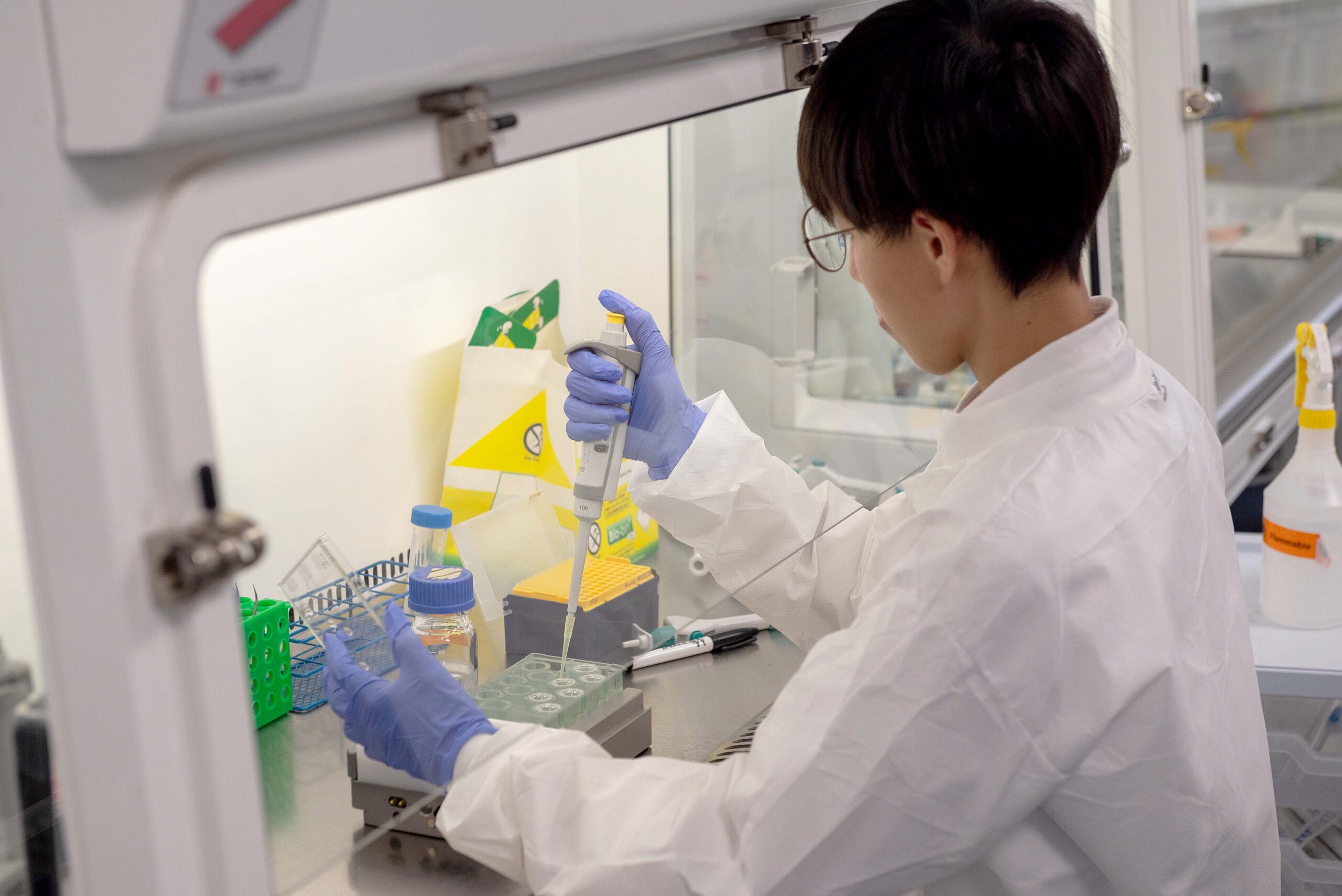
In April 2025, the U.S. Food and Drug Administration (FDA) released a strategic roadmap to make animal testing the exception for preclinical safety and toxicity studies within the next three to five years. Central to that vision is the adoption of validated new approach methodologies (NAMs), including organ-on-chip systems. The National Institutes of Health reinforced that shift the same month by requiring that all new notices of funding involving animal models incorporate human-focused approaches such as organ chips and other NAMs. Similar changes are emerging globally. In November 2025, the U.K. government published its roadmap to largely phase out animal testing in research while accelerating the development and validation of alternative methods.
For organ-on-chip developers, growing interest from federal agencies is a welcome trend. They are currently generating the data necessary to show that their technologies can work in stringent regulatory environments. However, there are still outstanding questions around validation standards, regulatory expectations, and how NAM data will be evaluated in submissions. At the same time, adoption remains slow, with drug developers continuing to rely largely on established animal models, which command billions in investment compared to the much smaller organ-chip sector.
Still, it is clear that momentum is building behind NAMs. And in response, organ-chip developers are stepping up to ensure that their platforms can produce results when the time comes.
From space flight to lab scale-up
When the Artemis II astronauts launched their historic 10-day journey around the Moon in April 2026, they carried some unusual cargo: organ chips containing cells from their bone marrow. The chips are part of the AVATAR (A Virtual Astronaut Tissue Analog Response) investigation, which is using organ-on-chip devices to study the effects of deep-space radiation and microgravity on human health.
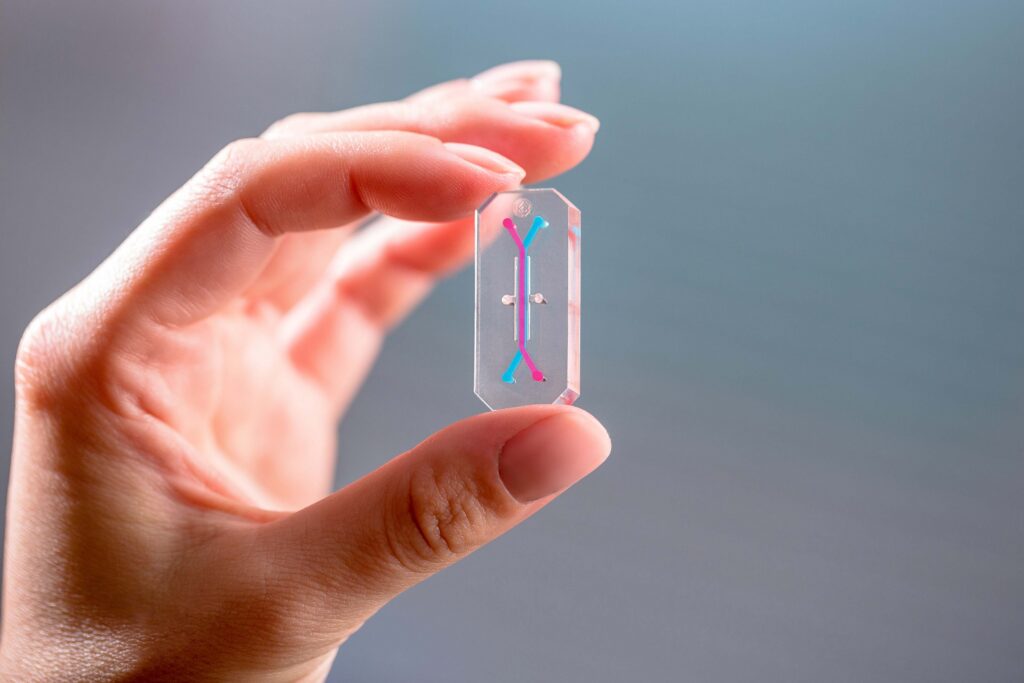
Before the trip, cells from the astronauts were harvested to create two sets of bone marrow chips: one set traveled beside the crew aboard their spacecraft, while another remained on Earth. The idea was to compare both sets of chips when the astronauts returned to Earth. More broadly, the AVATAR project also aims to provide proof-of-concept for including human organ chips in future missions.
In 2025, Emulate announced that its organ-chip technology was selected to accompany the astronauts on their lunar fly-by. It is an exciting project for Emulate, which commercializes human organ-chip technology developed at the Wyss Institute for Biologically Inspired Engineering at Harvard University. But it is only one of several activities that the company has been involved in the recent past. The company’s liver organ chips were one of the first to be accepted for the FDA’s Innovative Science and Technology Approaches for New Drugs (ISTAND) program, which supports tools that fall outside the scope of existing qualification programs but may still be useful for drug development.

Chief Scientific Officer
Emulate
In a conversation with GEN, Lorna Ewart, PhD, Emulate’s chief scientific officer, described 2025 as a pivotal year both externally—with announcements from multiple federal agencies promising increased support for organ chips—and internally, with the launch of Emulate’s new instrument, AVA, in June 2025 to address what Ewart describes as “key operational challenges” with the company’s first-generation platform. AVA has a higher throughput than its predecessor, enabling microfluidic workflows across 96 parallel organ chips or “emulations” in a single run. The company claims that it is the first organ-on-chip workstation to combine high-throughput microfluidic tissue culture with automated imaging in a self-contained environment.
Interest in the instrument to date has come primarily from large pharmaceutical companies and mid-sized biotech firms, who need to run large numbers of chips in parallel. But, Ewart says, there is also strong interest from academic institutions and government agencies. Some of that interest is driven by AVA’s much smaller footprint. Compared to Emulate’s first-generation system, AVA is a compact benchtop system that does not require multiple incubators. The company has also reduced the size of each emulation, or chip equivalent, by about 50%, meaning that the new platform requires fewer cells and uses less media, helping to keep experimental costs down. “Academics are actually quite excited about getting their hands on it and looking at it as a core lab instrument where multiple labs will be able to use it.”
AVA also addresses concerns about reproducibility, a consistent source of worry for drug developers, and one that Emulate has made a priority. The company has shared data showing that its liver-chip biology is reproducible both internally and externally in laboratories using AVA. The company has also taken steps to minimize technical variability within experiments as well as bias when running AVA at scale. “We need to make sure that the first chip array looks the same as chip array eight,” Ewart says. “If it doesn’t, there’s variability across those different [chip arrays] that will impact the way that a user can design, what we would refer to as a fully burdened experiment.”
More complex, automated models
When it first launched, U.K.-based organ-on-chip company CN Bio started with a liver-on-a-chip platform, but has since expanded to include various organ models, including intestine, lung, and kidney. The company’s commercial platform is built on technology developed in the laboratory of Linda Griffith, PhD, at the Massachusetts Institute of Technology.

Chief Scientific Officer
CN Bio
Currently, CN Bio has applications in multiple arenas, including safety, toxicology, and disease modeling. “For example, in the toxicology space, we have a very well-known and well-utilized model of drug-induced liver injury,” Tomasz Kostrzewski, PhD, the company’s CSO, tells GEN. That model is being utilized by several global clinical research organizations to offer assays as a service. The company also has a multi-organ system that links its intestine and liver chip models, which can be used to predict the oral bioavailability of drugs, and a range of disease models for metabolic liver disease, chronic obstructive pulmonary disease, and more.
Perhaps one of the biggest challenges, from Kostrzewski’s perspective, is the misconception among some stakeholders that organ chips can fully replace animal models today. That is not a position that the organ-chip community has advocated for, he says. The focus should be on “using these tools to answer the right question and [in] the right context of use at the right time alongside all those other approaches that are out there.”
Development plans in the near future involve making incremental improvements that refine CN Bio’s platform over time. “One key area that we’re working on is immunology and adding in more complex immune cultures into our chips,” Kostrzewski says. Recently, “we presented some of the first data [incorporating] peripheral immune cells in our liver model and looking at the toxicity of monoclonal antibodies.” Some customers are building “neuronal blood brain barrier models on our platform” with an eye towards “understanding how drugs can penetrate across that barrier.” In parallel, the company is expanding into new organ systems, including kidney models, via partnerships.
The company is also turning to automation to help customers scale their work. CN Bio’s open design integrates well with standard robotic systems, making it well-suited for high-throughput workflows, Kostrzewski says. Customers could run more chips in parallel as part of larger screening studies with more consistency and less human intervention. There is also the potential to incorporate sensing capabilities, much like those used in biomanufacturing, to monitor system performance in real time and generate functional readouts.
In addition, the company is working to demonstrate to drug developers that organ chips can generate valuable translational data that predicts clinical outcomes. That certainly has been true for CN Bio as “we have a number of molecules that we have helped take to the clinic” that have been proven successful, says Kostrzewski. And there are customers using its organ chips “to make no-go decisions” regarding potential drug programs. “That’s the ultimate proof that these technologies do what they say,” he says.
Digital twin and multi-organ models
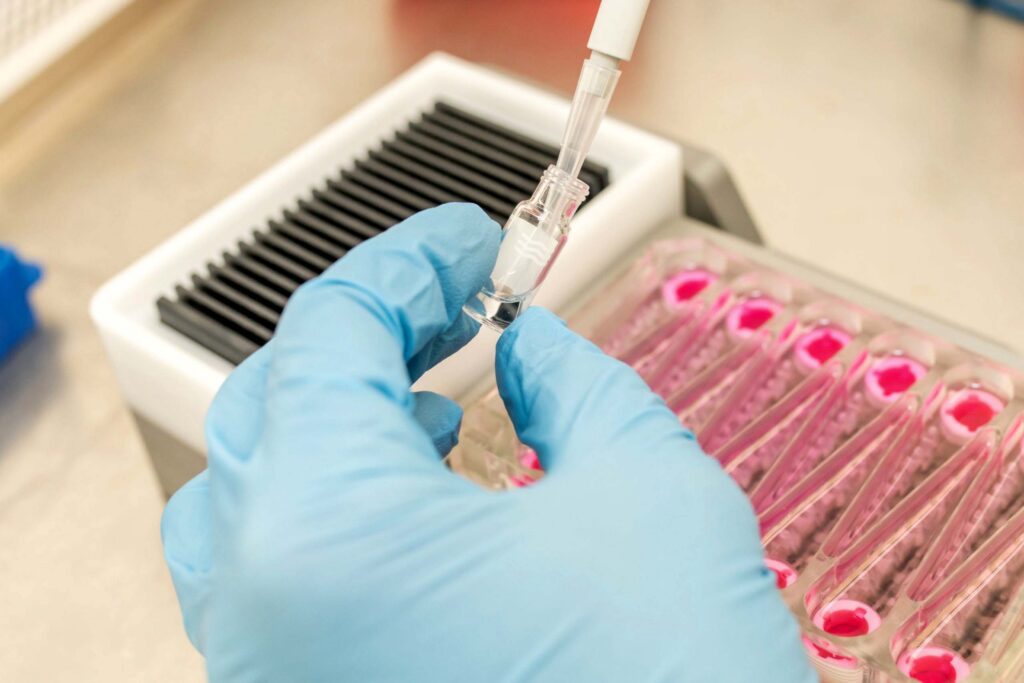
Hesperos’ co-founders, James Hickman, PhD, and Michel Shuler, PhD, have been involved in the organ-chip space since its early conception. In fact, the technology that underpins the company’s services emerged from work that both scientists were doing independently in their laboratories. Today, the company provides drug development services using its Human-on-a-Chip® single- and multi-organ systems in areas such as neurodegenerative disease.
In April, the company published a study in Alzheimer’s & Dementia: The Journal of the Alzheimer’s Association focused on familial Alzheimer’s disease (fAD). Specifically, scientists at Hesperos and the University of Central Florida (UCF) used a neuromuscular junction (NMJ) multi-organ chip to show that fAD-associated mutations caused specific impairments in NMJ functions that occurred independently of brain pathology. Building on that work, Hesperos scientists and their collaborators are trying to understand what therapeutics could potentially be useful for both the peripheral and central nervous systems, as well as which would need to be specific for each.
Last year, the company also demonstrated what they claim is the first true digital twin capability using an organ-on-chip platform. That capability is described in an Advanced Science paper where the scientists explain how a multi-organ system comprising human liver, spleen, endothelial tissues, and blood was used to replicate the full lifecycle of Plasmodium falciparum, the parasite responsible for malaria. They plan to publish additional studies on their work on digital twins. Additionally, like Emulate, Hesperos is also participating in the FDA’s ISTAND program.
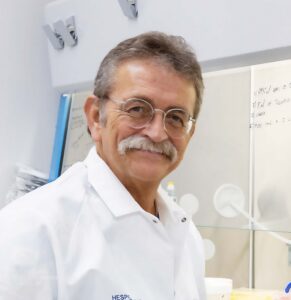
Co-founder
Hesperos
In a conversation with GEN, Hickman described the broader adoption of organ-on-chip technology as a mixed bag, with some people being more open to the technology and others showing more resistance. He noted that many in the community are still accustomed to using animal models, which may make them more reticent to change, but also acknowledged that animal testing is a multi-billion-dollar business. “There are a lot of people with a vested interest in keeping animal experimentation going,” he says. That means that although people may be interested in alternatives like organs-on-chips, from a practical perspective, it may be difficult for them to disengage from their reliance on animal models.
He also pointed to the FDA’s evolving guidance on alternative technologies—and the lack of clarity—as one of the biggest hurdles. “People are still trying to get their hands around the FDA announcements on moving away from animal models,” and trying to understand what the agency wants to see, Hickman explained. “We have a pretty good idea of what that [might be needed and] we work with a couple of people [to] generate data along those lines,” he says. “The biggest thing is to start getting [clearer guidance] in terms of what they will accept in lieu of safety data.” There are also questions around whether good laboratory practice (GLP) requirements for these new approach methodologies need to mirror those for animal studies, given the differences between the systems. “Doing GLP is really expensive,” Hickman said, and requiring the same standards could effectively put many companies out of the running to conduct safety studies because they can’t afford it.
Equally important is addressing the limited investment in organ chip and other alternative technologies. Hickman estimates that commercial NAM entities collectively generate hundreds of millions in revenue, compared to tens of billions secured by large animal CROs. Although federal agencies have committed to supporting NAMs, providing millions in funding, greater investment is needed for these alternative technologies to come into their own. Hickman added, “It’s a matter of trying to increase that capacity to really start showing that it’s a force in the industry versus a shiny new toy that people haven’t quite figured out what to do with.”
The post Organ Chips Move Towards Mainstream Drug Development, with Hurdles Ahead appeared first on GEN - Genetic Engineering and Biotechnology News.
Apa Reaksi Anda?
 Suka
0
Suka
0
 Kurang Suka
0
Kurang Suka
0
 Setuju
0
Setuju
0
 Tidak Setuju
0
Tidak Setuju
0
 Bagus
0
Bagus
0
 Berguna
0
Berguna
0
 Hebat
0
Hebat
0