

















































%20and%20Batch%20Production%20Records%20(BPR).png)














Trait Combining Key to More Effective Vector Production Hosts

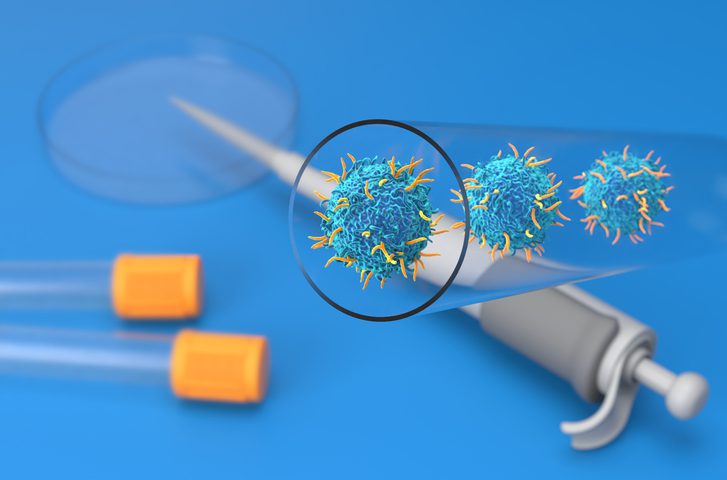
HEK293 cells may be the most common host used in viral vector production, but they are far from ideal, says the author of a new study, who argues that gene therapy firms will need more effective alternatives to support commercial growth.
The study, by a team at University College Dublin and services firm APC, examined the manufacturing systems used to make the recombinant adeno-associated viruses (rAAVs) on which many gene therapies rely.
And the key finding is that not one of the eight commercial cell lines used to date—including the most widely-used line, HEK293—is ideal.
Lead author, James Conheady, from APC, tells GEN, “Current rAAV production methods using existing cell lines struggle to meet clinical demands, contributing to the expensive price-tag associated with rAAV-based gene therapies.
“Novel cell lines may be able to produce rAAVs at higher yields and/or with improved quality, which ultimately could help make these therapies more accessible to the people who need them.”
Shortcomings
To date, eight different host cell systems have been used to produce rAAVs, with each having strengths and weaknesses.
For example, some cell lines generate rAAV capsids that do not contain the desired genetic material. These empty vectors are a problem because they generate an immune response without providing a therapeutic effect.
Other cell lines struggle to make enough capsids. For example, the recommended dose for systemically delivered gene therapies is upwards of 1 × 10¹⁴ vg/kg of a patient’s bodyweight. The yield per production run for HEK293 cells is only around 1010.
Cost is another issue.
According to Conheady and co-authors, the GMP-grade plasmids and transfection reagents used to modify cell lines such that the vectors they produce contain the genes of interest account for a significant proportion of the price of the resulting therapies.
Alternative systems
Given these shortcomings, it is no surprise that the search for more effective alternative hosts is already underway.
Conheady says, “At the end of the day, rAAV manufacturers are all looking for the same things from their upstream process—high titers, improved full/empty ratios, and transduction rates.”
Current cell line development efforts are focused on combining desirable traits, Conheady adds, with characteristics such as resistance to apoptosis, diminished antiviral immune response, and secretion profiles being among the most sought after.
“Many of the traits identified in this review are aligned with modifications that have been shown to be beneficial in the context of rAAV production in HEK293 cells. For example, secretion of vector particles from the cell into the production medium can greatly simplify downstream operations and can be influenced by knocking out genes involved in endosomal trafficking.
“The ideal cell line should also be resistant to transfection and virus-induced apoptosis, to produce significant vector quantities. Knockout of the pro-apoptotic BAX and BAK1 genes has been shown to improve vector yields,” he says.
Whether industry will ever see these efforts pay off and agree on the “ideal” cell line remains to be seen, according to Conheady.
“Manufacturers will require significant grounds to agree on a standardized approach, a novel cell line may need to vastly outperform all others in relation to yield and quality characteristics—as the saying goes, ‘you stick with what you have until you have better’.”
The post Trait Combining Key to More Effective Vector Production Hosts appeared first on GEN - Genetic Engineering and Biotechnology News.
Apa Reaksi Anda?
 Suka
0
Suka
0
 Kurang Suka
0
Kurang Suka
0
 Setuju
0
Setuju
0
 Tidak Setuju
0
Tidak Setuju
0
 Bagus
0
Bagus
0
 Berguna
0
Berguna
0
 Hebat
0
Hebat
0