



















Analyze of Production Performance of Shrimp Litopenaeus vannamei Culture and Water Quality on Earthen Pond Quality on Earthen Pond and HDPE-Lined Pond
By Aquaculture Magazine Editorial Team
As global demand for seafood continues to rise, aquaculture faces increasing pressure to optimize production systems while maintaining sustainability. Operational excellence in intensive shrimp farming is directly linked to pond design and environmental control. This study reveals that highdensity polyethylene (HDPE)-lined systems achieve a 133% performance boost over traditional earthen ponds by facilitating superior waste management and biosecurity. These efficiencies not only reduce long-term costs but also ensure the economic sustainability of the operation through consistent, high-yield harvests and improved nutrient utilization.
The white-leg shrimp (Litopenaeus vannamei) is one of the most important aquaculture species globally due to its adaptability to varying salinity and temperature, high survival rates and suitability for intensive farming. By 2020, global production reached 5.8 million tons, representing over half of total shrimp production, and demand is expected to continue increasing due to population growth and changing consumption patterns.
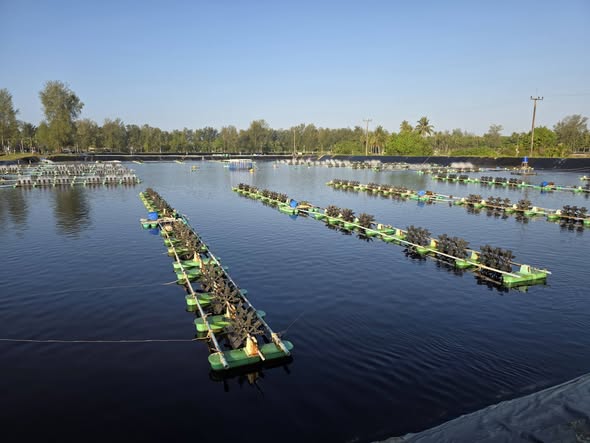
In Indonesia, shrimp production targets have driven the need for improved farming practices, particularly in pond selection, as ponds play a critical role in water quality control and waste management. Two main types are used: earthen ponds and high-density polyethylene (HDPE)- lined ponds. Earthen ponds are more economical and support natural processes such as nutrients cycling, mineral provision, and pH buffering through soil interaction. However, they are prone to leakage, erosion, turbidity, and depend heavily on soil quality. Over time, accumulation of organic matter and toxic compounds like ammonia and hydrogen sulfide can reduce productivity and increase the risk of harvest failure.
HDPE-lined ponds demonstrate significantly higher productivity and survival rates compared to earthen systems, with productivity reaching 9.3 tons/ha. The design facilitates efficient waste removal and better control of harmful compounds, leading to a 133% increase in performance outcomes and a 24% improvement in feed efficiency.
HDPE-lined ponds, in contrast, offer more stable and predictable production. Their design allows efficient waste removal through drainage systems and facilitates better control of harmful compounds, improving shrimp survival rates. Additionally, they tend to have lower levels of pathogens such as Vibrio. However, these systems require higher construction costs and eliminate natural soil-water interactions, increasing the need for artificial mineral supplementation, which is essential for shrimp metabolism and ecosystem balance.
Despite existing studies, most research has focused on extensive systems. These remains a lack of comprehensive analysis in intensive farming conditions. This study aims to address that gap by evaluating how pond type affects water quality, shrimp survival, production performance, and economic outcomes in intensive aquaculture systems.
Materials and Methods
This study was conducted in West Java, Indonesia, comparing three earthen ponds and three HPDE- lined ponds stocked with L. vannamei. Water, shrimp, phytoplankton, and bacterial samples were collected periodically to evaluate water quality and biological conditions. Growth performance was measured through productivity, survival rate (SR), average daily growth (ADG), and feed conversion ratio (FCR). Economic analysis includes costs, revenues, and profitability using benefit-cost ratios (BCR). Statistical tests (T-test, Mann-Whitney, and Pearson correlation) were applied to assess differences and relationships between variables. The methodology aimed to determine how pond type influences shrimp performance, water quality, and economic feasibility in intensive aquaculture systems.
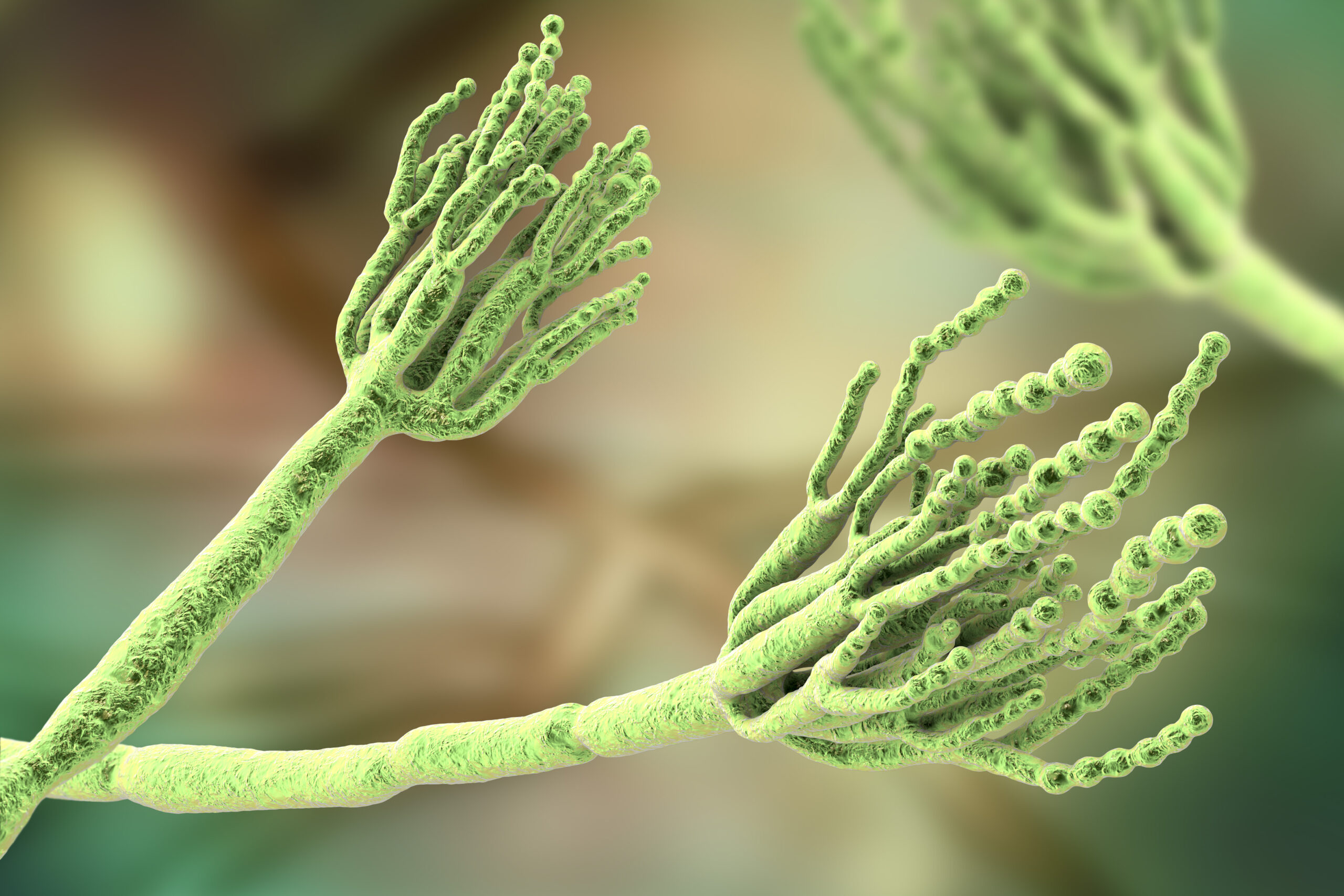
Pond substrate directly influences water quality and phytoplankton composition. Earthen ponds are susceptible to Cyanophyta blooms, which produce toxins like microcystins that damage shrimp tissue. HDPE ponds maintain a more stable environment dominated by beneficial Chlorophyta, resulting in higher dissolved oxygen levels and better overall shrimp health.
Results
The results indicate that pond type significantly influences the production performance of L. vannamei. HDPE ponds showed superior outcomes compared to earthen ponds. Productivity and SR, were significantly higher in HDPE systems (p < 0.05) with increases of 133%. In contrast, earthen ponds exhibited higher ADG and FCR (p < 0.05), although a lower FCR in HDPE ponds (24% less) indicates better feed efficiency. Overall, HDPE ponds demonstrated the best production performance.
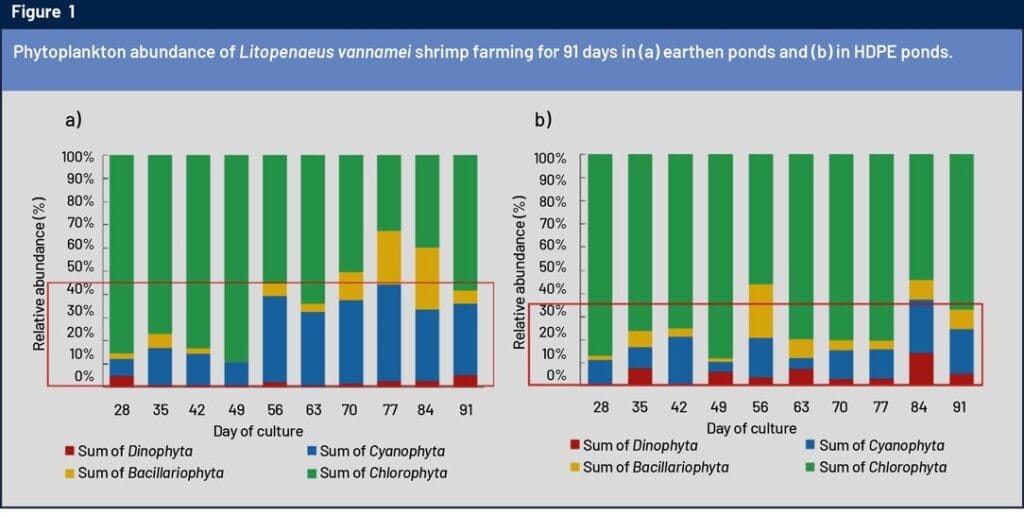
Water quality parameters also differed significantly between pond types (p < 0.05). Earthen ponds have higher temperature, pH, and oxidation-reduction potential (ORP), while HDPE ponds showed higher salinity, dissolved oxygen (DO), hardness, total organic matter (TOM), nitrite, and total bacterial count (TBC). Specifically, earthen ponds had lower salinity (21.93 psu) and DO (4.56 mg/L) compared to HDPE ponds (25.07 psu and 5.03 mg/L, respectively). Phytoplankton abundance was greater in earthen ponds, where four classes were identified: Dinophyta, Cyanophyta, Bacillariophyta, and Chlorophyta (Figure 1a, 1b). Chlorophyta dominated early stages in earthen ponds but was later replaced by Cyanophyta after day 56. In HDPE ponds, Chlorophyta remained dominant throughout the culture period.
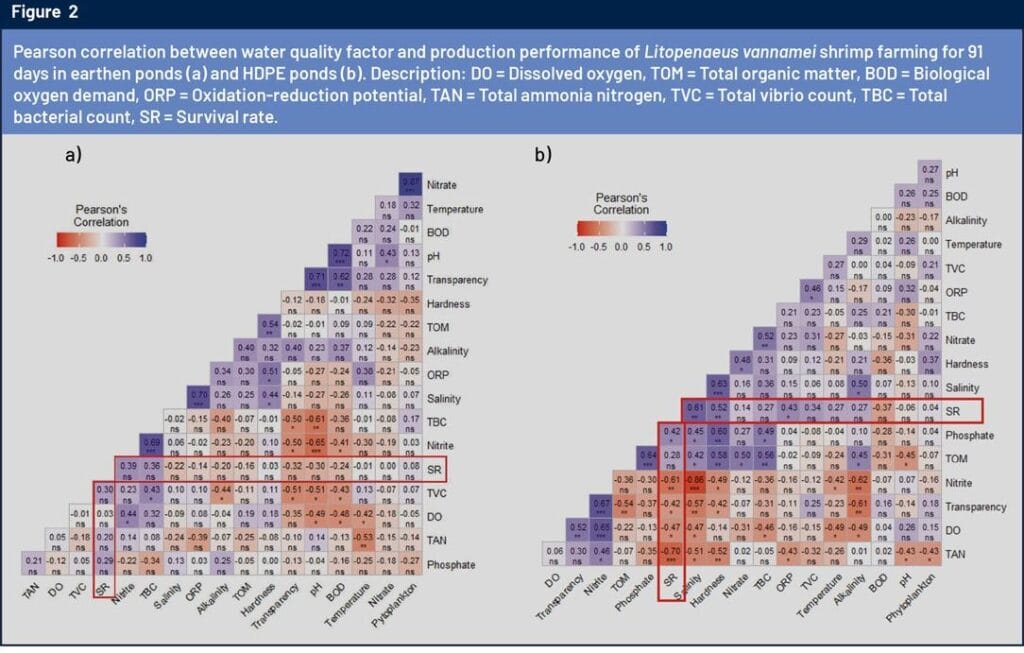
The relationship between water quality and shrimp survival was assessed using Pearson correlation analysis. In earthen ponds, no significant correlation was observed (p < 0.05), and only weak relationships were detected (Figure 2a). This suggests that survival is influenced by multiple interacting factors or unmeasured variables. In contrast, HDPE ponds showed significant correlations (Figure 2b). Salinity and hardness were positively correlated with SR (p < 0.01; r > 0.50), while total ammonia nitrogen (TAN) and nitrite were negatively correlated (p < 0.01; r < -0.50). These parameters exhibited moderate correlations with survival, highlighting their importance in intensive systems.
Economic analysis revealed that although earthen ponds had lower total operational costs, their production and revenue also lower. HDPE ponds required 17.54% higher investment but generated 57.20% higher revenue. The undiscounted BCR was 0.89% for earthen ponds and 1.72 for HDPE ponds, indicating that earthen systems were not economically feasible, while HDPE systems were profitable. Furthermore, the incremental benefit-cost radio (IBCR) for HDPE ponds was 5.67, meaning that each additional unit of cost produced 5.67 units of benefit.
In summary, HDPE ponds outperform earthen ponds in terms of productivity, survival, water quality control, and economic feasibility, making them a more efficient option for intensive shrimp farming systems.
The use of HDPE liners effectively mitigates the negative effects of declining soil quality and reduces the prevalence of pathogens such as Vibrio. Unlike earthen ponds, which suffer from low oxidation-reduction potential and anaerobic conditions that promote toxic hydrogen sulfide formation, lined systems provide a predictable environment for intensive farming.
Discussion
The study demonstrates that pond type significantly affects shrimp production performance, with HDPE- lined ponds outperforming earthen ponds. HDPE ponds achieved higher productivity (9.3 tons/ha vs. 3.92 tons/ha) and SR, while earthen ponds showed notably low survival (27.32%), likely due to disease outbreaks. FCR was higher in earthen ponds (1.88), exceeding optimal levels (<1.5), indicating inefficient feed use and possible stress-related anorexia linked to infections such as Enterocytozoon hepatopenaei (EHP). These findings highlight the critical role of environmental conditions in shrimp health and productivity.
Although HDPE-lined ponds require a 17.54% higher initial investment, they generate 57.20% higher revenue due to improved survival and productivity. Economic analysis shows an undiscounted benefit-cost ratio of 1.72 for HDPE systems, making them profitable, while earthen systems with low survival rates are no longer economically viable.
Differences in pond substrate influenced water quality through soilwater interactions, which occur only in earthen ponds. Most parameters remained within tolerable ranges for L. vannamei, except TOM, TAN, and nitrite. HDPE ponds exhibited higher TOM promoted bacterial growth, increasing TBC and accelerating nitrification. which raised TAN and nitrite levels in HDPE systems.
Phytoplankton composition also varied. Earthen ponds showed higher Cyanophyta abundance (Figure 1a, 1b), likely due to low nitrogen -to- phosphorus ratios and limited mineral availability. Cyanophyta can fix atmospheric nitrogen, giving them a competitive advantage. However, they produce toxins such as microcystins (~45 μg/L), which damage shrimp hepatopancreatic tissue, causing stress and mortality. Studies confirm toxin presence in dead shrimp, linking Cyanophyta blooms to mortality events.
Water quality influences shrimp survival through complex interactions of physical, chemical, and biological factors. Although HDPE ponds had elevated TAN and nitrite, overall conditions remained favorable due to balanced parameters. In contrast, earthen ponds showed weak correlations between water quality and survival, suggesting other factors were responsible. Poor sediment quality emerged as a key issue. Low ORP values (-191 to -109 mV) indicated anaerobic conditions, promoting hydrogen sulfide (H₂S) formation, a toxic compound linked to shrimp mortality.
For intensive Litopenaeus vannamei culture, the transition to HDPE-lined systems is a critical factor for long-term sustainability. Each additional unit of cost in an HDPE system produces 5.67 units of benefit, proving that the adoption of advanced pond designs enhances both farmer income and the resilience of the global seafood supply chain.
Economically, HDPE ponds required 17.54% higher investment but generated 57.20% higher income due to improved survival and productivity. Earthen ponds had lower costs but poor performance, resulting in a low BCR of 0.89, indicating non-viability. In contrast, HDPE ponds showed strong profitability, with an incremental BCR of 5.67, meaning each additional cost unit yielded substantial returns.
Overall, HDPE-lined ponds provide better environmental control, higher survival, and greater economic benefits, making them a more sustainable and profitable option for intensive shrimp farming.
Conclusion
HDPE-lined ponds demonstrated higher production performance compared to earthen ponds due to their more optimal water quality, particularly indicated by the lower abundance of Cyanophyta. Cyanophyta is a potentially harmful phytoplankton species that produces toxins capable of reducing shrimp survival rates. Additionally, the low SR of shrimp in earthen ponds was also influenced by poor soil quality. Earthen pond with degraded soil quality is no longer economically viable.
The use of HDPE- lined ponds can mitigate the negative effects of declining soil quality, there by creating a more stable environment for shrimp growth. Although the production costs for intensive shrimp farming in HDPE-lined ponds were 17.54% higher than in earthen ponds, this investment was proven to increase farmers’ total income by 57.20%. Thus, the adoption of HDPE- lined ponds not only enhances productivity but also contributes to the economic sustainability of shrimp farmers.

This informative version of the original article is sponsored by: REEF INDUSTRIES INC.
This is a summarized version developed by the editorial team of Aquaculture Magazine based on the review article titled “ANALYZE OF PRODUCTION PERFORMANCE OF VANAME SHRIMP LITOPENAEUS VANNAMEI CULTURE AND WATER QUALITY ON EARTHEN POND AND HDPE-LINED POND” developed by: Zulfana Fikru Sifa, Kukuh Nirmala, Yuni Puji Hastuti and Eddy Supriyono ─ IPB University, Bogor, West Java, Indonesia. The original article was published on JULY, 2025, through JURNAL AKUAKULTUR INDONESIA. The full version, including tables and figures, can be accessed online through this link: DOI:10.19027/jai.25.1.1-15
Apa Reaksi Anda?
 Suka
0
Suka
0
 Kurang Suka
0
Kurang Suka
0
 Setuju
0
Setuju
0
 Tidak Setuju
0
Tidak Setuju
0
 Bagus
0
Bagus
0
 Berguna
0
Berguna
0
 Hebat
0
Hebat
0