




















A Solution for Sustainable Utilization of Aquaculture Waste: A Comprehensive Review of Biofloc Technology and Aquamimicry
* By Aquaculture Magazine Editorial Team
Can aquaculture waste become a valuable resource instead of an environmental problem? Biofloc Technology converts organic waste into nutrient-rich microbial biomass to enhance shrimp farming sustainability. This comprehensive review highlights that for large-scale production, utilizing high-density polyethylene (HDPE)-lined ponds with central drainage is ideal. Alongside aquamimicry, these closed systems drastically reduce water exchange, suppress pathogens, and lower feed costs, presenting a highly profitable and environmentally friendly future for global aquaculture.
Aquaculture plays an increasingly important role in meeting the food demands of a global population approaching 7.8 billion people. To sustain production growth, farming systems must expand while adopting environmentally responsible management practices. Intensive aquaculture often generates large amounts of organic waste and carbon-based pollutants that can negatively affect water quality and the surrounding environment. Traditional solutions such as frequent water exchange or recirculating aquaculture systems (RAS) can reduce these impacts, but RAS is often too costly for widespread adoption.
Biofloc Technology (BFT) converts fish and shrimp waste into microbial biomass. Manipulating the carbon-to-nitrogen ratio stimulates heterotrophic bacteria to assimilate inorganic nitrogen, generating microbial protein that improves water quality and lowers feed costs.
As a result, Biofloc Technology (BFT) has emerged as a sustainable and cost-effective alternative. BFT promotes the growth of beneficial microorganisms that recycle nutrients, remove nitrogenous wastes, improve water quality, and produce microbial protein that can be consumed by culture species. This reduces feed conversion ratios and production costs. Since feed accounts for approximately 50% of aquaculture operating expenses, BFT offers significant economic advantages by converting waste into valuable biomass.
The reviewed study examines both Biofloc Technology and aquamimicry as sustainable approaches for increasing aquaculture productivity while minimizing environmental impacts and resource use.
Biofloc Technology
BFT was developed as a sustainable and cost-effective aquaculture system designed to improve water quality while reducing water consumption, particularly in regions where water resources are limited. The systems work by promoting the growth of beneficial microorganisms that convert fish and shrimp waste into microbial biomass, known as biofloc. In conventional aquaculture, 70-80% of dietary protein can be lost as nitrogenous waste.
BFT addresses this problem by manipulating the carbon-to-nitrogen (C:N) ratio, encouraging heterotrophic bacteria to assimilate inorganic nitrogen and transform it into microbial protein. To maintain an effective system, the C:N ratio is kept above 10 through the addition of carbon sources such as molasses, starch, or wheat flour.
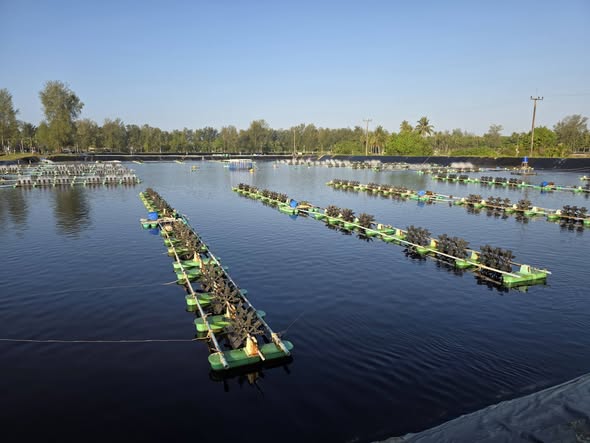
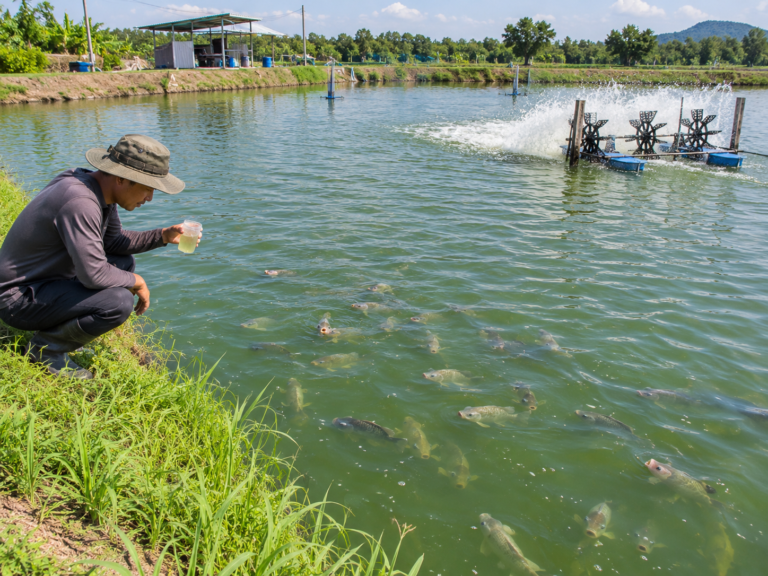
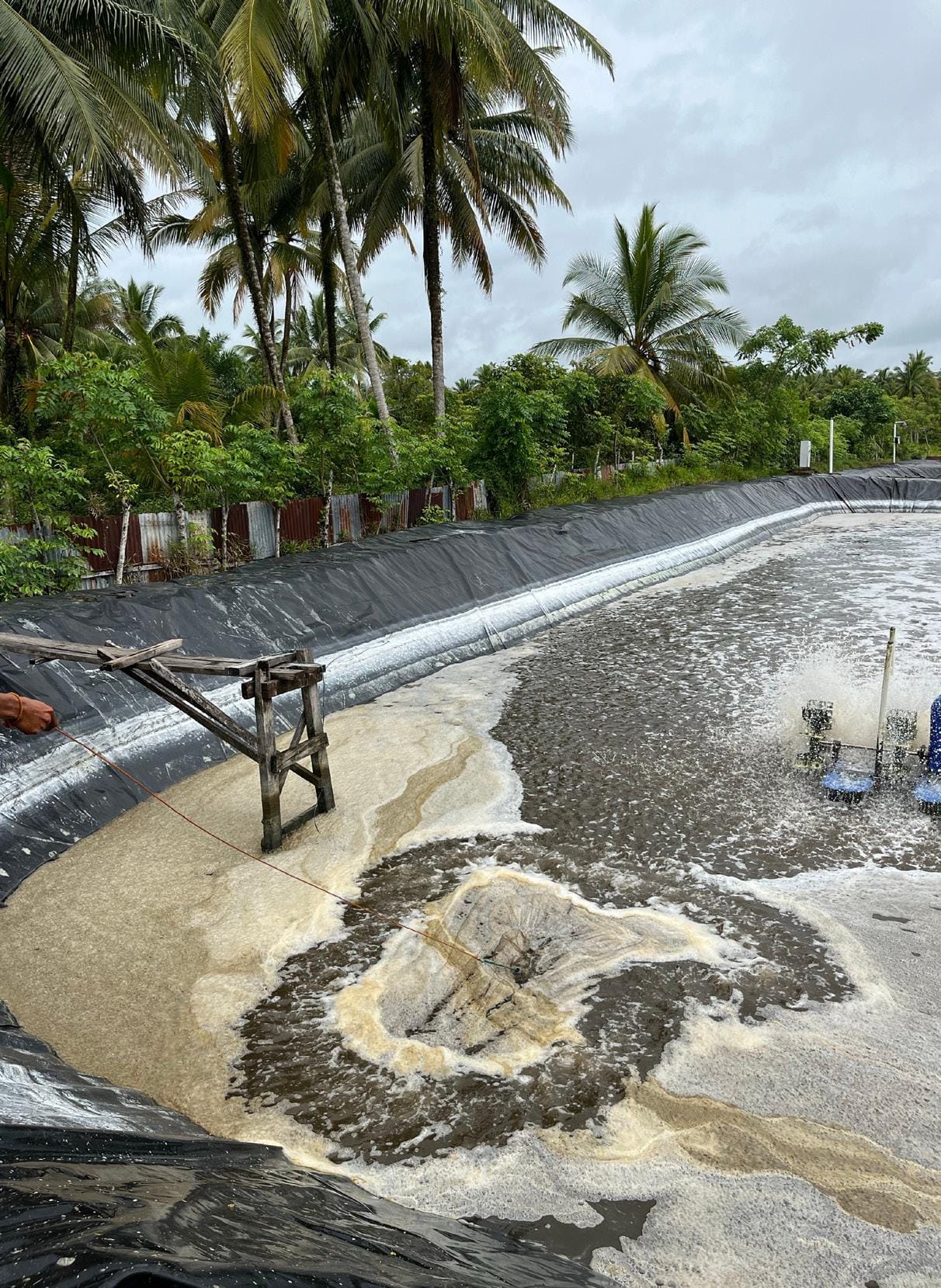
For large-scale biofloc fish or shrimp production, high-density polyethylene (HDPE)-lined ponds with well-prepared dikes are preferred. HDPE-lined ponds with sufficient elevation and central drainage are ideal for biofloc-based farming.
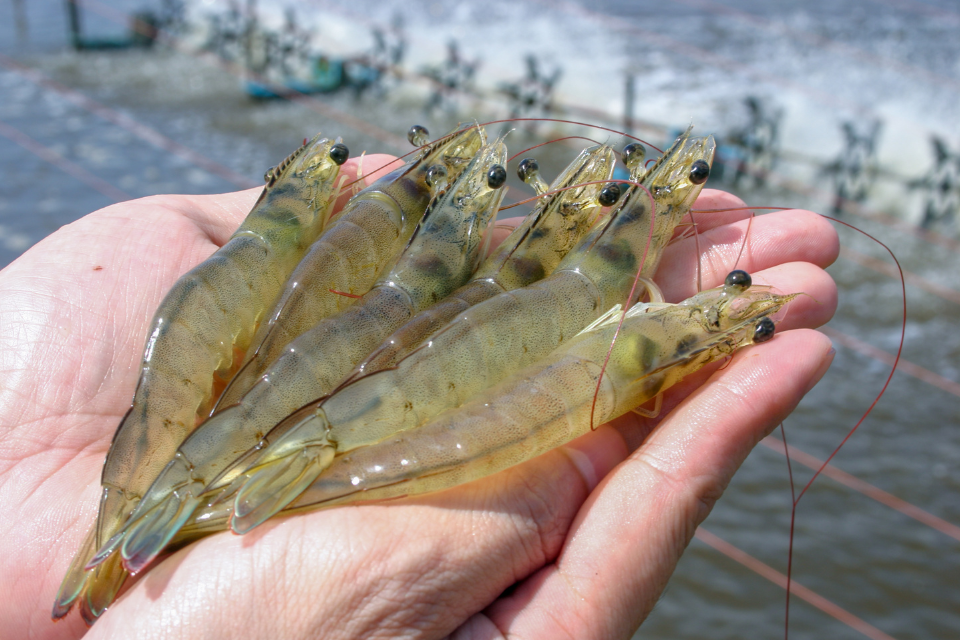
This process improves water quality while simultaneously generating a supplementary protein source that can be consumed by cultural species. First developed in the 1970s as the French Research Institute for Exploration of the Sea, BFT has been successfully applied to the culture of several shrimp species, particularly Litopenaeus vannamei.
Because it operates as a closed system with minimal water exchange, BFT reduces environmental impacts, prevents eutrophication, and enhances biosecurity. The dense microbial community sustainable suppresses harmful pathogen, strengthens the immune system of cultured organisms, and increases resistance to diseases such as infectious myonecrosis virus (IMNV) and Vibrio infections.
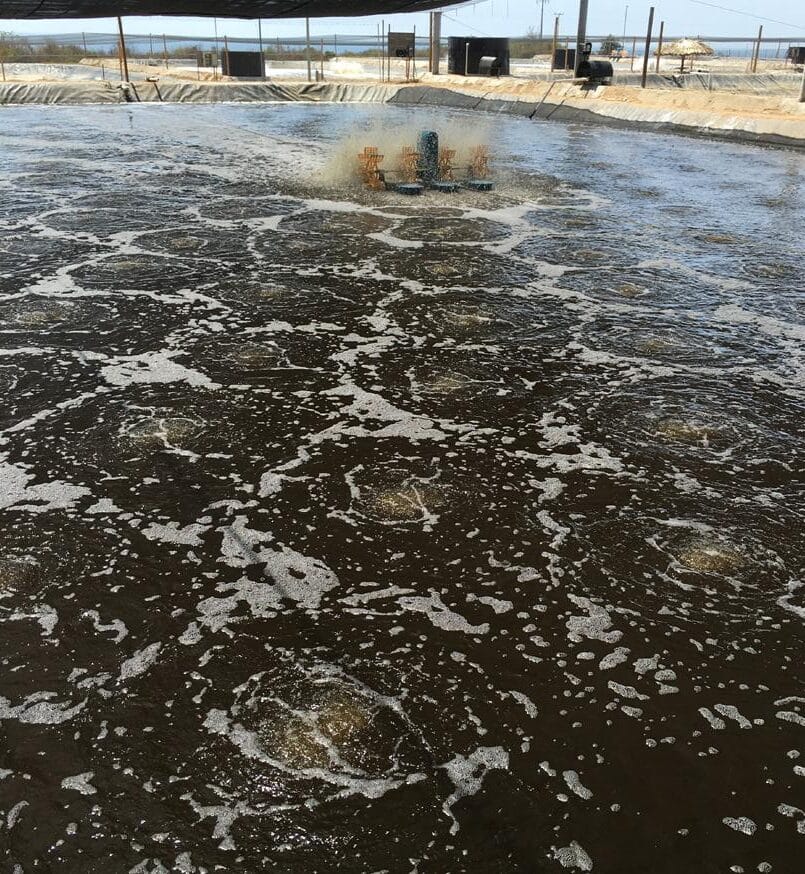
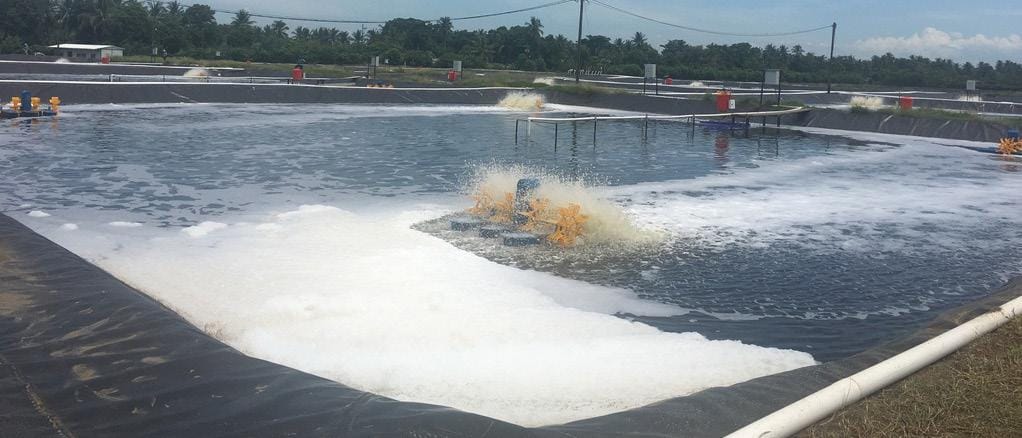
For large-scale biofloc fish or shrimp production, high-density polyethylene (HDPE)-lined ponds with well-prepared dikes are preferred. HDPE-lined ponds with sufficient elevation and central drainage are ideal for biofloc-based farming. The BFT can be conveniently applied in recirculatory aquaculture or raceway systems by including it in situ or producing the floc ex situ through an activated sludge system. The harvested biofloc is then put into the production system. The system is adequately agitated and aerated to keep the microbial floc in suspension.
Operating with minimal water exchange, BFT prevents eutrophication and enhances biosecurity. Its dense microbial community naturally suppresses harmful pathogens, strengthening the immune system of cultured species against lethal diseases and Vibrio infections.
These economic, environmental, and health benefits have made BFT one of the most promising technologies for aquaculture development. Biofloc formation occurs in well-aerated aquaculture systems where carbon sources such as molasses, starch, or wheat flour are added to stimulate heterotrophic bacterial growth.
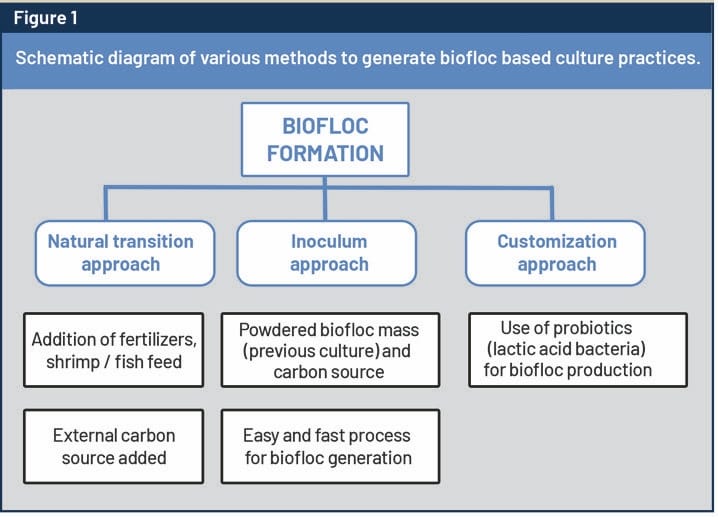
These bacteria convert nitrogenous wastes into microbial biomass, improving water quality and producing nutritious bioflocs. Continuous aeration and monitoring ensure stable microbial development and system performance (Figure 1).
Approaches for Biofloc Generation
Biofloc can be generated through three main approaches: the natural transition, inoculum, and customization methods. The natural transition approach relies on the gradual conversion of autotrophic communities into heterotrophic microbial populations by adding carbon sources and maintaining an appropriate carbon-to nitrogen ration (12-15:1).
Factors such as salinity and carbon source influence both the speed and quality of biofloc formation. Although effective, this method is relatively slow and may require several days before a stable biofloc community develops. The inoculum approach accelerates biofloc development by introducing previously cultures biofloc into a new production system.
The inoculum approach accelerates biofloc development by introducing previously cultured biofloc into new systems. Fermenting carbon sources with biofloc powder reduces initialization time, stabilizing the environment and enhancing overall production efficiency.
Carbon sources such as rice bran or molasses are fermented and aerated before being combined with dried biofloc powder from an earlier culture cycle. This method significantly reduces the time required to establish biofloc and improves production efficiency. The customization approach is the most advanced technique, incorporating probiotics and beneficial microorganisms into the biofloc system.
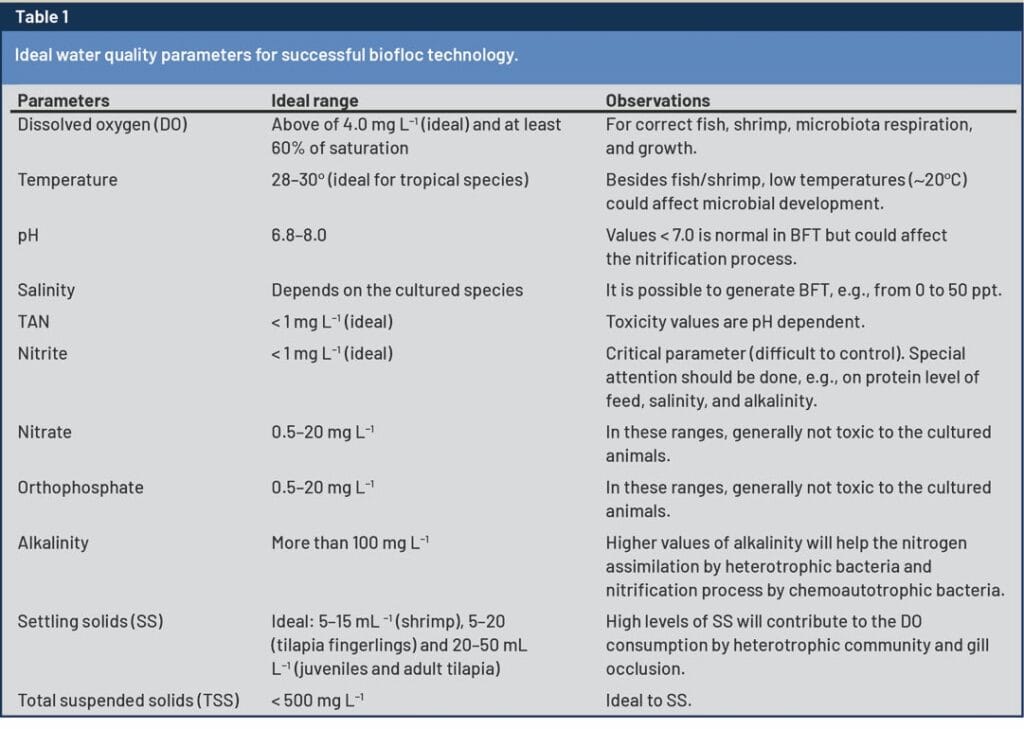
These microbes enhance water quality, improve disease resistance, reduce ammonia and hydrogen sulfide accumulation, and stimulate immune responses in cultured species. Common probiotic groups include Bacilus, Pseudomonas, and lactic acid bacteria. The recommended water quality parameters for tropical species (e.g., Litopenaeus vannamei and Oreochromis niloticus) of BFT are shown in Table 1.
BFT: Microbial Community, Nutritional Value, Sustainability and Applications
Biofloc also provides significant nutritional benefits. It contains approximately 50% crude protein, along with lipids, fiber, minerals, and energy, making it a valuable supplementary feed source. Its nutritional composition varies according to particle size, microbial composition, and carbon source used. Studies have shown improvements in feed conversion ratio (FCR), feed efficiency, growth performance, survival, reproductive success, and egg quality in several cultured species when biofloc is present.
One of the major advantages of BFT is its ability to drastically reduce water consumption and nutrient discharge. Compared with conventional aquaculture, BFT requires minimal water exchange, decreases nitrogen and phosphorus waste, improves biosecurity, and enhances disease resistance. Beneficial microbial communities suppress harmful pathogens while promoting animal health.
Nutritious bioflocs provide up to 50% crude protein alongside essential lipids and minerals. Cultured species show significant improvements in feed conversion ratios, growth performance, reproductive success, and egg quality when biofloc is present.
The technology has been successfully applied to shrimp, tilapia, carp, prawns, ornamental fish, and several other commercially important species. Although BFT requires continuous aeration and careful management, studies demonstrate higher productivity, reduced feed costs, improved profitability, and greater environmental sustainability. Furthermore, integrating BFT with multirophic aquaculture systems allows waste recycling among species, enhancing nutrient utilization and supporting sustainable aquaculture development.
Aquamimicry and Waste Utilization in Aquaculture
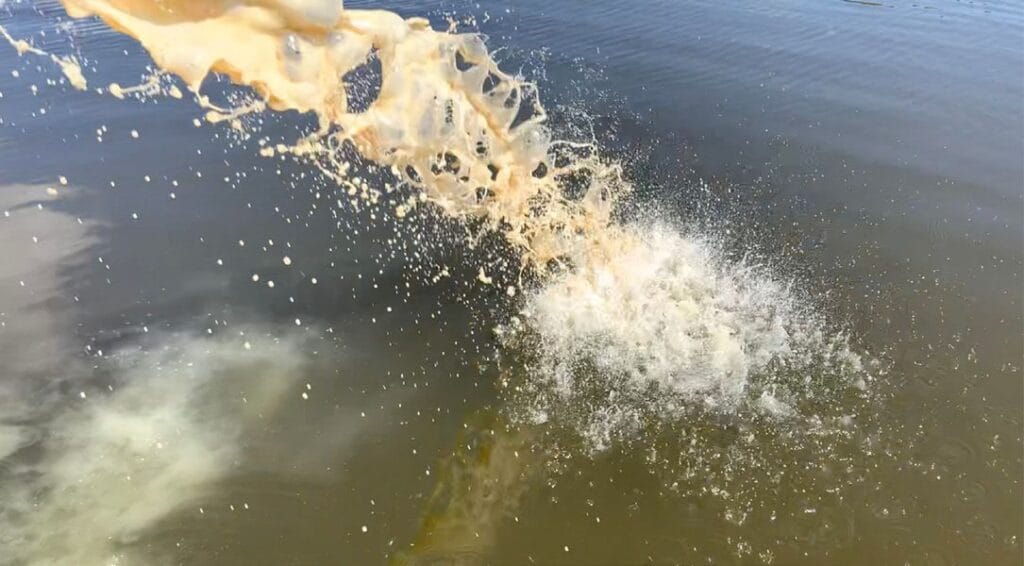
Aquamimicry is an aquaculture approach that mimics natural estuarine ecosystems by promoting blooms of copepods, zooplankton, and beneficial microorganisms through the addition of fermented rice bran and probiotics. Unlike conventional biofloc systems, it requires less aeration while providing natural supplemental nutrition that improves shrimp growth, survival, and water quality.
Copepods serve as efficient nutrient recyclers and high-quality feed organisms. Both aquamimicry and biofloc systems enhance waste utilization by converting uneaten feed and nitrogenous wastes into valuable biomass, improving nutrient recovery, reducing water exchange requirements, increasing biosecurity, and supporting more sustainable and environmentally friendly aquaculture production.
Aquamimicry vs. BFT
Both aquamimicry and BFT rely on external carbon sources to improve water quality and nutrient recycling. BFT maintains a strict carbon-to-nitrogen ratio and depends on continuous aeration to support bacterial protein production. Aquamimicry, developed in Thailand, uses fermented rice bran to stimulate natural blooms of zooplankton, microalgae, and beneficial bacteria, creating conditions similar to estuarine ecosystems. While aquamimicry requires less pond preparation and no antibiotics, it is difficult to implement indoors, requires large treatment ponds, and generates sediments that cannot be recycled as efficiently as in BFT.
Aquamimicry mimics natural estuarine ecosystems using fermented rice bran and probiotics. This practice promotes blooms of zooplankton and copepods, which recycle nutrients, require less artificial aeration, and provide high-quality supplemental nutrition.
Conclusion
BFT offers a sustainable solution to increasing seafood demand by improving productivity, reducing water use, lowering feed costs, and enhancing biosecurity. Aquamimicry complements this approach by mimicking natural ecosystems through copepod production. Both technologies support environmentally friendly, cost-effective aquaculture and hold significant potential for future industry growth.

This article is sponsored by: REEF INDUSTRIES INC.
This is a summarized version developed by the editorial team of Aquaculture Magazine based on the review article titled “A SOLUTION FOR SUSTAINABLE UTILIZATION OF AQUACULTURE WASTE: A COMPREHENSIVE REVIEW OF BIOFLOC TECHNOLOGY AND AQUAMIMICRY)” developed by: NISAR, U., PENG, D., and MU, Y. – Ocean University of China and SUN, Y. – Qingdao Agricultural University. The original article, including tables and figures, was published on JANUARY, 2022, through FRONTIERS IN NUTRITION. The full version can be accessed online through this link: 10.3389/fnut.2021.791738
Apa Reaksi Anda?
 Suka
0
Suka
0
 Kurang Suka
0
Kurang Suka
0
 Setuju
0
Setuju
0
 Tidak Setuju
0
Tidak Setuju
0
 Bagus
0
Bagus
0
 Berguna
0
Berguna
0
 Hebat
0
Hebat
0