























From microbiome to management: A new era for poultry gut health

The future of gut health lies in combining scientific insight with practical application, ensuring that advances in research translate into real-world improvements in production. Translating experimental findings into the field is vital. One of the most important areas for research is the functional understanding of the gut microbiome. We know which bacteria are there, but we still need to better understand how these communities influence host physiology and performance. Another priority is the development of practical diagnostic tools that can be easily used on farms.

Ghent University
Following the 9th International Conference on Poultry Intestinal Health (ICPIH) in Istanbul, we had the opportunity to exchange views with Professor Filip Van Immerseel of Ghent University, Belgium, who also served as one of the co-chairs of this year’s conference. As one of the leading experts in poultry gut health research, Van Immerseel has played a key role in advancing our understanding of the complex interactions between nutrition, microbiota, immunity, and intestinal function, helping to bridge the gap between fundamental science and practical poultry production.
In this exclusive interview, he reflects on the major themes and scientific developments that shaped ICPIH 2026, from the growing focus on microbiome functionality and organoid research to the industry’s accelerating shift toward preventive gut health strategies. He also shares his perspective on the challenges facing poultry producers in an era of reduced antibiotic use, the evolution of diagnostic technologies, and the role that gut health plays in improving both production efficiency and environmental sustainability. The conversation provides valuable insights into where poultry gut health research stands today—and where it is heading in the years ahead.
Let’s start with the 9th International Conference on Poultry Intestinal Health (ICPIH), which just wrapped up in Istanbul. Looking at this year’s themes and the profile of attendees, what shifts have you observed in the industry’s focus? And what were your personal “top three” takeaways from the conference?
This year’s conference highlighted that poultry research is moving away from simple studies on single pathogens or processes — what are known as reductionist approaches — towards an integrated, systems-level understanding of gut health. It is well understood that gut health is complex, and that nutrition, microbiota, immunity, and environmental factors interact dynamically within an animal, and methods that capture all of these dimensions should be used. Another important theme was the use of in vitro cell systems to study disease; the organoid research, involving 3D, miniaturized and simplified versions of the gut grown in vitro, was a major innovation for poultry research. Also, it became clear that data collection is no longer limited to performance metrics but includes many indicators of gut functionality, measured by a variety of assays, some of which are increasingly being introduced in industrial settings.
Gut health is not a single-discipline topic and that was reflected in the conference. Data scientists, molecular biologists, and specialists in bioinformatics, alongside traditional nutritionists and veterinarians, were all part of the audience, ensuring multidisciplinary collaborations.
Top 3 takeaways. Number 1. Microbiome research is maturing, from studying single pathogens or bacteria, or generating huge amounts of sequencing data without proper analysis, towards data generation aimed at understanding microbial functions that support gut health. Number 2. Many innovative tools are being developed to support gut health research. Organoids are one of them, but also molecular diagnostic tools are becoming more advanced and in the near future will become more and more accessible. Third, the industry is clearly aligning around prevention to overcome issues related to antimicrobial usage.
Gut health has become a highly debated topic, both in poultry production and more broadly across the livestock industry. Could you explain the reason behind this? When things go wrong in a broiler’s gut, what are the practical implications for the producer?
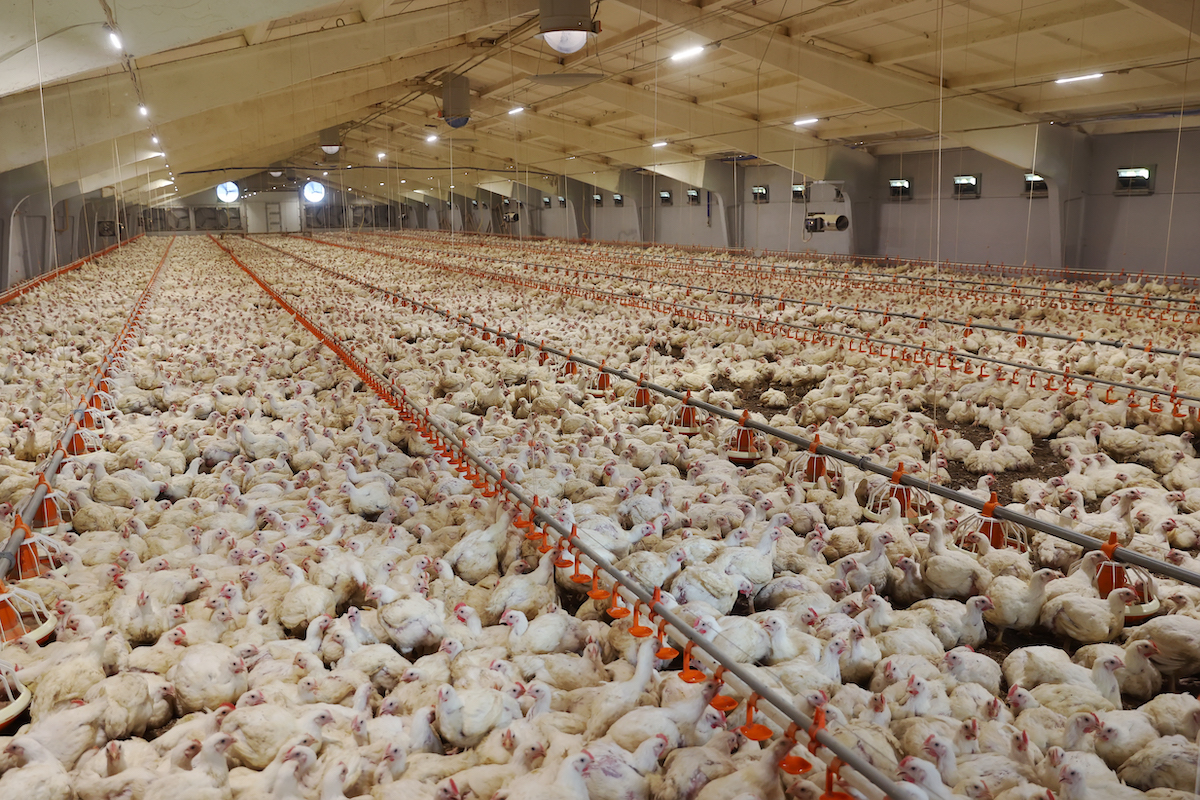
Gut health problems cause many issues. When gut health is optimal, nutrients are efficiently digested and absorbed, the microbiota is stable, and the immune system remains balanced. So, in case of gut health problems, flocks experience poor feed efficiency, within-flock variability, low performance, so high costs, also related to treatments. Also, animal welfare can be affected, not only by disease, but also poor litter quality leading to dermatitis.
The importance of the gut microbiome was a recurring theme throughout the conference, and it’s also central to your own research. What are the key factors that distinguish a healthy gut microbiome from a diseased one? In other words, what are the biological and physiological parameters of a healthy gut?
A healthy gut microbiome is characterized by a stable and resilient ecosystem that supports digestion, protects against pathogens, and strengthens the intestinal epithelial lining. One of the important aspects of a healthy microbiome is diversity, creating resistance against disturbances such as dietary changes or pathogen exposure. Also, functional activity is equally important, by producing beneficial metabolites such as short-chain fatty acids, playing a crucial role in maintaining intestinal integrity, providing energy to epithelial cells, and modulating the immune response. This results in well-developed villi, strong tight junctions between cells, and a balanced level of immune activity. In contrast, a diseased or dysbiotic microbiome often shows reduced stability and an overrepresentation of opportunistic pathogens such as E. coli and enterococci, supporting inflammation and bacterial translocation.

The threats to gut health in the poultry sector are constantly evolving. Today, especially in a world where antibiotic use is restricted, what are the primary challenges keeping producers up at night (e.g., Necrotic Enteritis, Coccidiosis, etc.)? How should producers manage these threats? Is it truly possible to maintain gut health without the use of antibiotics?
With regard to intestinal health, poultry producers may face many challenges, including indeed diseases, of which coccidia are of major importance, zoonotic infections (Salmonella, Campylobacter) but also conditions that allow opportunistic pathogens to proliferate, that depend on diet quality (also mycotoxins), environmental conditions (e.g., heat stress), and many more. Managing these threats requires a holistic approach. Biosecurity and vaccination remain fundamental, but they must be complemented by optimized nutrition and targeted use of feed additives. Gut health can be maintained without antibiotics, but it is not straightforward. It requires a combination of strategies working together, including improved management practices and a deeper understanding of gut biology. Good strategies in the starting phase of the bird are vital, as was demonstrated at the conference with talks on early nutrition, on-farm hatching, dietary additives early post-hatch and more.
Drawing on the research presented at ICPIH, which innovative solution — whether a new feed additive, a nutritional strategy, or a digital monitoring tool — did you find the most “promising” for supporting gut barrier function or controlling pathogens? Which approaches stood out the most at the conference?
With regard to additives, many are very promising so it is clear that many solutions are being developed. What is more important to me is how we evaluate gut health and in this regard, the development of models (organoid work) and molecular diagnostic tools (also digital tools) were the highlights, as this brings poultry research to a new dimension.
Probiotics, prebiotics, organic acids, phytogenics… With so many options available, how should producers make the right decision? Is the solution simply finding the “right ingredient,” or is it about the interaction between these substances? And how do you see that synergy being better harnessed in the future?
With the wide range of feed additives available, the challenge for producers is not simply selecting a product, but understanding how different solutions fit together. Producers should base their decisions on specific challenges within their operations, rather than following general trends. No product is fit for all problems. In the future, we are likely to see more tailored solutions, potentially supported by data-driven insights and even farm-specific microbiome profiling. Anyhow, producers should also educate themselves and discuss solutions and trends with veterinarians, nutritionists, and additive developers, to try to find the perfect solution for their farm-specific problems.
There’s a lot of talk about shifting from a reactive to a proactive, preventive approach to gut health management. But how much of that shift is actually taking place in the field? How ready are producers for this kind of change?
The transition from reactive to preventive gut health management is clearly underway, but it is progressing at different speeds across the industry. Larger, more integrated operations are generally leading the way, as they have greater access to data, technology, and technical expertise. External pressures are accelerating the shift. Regulatory restrictions on antibiotics, combined with economic pressures to improve efficiency, are making preventive strategies more attractive and, in many cases, necessary. Also, here veterinarians play a key role in supporting preventive approaches, while of course keeping treatment options within reach.
How can the producers in the field monitor gut health? Are there practical and reliable diagnostic tools available? In what direction is research in this field heading?
Monitoring gut health has traditionally been based on post-mortem examinations and performance indicators. While useful, these methods only provide information after problems have already occurred, and post-mortem analysis needs bird euthanasia when used for health monitoring. Often these are still the gold standards. Today, there is a strong movement towards proactive tools, using biomarkers in blood, feces, or even litter, that are gradually becoming available for field use. Sensors and real-time monitoring tools are also a field of growing interest. These topics were highlighted in many talks in the conference. The ultimate goal is to enable producers to make informed decisions in real time, improving both performance and animal welfare.
What role does improving gut health play in reducing the environmental footprint of livestock production (via the feed conversion ratio)? Does a healthy gut ultimately mean a greener industry?
A healthy gut allows birds to extract more nutrients from the same amount of feed, reducing the resources required for production. Improved gut function also reduces nutrient excretion, particularly nitrogen and phosphorus, which are major contributors to environmental pollution. So yes, the environmental footprint is reduced when gut health and performance is optimal. Of course, many other factors also play a role.
Looking ahead, which areas do you believe require a greater focus in terms of both research and commercial applications within the field of gut health?
The future of gut health lies in combining scientific insight with practical application, ensuring that advances in research translate into real-world improvements in production. Translating experimental findings into the field is vital. One of the most important areas for research is the functional understanding of the gut microbiome. We know which bacteria are there, but we still need to better understand how these communities influence host physiology and performance. Another priority is the development of practical diagnostic tools that can be easily used on farms. These tools need to translate complex biological data into simple, actionable insights. At the conference, we could clearly see that a lot of progress has been made.
About Filip Van Immerseel
Filip Van Immerseel received a Master’s degree in Bio-engineering Sciences from the Catholic University of Leuven (KUL) in 1999 and a Master’s degree in Laboratory Animal Sciences from Ghent University in 2004. He earned a PhD in Veterinary Medical Sciences from Ghent University in 2004, focusing on intestinal immune cell infiltration following Salmonella infection in chickens and on environmental triggers in the gut that influence Salmonella invasion.
Following a postdoctoral research period, he was appointed Research Professor at Ghent University in 2008. He is currently Professor at the Department of Pathobiology, Pharmacology and Zoological Medicine within the Faculty of Veterinary Medicine at Ghent University, Belgium, and heads a research group studying host–bacterium interactions.
Filip Van Immerseel has authored more than 240 scientific papers published in international peer-reviewed journals, contributed book chapters, and edited books on Salmonella and Clostridium perfringens. He is a well-known speaker at international scientific and industry events. He serves as Editor of the journal Avian Pathology and is actively involved in numerous international collaborative research networks.
He also holds a dozen patents and is engaged in valorization activities aimed at bringing novel scientific developments to the market.
From microbiome to management: A new era for poultry gut health yazısı ilk önce Feed & Additive Magazine üzerinde ortaya çıktı.
Apa Reaksi Anda?
 Suka
0
Suka
0
 Kurang Suka
0
Kurang Suka
0
 Setuju
0
Setuju
0
 Tidak Setuju
0
Tidak Setuju
0
 Bagus
0
Bagus
0
 Berguna
0
Berguna
0
 Hebat
0
Hebat
0


