































Impact of dietary amino acid levels on body fat, laying-hen performance

Amino acid requirements for laying hens are not well understood, primarily because data are lacking for the pullet stage. This gap is increasingly important as the table-egg industry wants to extend the hen’s life cycle to 100 weeks or more. The economic and environmental implications are vast, as it could mean a single hen may lay as many as 500 eggs in a lifetime.
“We need to think of pullets as an investment. If we help them grow well from the start, we can set them up for a lifetime of successful egg production,” said Jo Ann Chew, graduate research assistant, University of Alberta, at the 2025 Poultry Science Association annual meeting.
Bodyweight and age are often used to initiate photo stimulation of laying hens. But more recent research suggests that body fat, not bodyweight, is the primary determinant to trigger laying.
“However, we don’t know what the body fat threshold is,” Chew told the audience. “We have some idea, but we’re not sure what we’re aiming for, especially in the case of low-protein dietary intake.”
This knowledge gap encouraged Chew and her colleagues to investigate how amino acid levels during rearing might impact body fat and the onset of lay.
Study objective
The research team wanted to understand the impact of various amino acid levels provided during rearing on on two laying-hen strains. They set up six isocaloric diets of varying amino acid levels relative to digestible lysine based on the ideal protein concept, Chew explained.
Treatments were set up in two rooms, with birds receiving 60%, 80% and 100% amino acid levels, or 70%, 90% and 110%. Protein sources included soybean meal and canola meal, with trade-off ingredients of rolled oats and meat-mill blend.
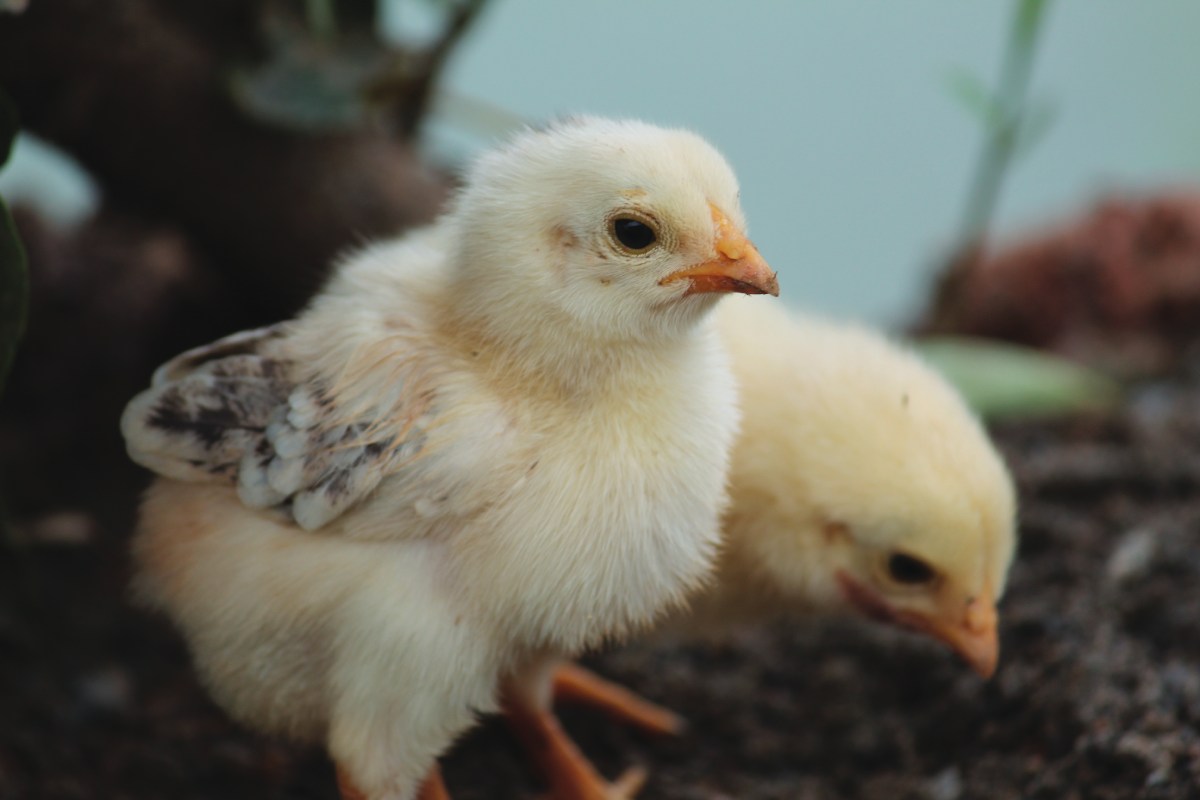
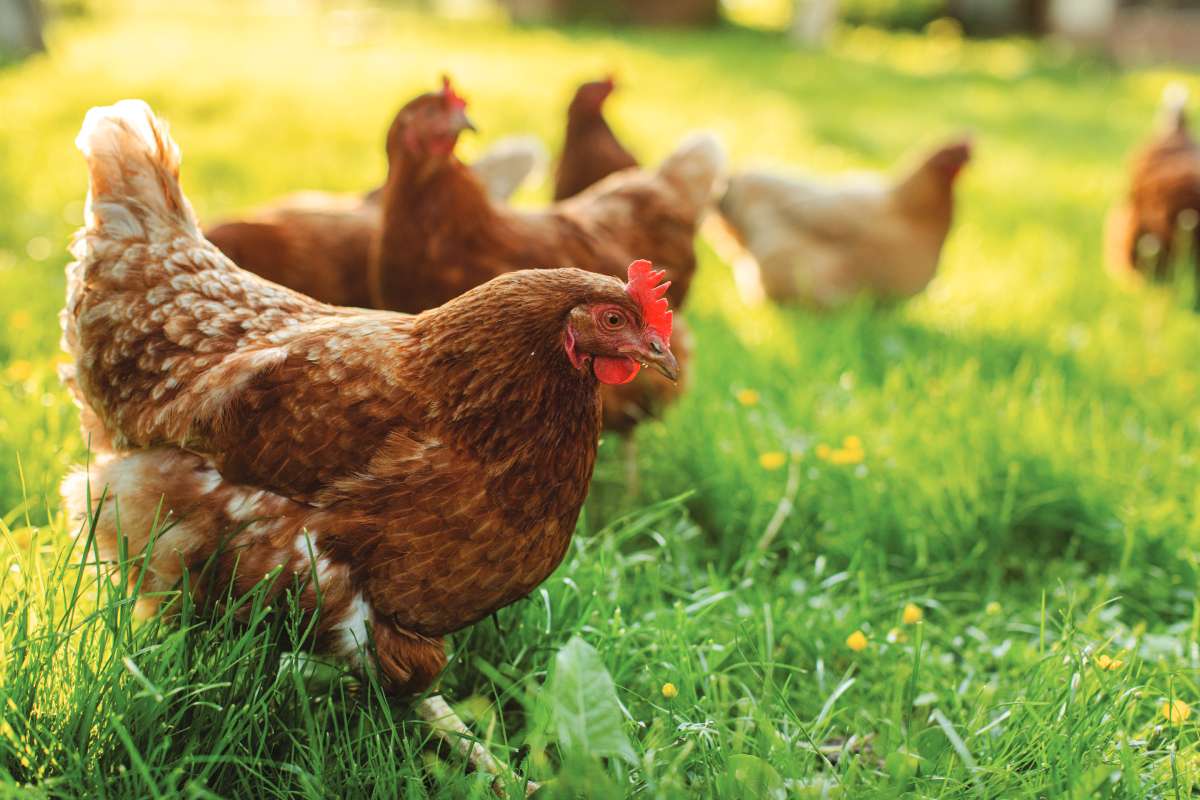
Bovans Brown and Babcock White pullets, eight per strain per dose level, were reared in floor pens and fed via multi-feeder precision-feeding stations. For the first 2 weeks of age, pullets were trained to eat from the precision-feeding stations, so all received 100% amino acid levels.
“We trained the birds to enter the station one at a time, and each bird could access only its assigned dietary treatment,” Chew said. “They were fed every time they entered the station.”
Because the multi-feeder stations can assign diets to individual birds, each bird is considered to be an experimental unit. “We also included a as a random variable in our analysis,” Chew noted.
The treatment period ran from 2 weeks to 17 weeks of age, at which time the birds were photo stimulated. After 17 weeks of age, all birds were fed commercial rations up to 30 weeks, after which they were euthanized.
The research team measured the body fat of live birds every 4 weeks from 12 to 30 weeks of age using a dual-energy X-ray absorptiometry (DEXA) machine. Following euthanasia, each bird’s fat pads were dissected and weighed.
No effect of amino acids
At 17 weeks of age, most Brown birds had reached a plateau in bodyweight. The White birds performed similarly. “They fell slightly below the performance objectives for both strains, but we suspect that was due to a younger parental flock,” Chew said. “We saw no effect of amino acid levels for either strain regarding the onset of lay, egg production or egg quality to 30 weeks of age.”
Because research has indicated that body fat triggers the onset of lay, Chew emphasized the study’s data from 20 weeks of age, which was just before the onset of lay. “There was no influence of amino acid levels on body fat for either strain,” she noted. “This was further affirmed by body composition and dissection data for the abdominal fat pad.”
Notably, the White birds had more fat than the Brown birds, consistent with DEXA data gathered throughout the study.
It’s not surprising that body fat was not directly influenced by amino acid levels. But Chew noted that there’s a gap in the scientific literature because layer research has focused on bodyweight, not body fat. “This is a research gap that we should fill,” she added.
The research team had hypothesized that pullets would respond to low amino acid levels by increasing feed intake to meet their protein requirements, and the excess energy would be stored as fat. In both strains, they saw a positive linear relationship between body fat and energy intake.
“But we also saw from the bodyweight data that pullets receiving 60% amino acid levels came into lay at the same time as birds on the other treatments,” Chew noted.
Key takeaway
One of the take-home messages the researchers emphasized was that the genetics of today’s layers are significantly different from past strains.
“We saw no effect of dietary treatments during rearing on laying-hen performance, including the onset of lay,” Chew pointed out. “This indicates that we can rear our pullets with the potential to feed lower amino acid levels — perhaps not to the extent of 60%, because we did start to see feed intake increase to meet protein needs.”
A follow-up trial
Chew shared information from a follow-up trial in the Netherlands using conventional feeding methods. Starting at 0 days of age, the study identified the potential to reduce amino acid intake to 80% of the levels recommended by breeder guides.
“Think of what this could mean for everyone involved,” Chew said. “If we are able to feed pullets more closely to what they actually need, we can reduce a lot of feed ingredient costs, as well as reduce feed waste in terms of extra nitrogen. This will subsequently provide environmental benefits.”
She emphasized that there’s more to investigate, pointing to studies suggesting that initiates the onset of lay.
“That’s where our research will take us next. Future research will look at nitrogen excretion for the environment, as well as going beyond 30 weeks of age to determine long-term production effects,” Chew noted, “with the goal of achieving 100 weeks of lifetime egg production.”
The post Impact of dietary amino acid levels on body fat, laying-hen performance appeared first on Modern Poultry.
Apa Reaksi Anda?
 Suka
0
Suka
0
 Kurang Suka
0
Kurang Suka
0
 Setuju
0
Setuju
0
 Tidak Setuju
0
Tidak Setuju
0
 Bagus
0
Bagus
0
 Berguna
0
Berguna
0
 Hebat
0
Hebat
0