





















































%20and%20Batch%20Production%20Records%20(BPR).png)

















BIO 2026: 340B faces growing calls for transparency, patient-focused reform
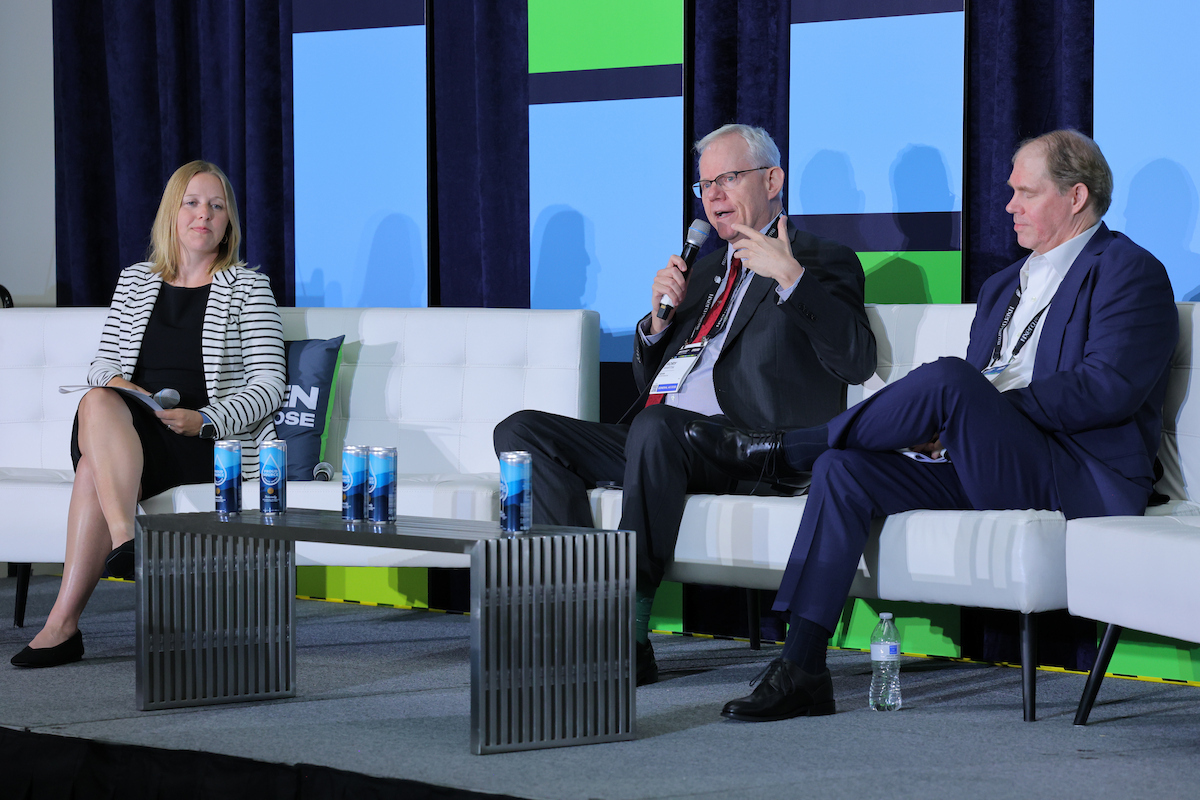
“The 340B drug pricing program was created to help safety net providers serve vulnerable patients,” said Ashley John, Director of Issue Advocacy at Novartis. “But we really have seen tremendous growth over the past few years, especially after the [Affordable Care Act], and as transparency slowly increases, it is very clear that hospitals need better criteria for which patients they are serving.”
Her comments came on Day 3 of the 2026 BIO International Convention and reflect an undeniable reality: 340B is at a crossroads.
340B is complex, lacks transparency
“When I think of 340B being at a crossroads, I think that this program actually epitomizes the tension that we have in health policy, between access and affordability,” said Darshana Patel, Ph.D., Member of the California State Assembly for District 76.
Her words were supported by research presented by Rory Martin, Ph.D., Senior Principal at Market Access Center of Excellence for IQVIA, and Patrick Wildman, Senior Vice President of Advocacy & Government Relations at the Lupus Foundation of America.
“When the program started 34 years ago, there were two nonprofit hospitals participating in the program,” said Martin. “Today, there are 2,000, and the sheer size and scope of the program is distorting the entire U.S. healthcare system.”
Additionally, Martin points out, the original intent of the program was to help vulnerable populations gain access to drugs as treatments that they couldn’t otherwise.
“There have now been multiple studies,” Martin continued, “that call this into question. It doesn’t seem to be happening. Even worse than that, it’s actually costing patients more. It’s increasing their costs.”
Based on research by Martin and his colleagues, it would seem that for-profit hospital systems are, in fact, being subsidized by the program to the tune of $16-$24 billion.
This is an astounding number in and of itself, but it is even more surprising when you consider that these hospitals claim the program does not cost patients or taxpayers any money. But Martin and his colleagues found that the program’s costs were more in the area of $180 to $200 billion as of last year.
“I think it would be wonderful if you could have a $200 billion free lunch, but I just don’t think that’s very realistic,” he said.
The impact of ‘duplicate discounts’
One of the reasons these costs are increasing, IQVIA found, is that 340B entities are, in essence, double-dipping through duplicate discounts.
“Drug makers provide Medicaid discounts to participating hospitals for qualifying drugs,” Martin explained. “They also provide discounts in the form of negotiated rebates. These are given to [pharmacy benefit managers] and to payers, to employers, to help lower net cost of drugs, and you can get this particular situation, which is called a duplicate discount, where you have both a 340B discount and a negotiated rebate on the same drugs for the same patient.”
This can not only drive up costs but also mean savings are not passed on to patients.
On 340B, patients deserve transparency – and a voice
“Many patients don’t know what 340B is,” explained Wildman. And what they don’t know can hurt them.
“It’s a decision of what do we do?” Wildman said. “Nothing, and let the program continue to grow exponentially and be driven by revenues, with patients being an afterthought? Or do we take a closer look at the burden, see how it can benefit patients, how it’s not benefiting patients, and make sure that the patient’s voice and concerns and needs and access to care are front and center in debate and reform discussions.”
And like IQVIA, the Lupus Foundation of America, along with the Arthritis Foundation, found that 340B costs were not just high, they were staggering.
“Besides the lack of transparency in the program, which was a challenge, one of the first things that really popped out to us was the revenue in just our two disease areas [lupus and arthritis] is over $2.2 billion in revenue in the 340B program,” said Wildman. “And that really surprised us.”
Wildman and his team were only looking at Medicare Part B and Part D in three states: California, Oklahoma, and Alabama, and for a restricted patient population.
But these numbers do need to be exposed, and to do that, more and more 340B transparency bills are coming before state and federal legislatures.
“As a scientist back at Genentech, bringing a single drug to market required so much testing, rigorous data, peer review, and evidence,” recalled Assemblywoman Patel. “I would love to see that kind of rigor applied to policymaking.”
The post BIO 2026: 340B faces growing calls for transparency, patient-focused reform appeared first on Bio.News.
Apa Reaksi Anda?
 Suka
0
Suka
0
 Kurang Suka
0
Kurang Suka
0
 Setuju
0
Setuju
0
 Tidak Setuju
0
Tidak Setuju
0
 Bagus
0
Bagus
0
 Berguna
0
Berguna
0
 Hebat
0
Hebat
0