

























































%20and%20Batch%20Production%20Records%20(BPR).png)















Sharper Vision, Better Performance?

This week in the world of sports science, here’s what happened…
- Should athletes train their vision?
- What World Cup finalists teach us about talent
- The next heat management breakthrough?
Should athletes train their vision?
Earlier this month, human performance specialist Stijn Lintermans sparked widespread debate and discussion with a highly informative LinkedIn post on visual training. What makes the post particularly engaging is that Lintermans not only showcases videos of a range of visual training drills and exercises but also explains the proposed benefits of each.
In one clip, Celtic F.C. footballer Reo Hatate can be seen performing rapid left-to-right and up-and-down eye movements during his warm-up. Lintermans refers to this as “Saccadic training,” which is proposed to increase the speed and accuracy of visual scanning during games.
Recent Wimbledon champion Jannik Sinner is shown lying on his back, focusing on a tennis ball suspended from a string and hovering at varying heights above his face. According to Lintermans, this drill helps develop hand-eye coordination and depth perception. Women’s world number one Aryna Sabalenka is also featured throwing and catching a tennis ball with her coach while covering one eye with her hand. This exercise is proposed to improve timing, ball tracking, and anticipation.
The Italian national football team can also be seen training while blindfolded or with an eye patch over one eye. Lintermans explains that this encourages the brain to rely more heavily on timing and anticipation.
The video concludes with several elite athletes, including basketball legend Steph Curry and American football star Marvin Harrison Jr., juggling balls. Lintermans describes juggling as a fantastic way to activate the visual motor system before training or competition.
Lintermans finishes his post with an important reminder that athletes should not neglect training their brain, vision, and decision-making ability. If you are interested in this topic, please check out our courses Anticipation and Decision Making in Team Sports and our blog How tennis ball drills can help develop hand-eye coordination.
What World Cup finalists teach us about talent
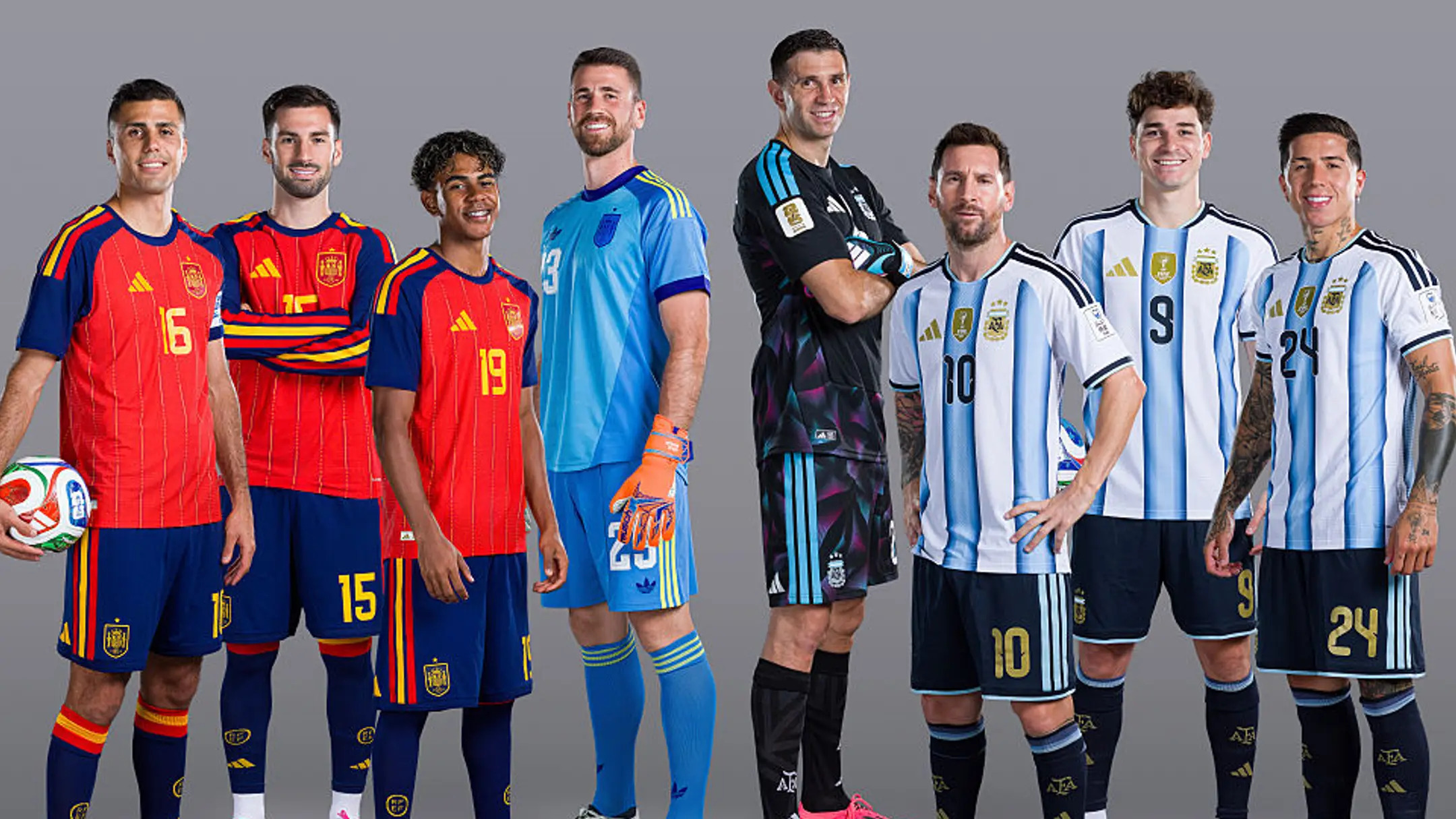
I’m sure the vast majority of us tuned into the World Cup final between Spain and Argentina last week. Well, Dr Juan Delgado provided some fascinating insight in a social media post into the squads of both nations.
Interestingly, according to Delgado, the relative age effect still exists at this level, with players born earlier in the year remaining overrepresented at the elite level. Spain had 39% of their players born in the first quarter of the year compared to just 13% born in the fourth quarter. Meanwhile, Argentina had 35% born in the first quarter compared to 17% born in the fourth quarter. (Our relative age effect course can be found here).
Interestingly, Delgado outlines that across both squads, nearly one-quarter of the players were classed as late developers (22% early developers, 54% on-time developers, and 24% late developers). This further reinforces the importance of ensuring youth academies do not neglect or overlook late developers.
The post also shows that, on average, it took approximately three years after players made their professional debut before they reached international level, indicating that there is a substantial development period before becoming an international player.
This post by Delgado provides a fascinating insight into the journeys of elite footballers and further highlights the importance of long-term development and understanding maturation. As Delgado outlines in his infographic, “Late bloomers win big too.”
Earlier this year, I featured another of Delgado’s posts, which explored Rodri and Harry Kane’s inspiring journeys (see here). It is well worth checking out, especially considering both had excellent World Cups.
The next heat management breakthrough?
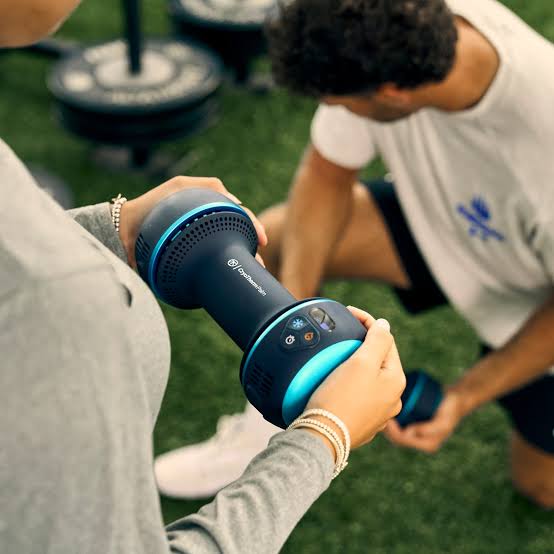
Sticking with the World Cup, there has been significant discussion around the Therabody CryoTherm Palm device. England’s players have been using the handheld device as part of their heat management strategy. Unlike traditional cooling methods that cool the entire body, this device specifically targets the palms of the hands.
The palms contain specialised blood vessels known as arteriovenous anastomoses (AVAs), which are among the body’s primary sites for heat exchange. These vessels allow heat to be transferred from circulating blood more efficiently than many other areas of the body. The theory behind the CryoTherm Palm is that cooling the blood as it flows through the hands can help lower core body temperature, reduce thermal strain, and ultimately delay fatigue.
Interestingly, some scientific research supports the effectiveness of this device. A study with elite footballers from IMG Academy found that athletes who used palm cooling reported feeling 60% cooler and maintained their sprint speed better compared to control conditions. Another study involving collegiate athletes showed that participants who used palm cooling between sets of the overhead press completed 58% more repetitions in their final set compared to the control group.
However, it is important to note that much of the current evidence comes from Therabody-funded research or studies conducted in collaboration with the company. While these findings are promising, they should be interpreted with caution until they are replicated by independent researchers.
As major sporting events continue to take place in increasingly hot environments, it will be interesting to see if palm cooling becomes a more widely adopted strategy for managing heat stress and helping athletes maintain their performance. If you want to learn about other heat management strategies the England team has been using, check out our previous edition of SFS Weekly here.
From us this week:
>> New course: Menstruation in Sport
>> New podcast: Frontal Plane Fundamentals with Dr Matthew Ibrahim
>> New infographic: Salivary Immunoglobulin
>> New article: Hydrotherapy
Access to a growing library of sports science courses
SFS Academy is an all-access membership to premium sports science education.
With SFS Academy, you’ll learn from some of the best coaches around the world as they teach you how to apply the latest research and practice with your athletes.
The post Sharper Vision, Better Performance? appeared first on Science for Sport.
Apa Reaksi Anda?
 Suka
0
Suka
0
 Kurang Suka
0
Kurang Suka
0
 Setuju
0
Setuju
0
 Tidak Setuju
0
Tidak Setuju
0
 Bagus
0
Bagus
0
 Berguna
0
Berguna
0
 Hebat
0
Hebat
0