


















































%20and%20Batch%20Production%20Records%20(BPR).png)

















Senators seek solutions for AMR, maintaining US biotech leadership
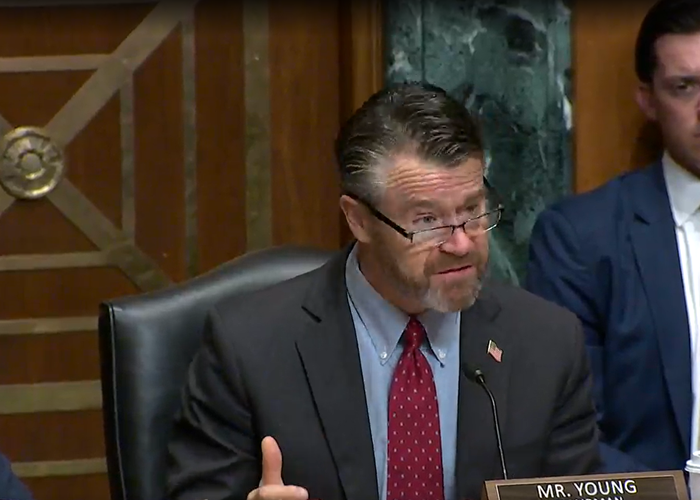
There was bipartisan support for the PASTEUR Act’s approach to addressing AMR and for NSCEB recommendations, both BIO priorities.
A bipartisan Senate hearing sought strategic approaches to two related challenges facing U.S. security—maintaining American biotech leadership and tackling antimicrobial resistance (AMR).
Lawmakers from both parties in the Aug. 4 Senate Finance Health Subcommittee hearing agreed on the need to support American innovation in developing not only antimicrobials, but all types of medicine.
“China’s rise in biotechnology and the growing risks of antimicrobial resistance present new challenges to the United States,” said Subcommittee Chair Todd Young (R-IN).
Chair Young, who noted 70,000 Indianans are employed in biotech, has worked on solutions to both challenges. In June, he, Sen. Michael Bennet (D-CO), and others reintroduced the Senate version of the PASTEUR Act, which would encourage development of new antimicrobials. In an effort to preserve American biotech leadership, Chair Young oversaw the National Security Commission on Emerging Biotechnology (NSCEB) report.
Additional approaches to these challenges were also discussed in the hearing.
Support for AMR research and innovation
Senators analyzed the threat of AMR, the market challenges to addressing AMR, and some policy solutions.
Witness Kevin Outterson, whose organization CARB-X leads a public-private partnership to fund new antimicrobials, explained the importance of antibiotics. He said soldiers who are wounded, mothers having C-sections, and older adults getting a knee replacement “depend on these amazing drugs as a safety net to prevent the infection.” But persistent use of antimicrobials lets pathogens develop resistance, creating a public health concern.
“AMR is linked to 170,000 deaths annually, and infections contribute to half of cancer deaths and are the second leading cause of maternal mortality,” in the U.S., explained witness Vera Luther, MD, an infectious disease expert at Dartmouth Hitchcock Medical Center. “Healthcare costs from the six biggest AMR threats are more than $4.6 billion annually.”
The need to use antimicrobials judiciously makes it nearly impossible for the innovative biotech developing these drugs to recoup their investment. Of the last 11 small biotechs gaining Food and Drug Administration (FDA) approval for novel antimicrobials, two approvals are new and the other nine “have either gone into bankruptcy or the economic equivalent. Their R&D investors are completely wiped out,” Outterson said.
The proposed PASTEUR Act was supported as a solution by Outterson and Luther. Lawmakers expressed interest in its concepts, and several asked pointed questions at the hearing, including Sens. Catherine Cortez Masto (D-NV), Bill Cassidy, MD (R-LA), Roger Marshall (R-KS), and Subcommittee Ranking Member Maggie Hassan (D-NH). Sen. Bennet provided a statement for the record expressing support for the PASTEUR Act at the hearing.
Instead of paying by volume, PASTEUR would use a contracting model that provides predictable support for qualifying new antimicrobials developed, ensuring we have effective treatments against the most threatening infections when they arise.
Government incentives for new AMR treatments would save lives, and money, Outterson said. “This would be a remarkably great value for the U.S. taxpayers,” he maintained. “A Center for Global Development study found a 28-to-1 return.”
The Biotechnology Innovation Organization (BIO) also supports the PASTEUR Act. “Updated PASTEUR legislation would help to repair the broken marketplace for antimicrobials by enabling a business model centered around the appropriate use of new and novel treatments,” said BIO President & CEO John F. Crowley, when the bill was reintroduced in Congress earlier this year.
BIO has called attention to patient challenges with AMR, including by amplifying the story of patient advocate Katy Grainger in “The Fight of Our Lives.”
Supporting small biotechs
Suggestions for supporting small biotechs came from several lawmakers, including Ranking Member Hassan, who mentioned developing legislation to give tax incentives for biotechs working on new antibiotics.
Sen. Cassidy urged supporting small innovative biotechs in general, and said the drug price controls established by the Inflation Reduction Act (IRA) is a drag on these companies.
“For small biotechs right now, their biggest challenge is raising critical capital,” he explained. “The IRA, which is going to begin to include small biotechs in 2028, is a real hindrance to raising capital now, they tell me, because the drugs for which they’re currently raising money may be subject to the IRA.”
Cassidy has proposed the Small Biotech Innovation Act to allow small biotechs that are investing heavily in research to claim some exemptions from IRA price controls.
The threat from China
BIO supports many recommendations of the NSCEB report on maintaining U.S. biotech leadership. As Chair Young told the hearing, the report outlines the threat posed by China’s concerted strategy to replace America by developing and manufacturing most of the world’s medicine.
One of the witnesses in the hearing, Michelle Rozo, Vice Chair of the NSCEB, described why that matters.
“America’s growing dependency on Chinese biopharmaceutical supply chains is a strategic vulnerability,” she testified. “If China has already restricted access to critical minerals, why would we assume it would continue supplying life-saving medicines during a conflict?”
The NSCEB report Rozo and Chair Young oversaw includes 49 recommendations to maintain biotech superiority, such as creation of a federal office to coordinate the work of diverse agencies and further spending by Congress.
While some improvements are under consideration by Congress and the administration, Rozo said we need to implement more—soon. Responding to a question from Sen. Cortez Masto, Rozo confirmed China has apparently begun implementing some NSCEB recommendations in their own country to compete with the U.S.
Subcommittee Ranking Member Hassan was one of several senators who appeared to appreciate the urgency.
“If the United States does not keep up with the science and innovation coming from countries like China, we risk falling behind and becoming reliant on critical new medications that are only available abroad,” she told the hearing.
Several Senators, including Sens. Roger Marshall, MD (R-KS), James Lankford (R-OK), and Mark Warner (D-VA), asked about challenges of onshoring, particularly as China dominates manufacture of the key starting materials underpinning much of drug production. Outterson, Luther, and Rozo said government incentives can drive innovation to potentially enable safe, low-cost production in the U.S.
Sen. Ron Wyden (D-OR) was one of several lawmakers praising the bipartisan agreement at the hearing. He said he hoped that next year “we’re working on these issues and that we have the same kind of coalition that you’re seeing here.”
The post Senators seek solutions for AMR, maintaining US biotech leadership appeared first on Bio.News.
Apa Reaksi Anda?
 Suka
0
Suka
0
 Kurang Suka
0
Kurang Suka
0
 Setuju
0
Setuju
0
 Tidak Setuju
0
Tidak Setuju
0
 Bagus
0
Bagus
0
 Berguna
0
Berguna
0
 Hebat
0
Hebat
0