






































%20and%20Batch%20Production%20Records%20(BPR).png)

















BIO 2026: Gov. Tina Kotek on Oregon’s thriving bioscience sector
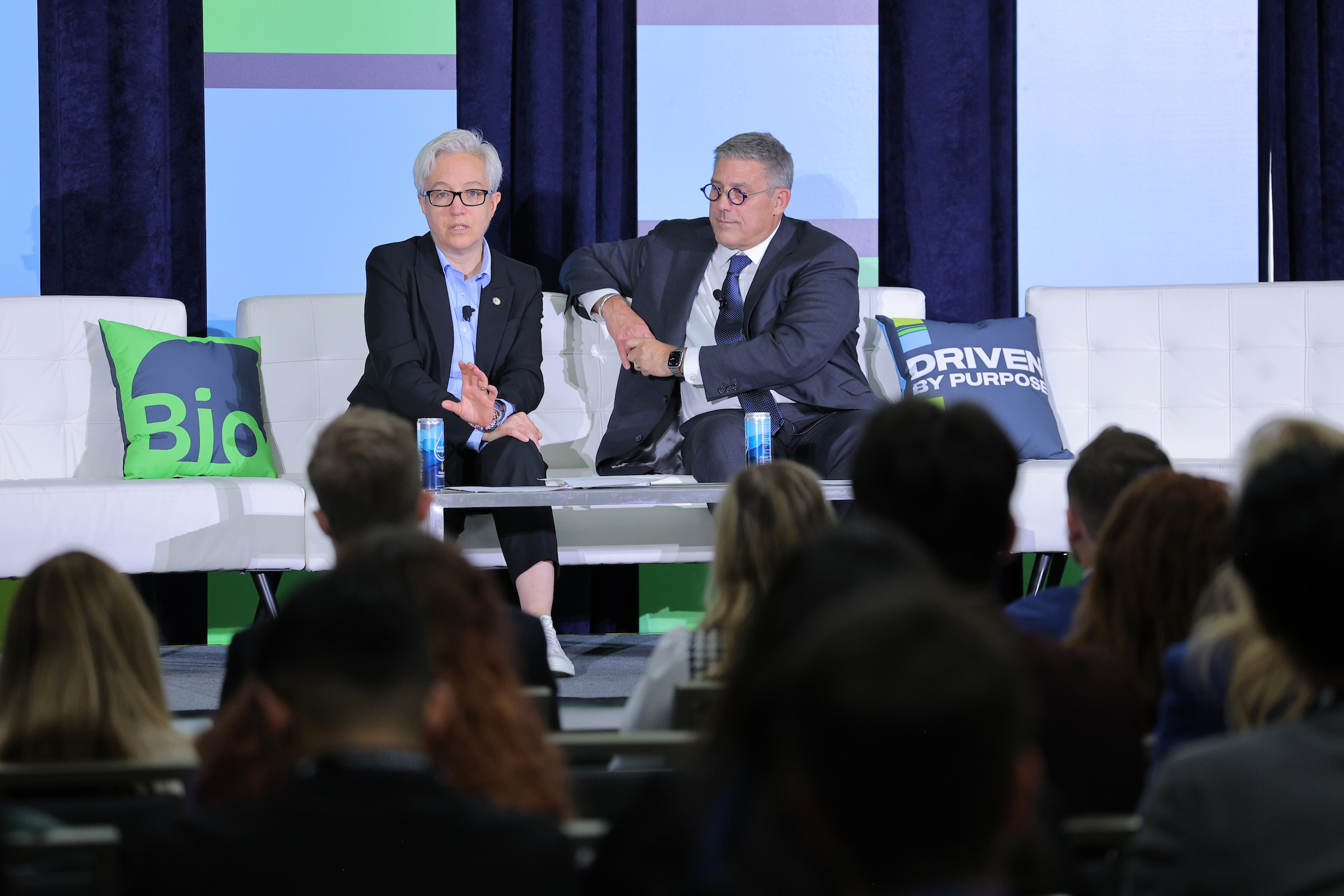
What will it take to build a stronger, more resilient U.S. life sciences industry? In a June 23 fireside chat at the 2026 BIO International Convention, Oregon Gov. Tina Kotek shared her perspective on her state’s thriving biosciences sector and advancing bold strategies to grow innovation, strengthen supply chains, and compete for the future.
The following is an edited transcript of her remarks and interview with Bio.News.
Q: What sets Oregon apart in creating or attracting companies, developing supporting services, and drawing investment?
A: I would start off with talent. I think the DNA in Oregon is about innovation, creativity. I think we pride ourselves on being changemakers, and I think that lends itself to research and development. We like to make things in Oregon; we’ve made a lot of things over the years, and we have a very strong ecosystem in biosciences, making things people need. It’s also a great place to recruit to. People say, “I want to live in Oregon because it’s beautiful.”
Oregon already has a very attractive life science and bioscience ecosystem: 75,000 jobs in our state in that sector, 2500 businesses that are connected to it.
Under my leadership, we have established fast-track permitting for large-scale investments, so if you are an existing company and want to grow or would like to come to Oregon, we are open to making that easier for you.
We are looking at expanding our research and development tax credit to include our life sciences partners, because we know that for those start-ups, the ability to get into the pipeline with new innovations is really critical.
We have so many opportunities for people across our state, and all I would say is, if you’re looking for something, we probably have it, and it’s a great place to grow. And, really importantly, it’s a great place to live. And so bringing talent to Oregon is kind of easy, and we are there to make it easy for you.
Q: Academic institutions, including academic research communities in Oregon, have been major stakeholders in the formative stages of growing our industry. In what ways have you supported this innovation ecosystem?
A: Our private sector partners are really important to us: Genentech, Thermo Fisher, Lonza, other companies. And I think where we have been very successful in working on some of our apprenticeship programs and some of the very specific biotech sector-type things that we can connect with our higher education community colleges, our universities. That, I think, has been very helpful for us to take it to the next level.
Last December, I announced a Prosperity Roadmap to focus on things like workforce development. It is about a tax structure that promotes innovation; I think next year we need to adjust our R&D credit. It’s about making sure that our economic development tools and apparatuses actually work for companies, so you’ve got to ask questions of people, you have to say is that really working for you and listen to the answers.
Q: Oregon has seen efforts over the past few years to expand the state’s R&D Tax Credit, which is currently limited to semiconductor R&D activities, to include life science R&D. We would love to see this pass! What do you see as the most significant barriers to this?
A: As I said, I want to see expansion of the R&D tax credit. I’ve said to the Prosperity Council – which is part of my roadmap for being more competitive – that we all have to be careful about the way we collect taxes. We need to agree on all the details so they are paying for things that matter. I want to be able to say if we make this change or that change, that we are going to see particular types of investment that will create good-paying jobs, provide the affordable living-wage jobs that people need to live in our state.
Q: In your state, Nike co-founder Phil Knight and his wife, Penny, pledged an unprecedented $2 billion to the Knight Cancer Institute at Oregon Health Sciences University. This has provided incredible momentum for comprehensive cancer care, and it has also been a catalyst for startups in the region. Can you describe what this has meant for the innovation ecosystem in Portland?
A: That gift from the Knights is transformational – the $2 billion gift for the Knight Cancer Institute with Oregon Health and Science Institute in Portland, which is on top of the $1 billion investment nearly a decade ago for cancer research. Now it’s about cancer treatment, so there’ll be a direct connection between the R&D that’s happening at OHSU, which is becoming an international destination for cancer treatment. What’s great about that is the intersection between going from research to actual treatment in one setting.
I think it’s important to support startups. I think of the risks that people take when they launch startups, and it’s really been great to meet some of these folks, because they just have so much passion. They’re saying, “I want to try this thing, and if I can get a little bit of help, I’m going to the next level.”
Q: Can you talk about your coalition to cooperate with other Western Governors?
A: I did vaccine work when I was a kid advocate, so I’m very aware of CDC recommendations and things like that. I know it made sense years ago to write into our law that we’re going to follow CDC vaccine guidelines. And then, of course, the world changed, and so the Governors of California, Washington, and Hawaii also joined us. We said we need to make sure that people get their vaccines.
It came together really quickly, actually, to have a West Coast health alliance that said we’re going to have our own scientifically-based standards on vaccine approval and that our insurance companies are going to pay for them.
Q: You have been an advocate for biotechnology in your state and beyond. BIO is a nonpartisan organization, and we work with the Democratic Governors Association, among other groups, and you have been an advocate for biotech there. This could be politically risky as a Democrat because many voters just think “big pharma.” Why is it so important for you to advocate for biotech in places like DGA?
A: My message to the industry is that the way to combat the lack of trust is to just be open and say, “What’s the goal? What are we all trying to do together?”
Let’s focus again on the goal: to make things that help people. What’s been great about the companies who are in Oregon is that they do understand that they’re dependent on the workforce there and the community and making sure people have what they need. When we’re all working together, we can move mountains.
The post BIO 2026: Gov. Tina Kotek on Oregon’s thriving bioscience sector appeared first on Bio.News.
Apa Reaksi Anda?
 Suka
0
Suka
0
 Kurang Suka
0
Kurang Suka
0
 Setuju
0
Setuju
0
 Tidak Setuju
0
Tidak Setuju
0
 Bagus
0
Bagus
0
 Berguna
0
Berguna
0
 Hebat
0
Hebat
0