









































%20and%20Batch%20Production%20Records%20(BPR).png)









Could a tiny intraoral robot make two-visit crown preparation a thing of the past?
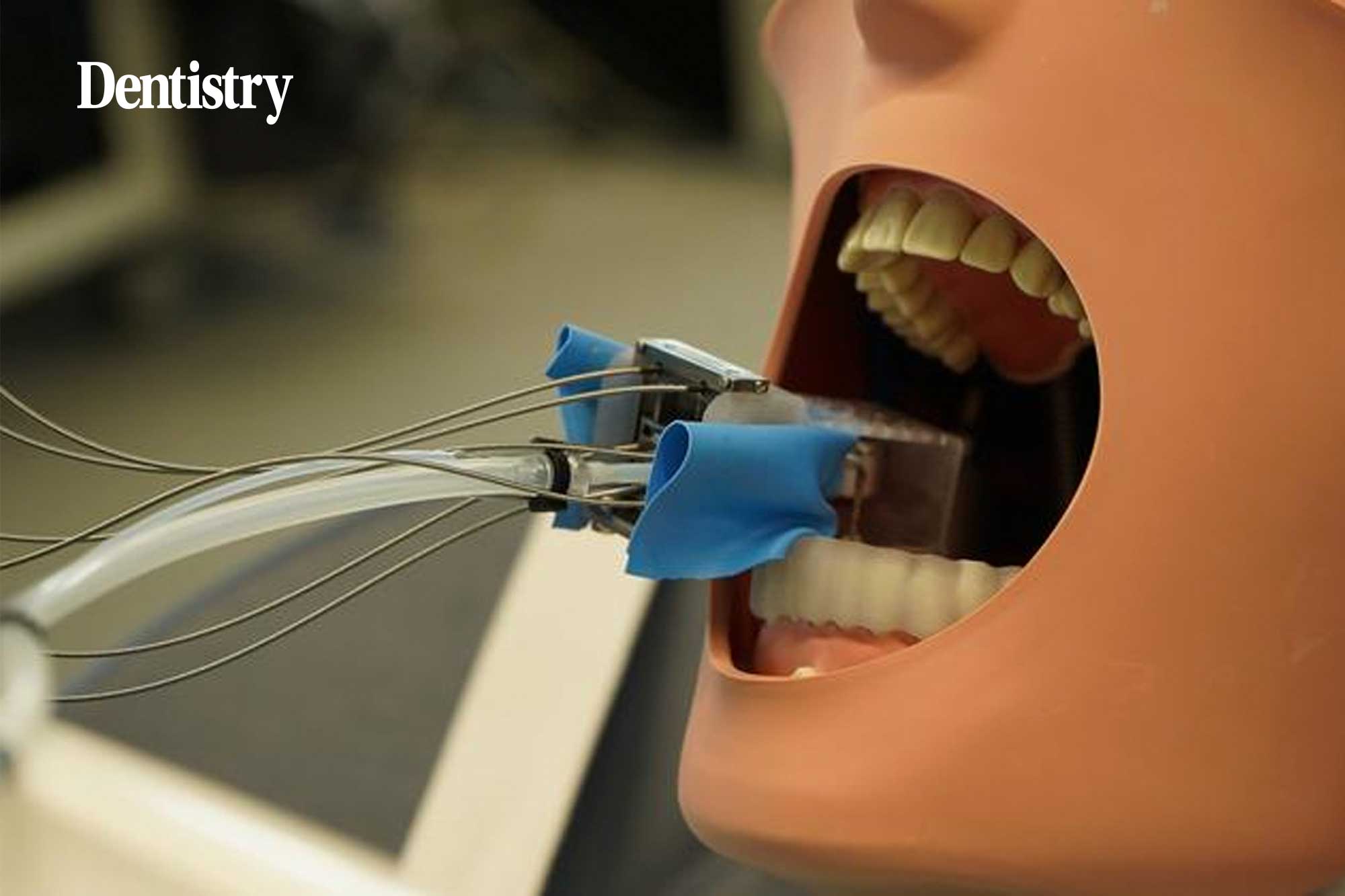
A miniature intraoral robot could allow dentists to complete crown preparations in a single visit, potentially eliminating the need for additional appointments.
Developed by researchers at the Department of Biomedical Engineering at the University of Basel, the robot is roughly the size of a cork and designed to fit comfortably inside the patient’s mouth. Its controls are located outside of the robot and connected with flexible cables.
The device is able to carry out precise crown preparation according to a digital plan. After a diagnostic scan, clinicians can plan exactly how the robot should remove the tooth material and order the crown immediately. Developers say that this means a second appointment is not needed.
In addition to planning the crown, the scan produces a custom-fitted dental splint which the mini robot is attached to. If the patient moves their head during the treatment, the splint allows the device to move with them.
How does the robot carry out crown preparation?
First, the intraoral robot uses a wide drill to reduce the tooth surface by removing material from above. It then uses a finer drill to work on the sides of the tooth.
This process was tested on tooth models made of synthetic resin and on a ceramic material with a hardness similar to that of tooth enamel. The margin of positional error was less than 0.2mm, which will be reduced further once positional sensors are integrated into the design.
The force generated during drilling was also tested, and found to be less than five newtons – comparable to the weight of a 500ml bottle of water. The robot’s noise levels are being assessed further to determine its suitability for use in practice.
Once further testing has been completed and sensors have been added, the researchers hope it could be implemented into dental workflows.
Yukiko Tomooka, first author of the paper, said: ‘Even after a power outage, [the miniature intraoral robot] would know where it is and where it needs to continue based on the sensor data.’
Dental robotics remains largely experimental in UK clinical dentistry, though robot-assisted implant systems are already being used overseas.
Follow Dentistry.co.uk on Instagram to keep up with all the latest dental news and trends.
Apa Reaksi Anda?
 Suka
0
Suka
0
 Kurang Suka
0
Kurang Suka
0
 Setuju
0
Setuju
0
 Tidak Setuju
0
Tidak Setuju
0
 Bagus
0
Bagus
0
 Berguna
0
Berguna
0
 Hebat
0
Hebat
0