

















































%20and%20Batch%20Production%20Records%20(BPR).png)
















CRISPR Base Editing Repairs Hard-to-Treat Cystic Fibrosis Mutation in Cell Models

Affecting an estimated 100,000 people globally, cystic fibrosis (CF) cases stem from mutations in the cystic fibrosis transmembrane conductance regulator (CFTR) protein. In the past several decades, scientists have successfully engineered various small-molecule therapies that lessen the severity of the disease. However there are still treatment challenges. Now, data from a new study in a cell model demonstrates that a gene therapy can successfully repair an “untreatable” mutation associated with a particularly severe form of the disease. Details of the potential therapy are published in a new Science Translational Medicine paper titled “Functional correction of the untreatable CFTR 1717-IG>A mutation through mRNA- and sgRNA-optimized base editing.”
Many current therapies benefit patients with the most common disease-associated mutation, F508del. However they often have little effect on patients who harbor other types of mutations. For example, some patients have a mutation named 1717-1G>A, which is relatively common but doesn’t have any approved therapies due to being a splicing mutation that results in little to no protein production. In fact, “about 10% of people with CF do not qualify for any of the available CFTR modulator therapies, particularly those people with severe splicing mutations that result in frameshifts and the formation of premature termination codons.”
The 1717-1G>A mutation is the target of the therapy described in the paper, which was written by scientists from the University of Trento and their collaborators elsewhere. Specifically, the team developed an “adenine base editing strategy to efficiently correct the 1717-1G>A mutation,” they wrote in Science Translational Medicine. “By harnessing the SpRY- ABE9 system, which we delivered as optimized RNAs for both the base editor and single guide RNA (sgRNA), we achieved functional correction in patient-derived models.”
Furthermore, the scientists note that they opted to use base editing rather than strategies like base editing because it has the advantage of “typically higher nucleotide modification efficiencies and a streamlined system requiring only the editor and an sgRNA” and because it has been used in other CF studies.
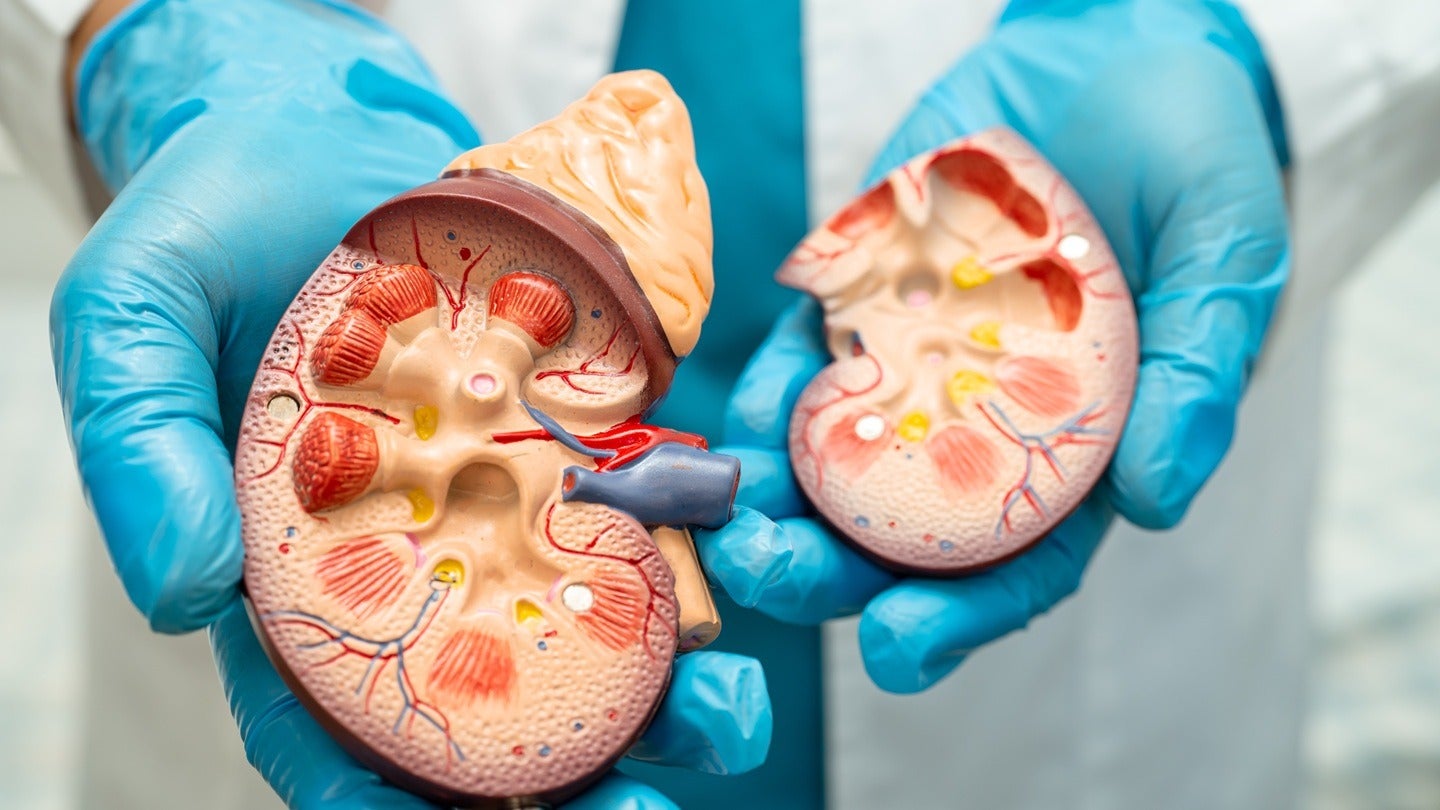
Using their ABE9 base editor and modified CRISPR-Cas9 tool, the scientists report successfully editing up to 30% of target DNA in human embryonic kidney cell lines and patient-derived airway epithelial cells with minimal off-target effects. It also corrected the mutation in intestinal organoids derived from CF patients as evidenced by restored CFTR activity.
Additional studies are needed, especially in animals, to fully assess the effectiveness of potential therapy but early results are promising. Overall, the approach achieved an editing efficiency of 13%. Prior studies showed that 10% efficiency may be enough for functional recovery. The results suggest that the therapy could benefit the subset of patients whose disease is caused by 1717-1G>A.
The post CRISPR Base Editing Repairs Hard-to-Treat Cystic Fibrosis Mutation in Cell Models appeared first on GEN - Genetic Engineering and Biotechnology News.
Apa Reaksi Anda?
 Suka
0
Suka
0
 Kurang Suka
0
Kurang Suka
0
 Setuju
0
Setuju
0
 Tidak Setuju
0
Tidak Setuju
0
 Bagus
0
Bagus
0
 Berguna
0
Berguna
0
 Hebat
0
Hebat
0