































%20and%20Batch%20Production%20Records%20(BPR).png)












AI Wizard Adapts Processes in a Self-Driving Lab
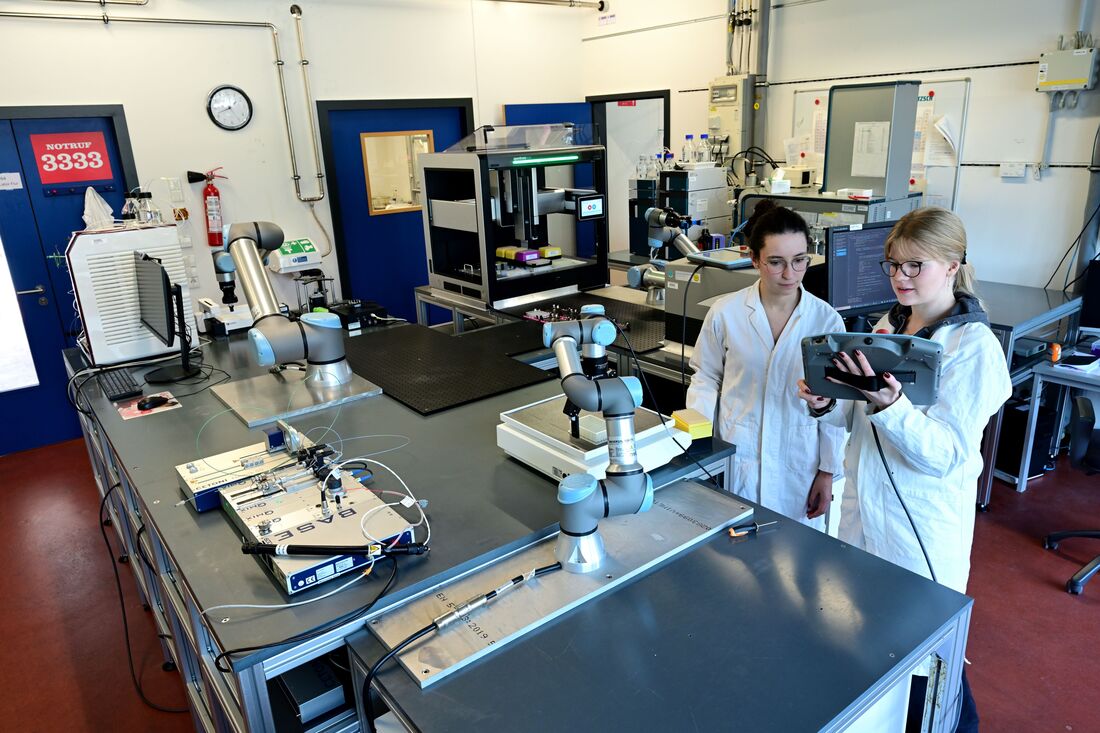
German researchers who run a self-driving laboratory have created an agentic AI wizard to help their students rapidly design and implement new processes.
The wizard, which uses N8N software, can guide a student through establishing experiments without the need for coding, allowing them to quickly set up a new process.
According to Matthias Franzreb, PhD, a professor and departmental leader in bioengineering and biosystems at the Karlsruhe Institute of Technology, developing wizards could help any autonomous laboratory where the experimental setup needs to change fast.
“Each of our bachelor’s and master’s students has their own type of experiment and, in the beginning, going into Python scripting, it used to take two months to have the whole thing programmed,” he says.
By contrast, he says, the AI agent can help the student develop a new process within one or two days. It has so far been used to develop around six processes, he says, for a slightly larger number of students, as the same template can be used more than once.
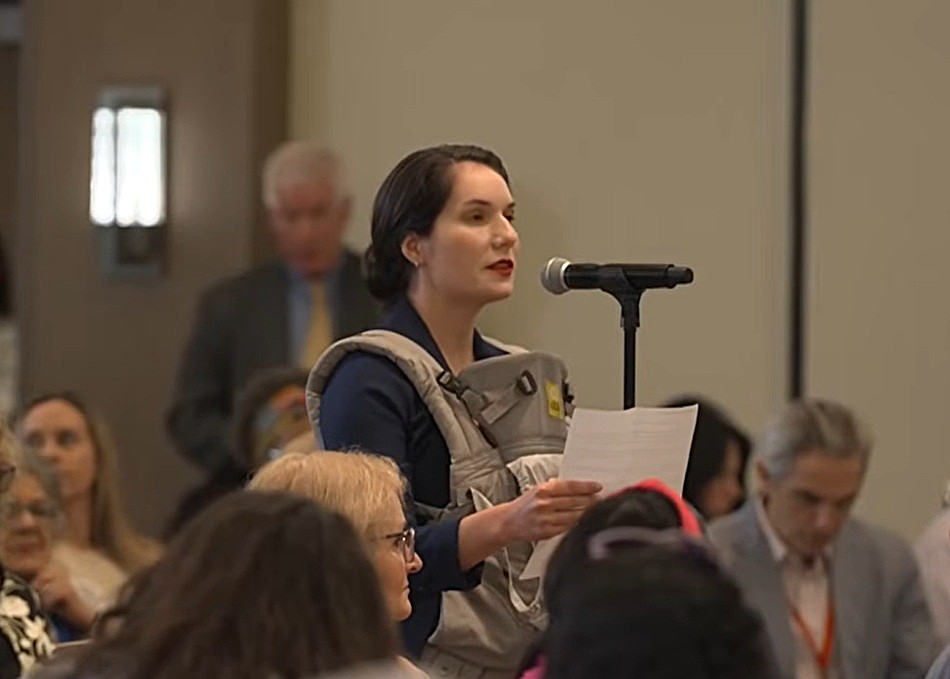
Bioprocessing, like many other areas of human endeavor, is experiencing disruptive change with the growing use of digital tools at both the laboratory and commercial scale, Franzreb explained in a talk at Bioprocessing Summit Europe.
Among these changes is the difference between classical labs, which have automated equipment, such as liquid handling stations, but where scientists must design and set up their own experiments, and self-driving labs. In the latter, he explains, machine learning uses a first set of experiments to autonomously decide what experiments should be next.
In his talk, Franzreb also showed how a wizard could be used for designing a chromatography experiment. An experiment was set up to determine batch parameters at a small-scale in 96-well plates. From this, the software used a chromatography simulation to find the optimal conditions for the experiment and then ran it in a real chromatography system to validate the results.
According to Franzreb, the next step for the self-driving laboratory will be working with the German Research Center for Artificial Intelligence (DFKI) and other research partners to develop ontological capabilities for the wizards so they can extract context for the experiments from Standard Operating Procedures (SOPs) or the academic literature.
“I think this is simple in principle,” he explains. “But at the moment we don’t have it, and it will be a challenge to roll out.”
The post AI Wizard Adapts Processes in a Self-Driving Lab appeared first on GEN - Genetic Engineering and Biotechnology News.
Apa Reaksi Anda?
 Suka
0
Suka
0
 Kurang Suka
0
Kurang Suka
0
 Setuju
0
Setuju
0
 Tidak Setuju
0
Tidak Setuju
0
 Bagus
0
Bagus
0
 Berguna
0
Berguna
0
 Hebat
0
Hebat
0