























































%20and%20Batch%20Production%20Records%20(BPR).png)














Advanced Cell Sorting Balances Precision, Scale, and Simplicity
Within complex biological samples, the most important cells are often the hardest to find. Identifying, characterizing, and isolating rare or functionally-distinct populations has become central to modern cell biology, translational research, and cell therapy manufacturing. Among the most powerful tools for this task is fluorescence-activated cell sorting (FACS), a specialized form of flow cytometry that physically separates heterogeneous cell mixtures into defined subpopulations based on fluorescent labeling. Compared with methods such as magnetic-activated cell sorting (MACS), FACS offers higher-resolution analysis and greater flexibility for characterizing diverse, multi-parameter populations.
Flow cytometry itself measures the physical and chemical properties of individual cells as they pass single-file through a laser interrogation point. Although the technology emerged in the mid-1960s, the term “flow cytometry” replaced the earlier “pulse cytophotometry” in the late 1970s as fluorescence-based analysis and physical cell sorting became increasingly intertwined. Using fluorescently-labeled antibodies or probes, investigators can identify and isolate specific populations, including T cells, B cells, cancer cells, stem cells, and genetically-engineered cells.
As cell sorting applications continue to expand, instrument selection increasingly depends on experimental and manufacturing demands. Considerations include fluorochrome capacity, sterility requirements, aerosol containment, throughput, scalability, and budget. GEN spoke with industry leaders about how next-generation sorting platforms are addressing these evolving challenges.
To address these challenges, Yee says the company developed the Pala platform, which integrates key components of traditional flow cytometry while focusing on being a faster and easier platform for single cell dispensing. “Within minutes, users can initialize the system, identify sorting parameters, and dispense single cells into a microtiter plate. The intuitive and simple software was designed so that all lab members could quickly learn to use the system.”
During operation, cells are loaded into a sterile, disposable microfluidic cartridge pressurized to less than two pounds per square inch (PSI;13.8 kPa, kilopascals). Yee reports, “Traditional flow cytometers are pressurized up to 35 PSI, which has been demonstrated to reduce viability, especially with sensitive cell lines such as induced pluripotent stem cells.”
Approximately the size of a desktop printer, the Pala cell sorter can be operated inside a tissue culture hood. The system is offered with a dual laser configuration, up to six photomultiplier tubes (PMTs) for fluorescence detection, and two photodiodes for light-scatter detection. Yee notes, “The use of a two-laser design allows for up to 11 different fluorophores to be used and therefore flexibility in the design of the experiment.”
Speed also matters for cell viability. After a brief sorting parameter set-up, a high-speed valve pushes target cells into a channel where a one-microliter droplet is dispensed into a microtiter well. For a 96-well microtiter plate, the process takes about two minutes and approximately six minutes for a 384-well plate.
The system simplifies single-cell applications, including cell line development, single-cell genomics, CRISPR editing, antibody discovery, and rare-cell isolation. Yee reports, “We are starting to see an expanded interest in the Pala platform for use with mass spectrometry and single-cell proteomics.”
Simplifying advanced sorting
As cell sorting moves beyond specialized core facilities into broader laboratory settings, a persistent challenge has been balancing performance with usability. This is particularly true when isolating rare or dim cell populations without further complicating operations. Instruments that deliver high sensitivity often demand extensive expertise, limiting adoption across multidisciplinary teams.
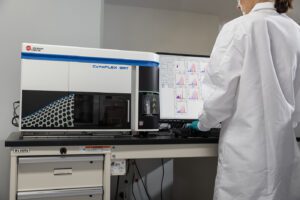
McCracken also highlights, “A key advantage is that automation programming is built into the instrument, helping laboratories integrate the CytoFLEX SRT into automated workflows with less upfront complexity. The compact benchtop design supports integration into connected lab environments, with flexible sorting into tubes, slides, and multi-well plates. This helps researchers connect sorted cells to downstream applications such as culture, liquid handling, single-cell genomics, transcriptomics, proteomics, or functional testing.” Additional capabilities include up to 15 fluorescence parameters, four-way sorting, and the capability to support sort logic across multiple streams.

Portfolio Product Manager
Beckman Coulter Life Sciences
McCracken summarizes, “With automated setup and quality control features, the system helps reduce workflow complexity and support reliable, repeatable sorting. For scientists, that means less time spent managing the instrument and more time spent moving from complex cell biology to downstream insights.”
Managing biosafety risks
The expansion of cell sorting into translational and higher-risk biological applications has elevated the issue of biosafety alongside performance. Researchers must not only balance purity, yield, and viability, but also mitigate risks associated with aerosol generation and operator exposure, especially when working with unfixed or human-derived samples. These considerations can further complicate sorting procedures already requiring technical precision and specialized expertise.

VP and General Manager of Instruments and Informatics
Waters Biosciences
Eric Diebold, PhD, vice president and general manager of instruments and informatics at Waters Biosciences (formerly BD Biosciences), a division of Waters Corp, says the BD FACSAria Fusion cell sorter incorporates biosafety directly into the instrument. He explains, “With its fully integrated Class II biosafety cabinet and aerosol management design, FACSAria Fusion enables high-speed, high-purity sorting of unfixed or higher-risk samples while meeting stringent operator and sample protection requirements.”
According to Diebold, “The system is typically deployed in high‑complexity research environments such as academic core facilities, pharmaceutical R&D, and translational research labs, where maximum flexibility, high‑speed sorting, deep multicolor resolution, and integrated biosafety are required to confidently interrogate complex or rare populations.”
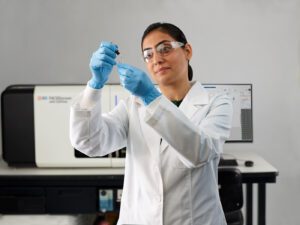 systems. Diebold reports, “All are built on BD’s distinctive fixed-alignment, gel-coupled cuvette flow cell-based sorter that is a historical differentiator that delivers stream stability, high sensitivity, and day-to-day reproducibility beyond the stream-in-air sorters.”
Another innovative instrument is the BD FACSDiscover S8 cell sorter, which employs spectral flow cytometry (i.e., full-spectrum flow cytometry) to capture the entire emission spectrum of fluorochromes rather than specific wavelength bands. Diebold explains, “The S8 sorter represents a significant step forward by integrating spectral flow cytometry with real‑time imaging, enabling simultaneous measurement of phenotype, morphology, and spatial features at the point of sort. This added imaging context allows researchers to visually confirm cell populations, resolve heterogeneous or ambiguous subsets, improve doublet discrimination, and sort based on characteristics that extend beyond fluorescence alone—capabilities that are increasingly important for complex translational studies and early process development.”
Clinical manufacturing
Successful cell therapies begin with high-quality, functional cells. Thus, GMP-compliant cell sorting focuses on producing consistent, sterile cell populations suitable for clinical applications under tightly controlled regulatory conditions. Therapeutic applications include isolation of stem cells, CRISPR-edited cells, and T cells that will be engineered with chimeric antigen receptors.

Global Product Manager
Miltenyi Biotec
“Clinical cell manufacturing demands the highest standards of safety, precision, and reliability,” notes Sudheer Gambheer, PhD, global product manager for flow cytometry cell sorting portfolio, Miltenyi Biotec. He continues, “The key point is that many of the traditional droplet-based FACS limitations become amplified and intertwined under GMP constraints.”
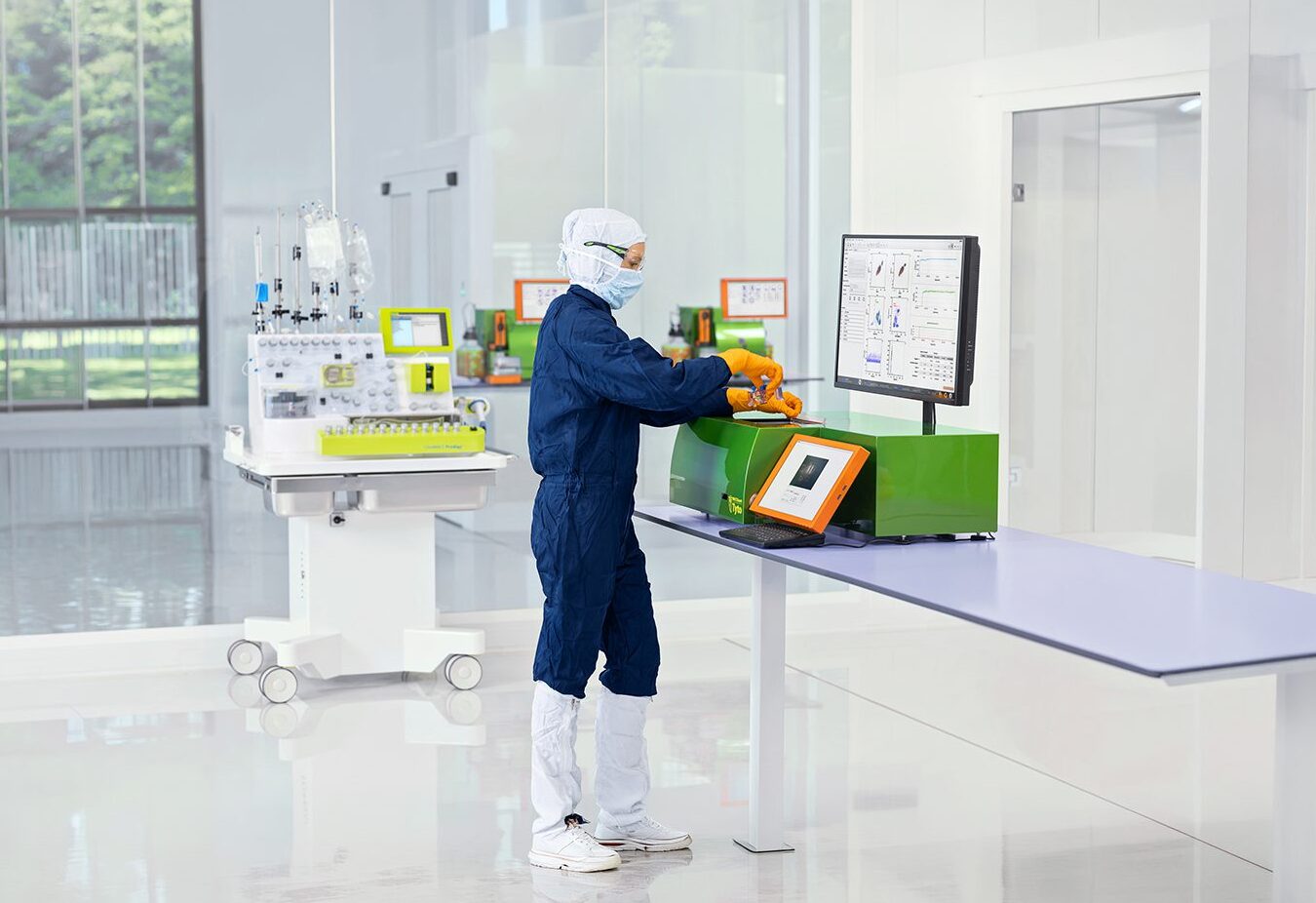
To address these challenges, the company has developed MACS® GMP Tyto® Consumables to enable GMP-compliant multiparameter cell sorting using the MACSQuant® Tyto Instruments. Employing gentle, microchip-based sorting within a closed-cartridge system, the MACSQuant Tyto Family of cell sorters is designed to preserve cell viability and functionality. Gambheer reports, “In the closed cartridge, cells are kept sterile at all times while never coming into contact with the instrument.”
The system employs GMP-compliant consumables, including unique single-use cartridges in a closed environment. A microfluidic chip housing an ultra-fast mechanical valve (30,000 actuations/sec) lies at the heart of the technology. During sorting, cells flow through the microchip under low air pressure. Lasers detect target cells based on fluorescence and scatter as they flow through the microchannel. Non-target cells pass into the negative collection chamber. When a target cell is detected, a magnetic pulse activates a solenoid to open the valve, redirecting the cell into a positive-sorting chamber. The valve then resets, ready to isolate the next target cell.
From a regulatory perspective, Gambheer notes that the MACS GMP Tyto Consumables come with extensive supporting documentation for regulatory submissions. “Miltenyi Biotec is one of the only vendors providing an end-to-end workflow for easy integration into the GMP environment. This includes everything from GMP antibodies, buffers, and cartridges to the 21 CFR Part 11 software module, simplifying sorting compliance with secure electronic records and signatures.”
Future directions
As cell sorting continues moving from specialized core facilities into translational research and therapeutic manufacturing, future platforms will likely emphasize automation, richer cellular characterization, biosafety, and standardized workflows alongside sensitivity and throughput. Increasingly, the challenge is no longer simply identifying rare cells, but isolating them reproducibly, gently, and at a clinically relevant scale.
The post Advanced Cell Sorting Balances Precision, Scale, and Simplicity appeared first on GEN - Genetic Engineering and Biotechnology News.
Apa Reaksi Anda?
 Suka
0
Suka
0
 Kurang Suka
0
Kurang Suka
0
 Setuju
0
Setuju
0
 Tidak Setuju
0
Tidak Setuju
0
 Bagus
0
Bagus
0
 Berguna
0
Berguna
0
 Hebat
0
Hebat
0