



















































%20and%20Batch%20Production%20Records%20(BPR).png)














India is the hub of our R&D strength, process innovation and regulatory excellence
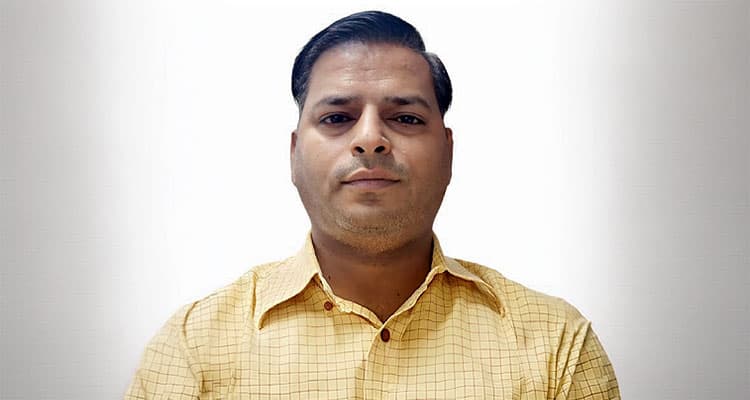
What will fuel the next round of growth, and how can companies stay ahead in this race?
The combination of cost competitiveness and scale has brought India into the fold of the global pharma industry, but what keeps us here now is our ability to be consistent in maintaining the quality of our drugs and our maturity in handling regulations and developing products further up the value chain. It is not the companies that are trying to compete through cost alone that will succeed, but those who invest in their research capability and sophisticated manufacturing processes.
Reshaping the approach to growth in light of diversifying supply chains and heightened regulatory expectations?
The ‘China +1’ discussion is essentially a discussion about trust. Buyers around the world don’t just want another supply source, they want a reliable one. It’s time for Indian pharma to view compliance as an investment and not an obligation. Companies that take the proactive approach to incorporate quality by design, upgrade facilities at an early stage, and stay ahead of changing international regulatory requirements will turn their diversification into sustained relationships rather than sporadic purchases. It’s also time for the sector to increase backward integration, given its reliance on external sourcing of critical raw materials.
Which of the opportunities – complex generics, specialty, biologics, peptides or CDMO – has the greatest potential for value creation?
All of them have their own importance, but complex generics and CDMO offer the best opportunity for value creation for the Indian pharmaceutical industry because in both cases our strengths can be used. We are familiar with the regulatory requirements and large scale production, so we can use that for complex generics. CDMO is equally important as Indian companies can collaborate at an advanced stage in the pipeline without taking full responsibility of development. Biologics and specialty products will take more time because of the investment and scientific expertise required.
What has to happen for India to become more than the ‘pharmacy of the world’?
The key shift is not just a function of infrastructure but also a mind-set one. The Indian pharma sector has shown its ability to manufacture consistently on a large scale. But now it must show its ability to innovate. This will require sustained investment in research and development, as well as a policy environment that recognises the risks associated with innovation over the more easily recognised manufacturing efficiencies. Intellectual property security, expedited regulatory approval of new molecules, and availability of research funding are the ingredients needed. But it will also require that Indian firms get used to slower development processes and less certainty in their early stages.
Looking at STERIS Healthcare, where do you see the biggest opportunities for growth?
Our most promising growth vectors are super specialty therapies in oncology, cardiology and nephrology, paired up with our recently expanded production capacity . We’re going full steam on digitising the supply chain so patient access gets better across tier 2 and tier 3 cities, not just the usual metros. Also, the planned IPO plus greenfield expansion in South India puts us in a strong spot to grab both domestic demand and some export upside. STERIS is, honestly, uniquely poised to lead in complex, high margin formulations that hit critical healthcare gaps.
As global pharma companies look for partners that can offer quality, reliability and supply-chain resilience, how is STERIS positioning itself to become a more strategic partner to them?
Because quality is part of everything we do – right from where the raw material begins right up to where the finished product stops. With zero-defect at our ISO-certified & WHOGMP manufacturing sites, and nimble logistics that neither falter, nor stall. With regulatory intelligence that aligns seamlessly.
The clear communication and bespoke development support we offer for sensitive and complex molecules are just part of the equation.
It is this dependable end-to-end ownership that makes STERIS feel like the vital partner of choice for world leaders seeking enduring global partnerships.
How important is India to STERIS’ global growth plans? Could India become more than a manufacturing base and emerge as a larger global capability hub for the company?
India is not just the hub of our global ambition but rather the hub of our R&D strength, process innovation and regulatory excellence. With an investment of Rs 50 crore in our expansion and the world class talent that supports us, we will be creating biosimilars and novel drug delivery systems for our regulated markets. The increase in our IP portfolio and robust, audit ready facilities is already transforming India into a strategic capability hub that will drive innovation globally for STERIS.
From a boardroom perspective, what is the one big strategic decision Indian pharma leaders need to make today to build sustainable growth over the next five to ten years?
To India’s pharma leaders, my honest advice is: be prepared to do a paradigm shift from volume competition to innovation led value creation. By focusing on differentiated R&D, complex therapies and a strong regulatory science, Indian companies will stand on the threshold of infinite possibilities globally. Rather than dilution in resources everywhere, deploy capital on patent-protected high value driven and needs-filling portfolio. With such a transition, India will command leadership globally.
lakshmipriya.nair@expressindia.com laxmipriyanair@gmail.com
The post India is the hub of our R&D strength, process innovation and regulatory excellence appeared first on Express Pharma.
Apa Reaksi Anda?
 Suka
0
Suka
0
 Kurang Suka
0
Kurang Suka
0
 Setuju
0
Setuju
0
 Tidak Setuju
0
Tidak Setuju
0
 Bagus
0
Bagus
0
 Berguna
0
Berguna
0
 Hebat
0
Hebat
0