



















































%20and%20Batch%20Production%20Records%20(BPR).png)















Single-Source Manufacturing Harmonizes Door Specification with Prefabricated Construction
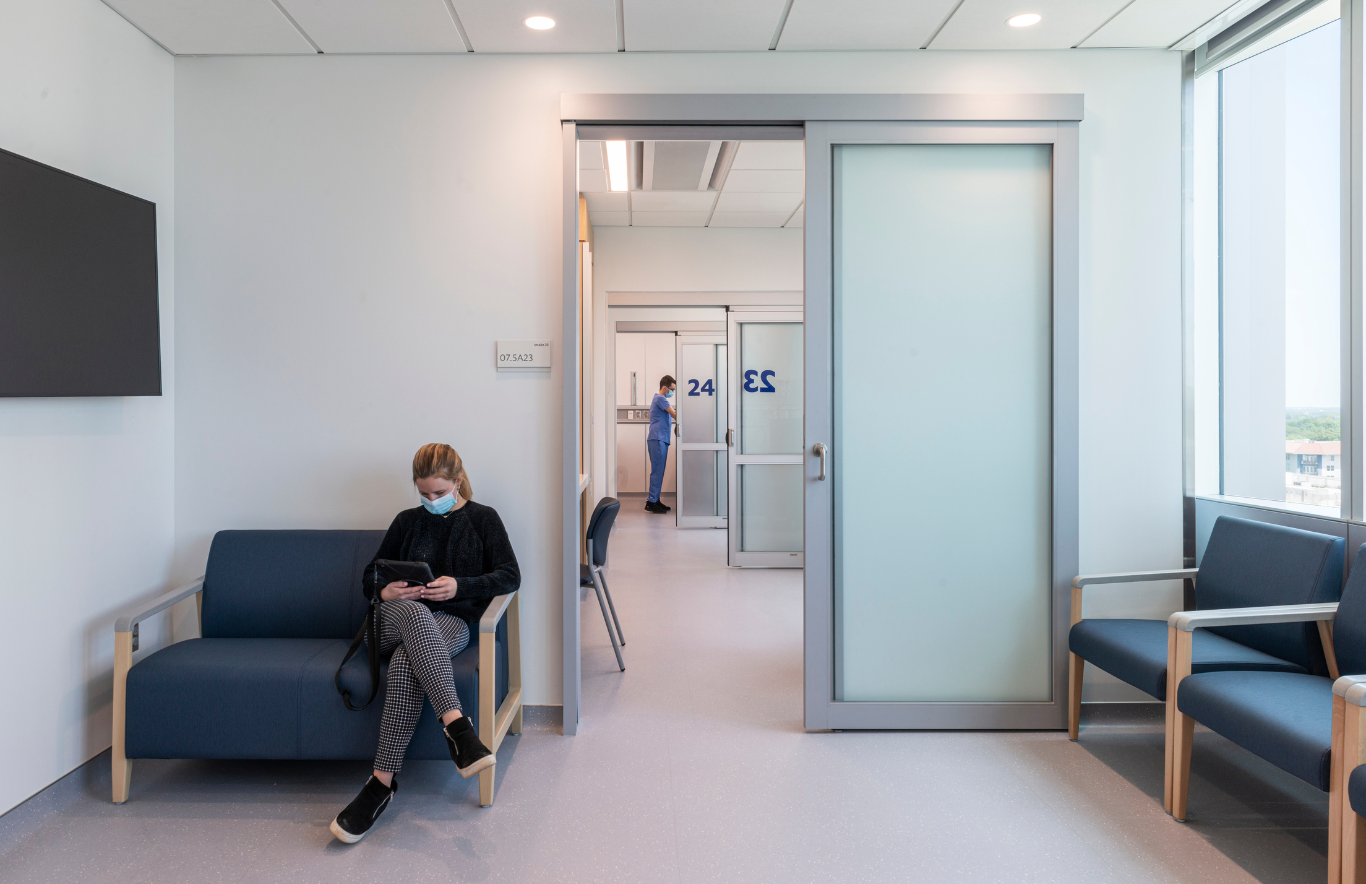
Complicated and repeated throughout a facility, doors can drive design optimization across the entire built environment. | Photo Credit: Courtesy of AD Systems
By Andres Chavez
Designing and building healthcare facilities requires a complex balance of planning for user comfort, optimizing floorplans, meeting code requirements, achieving best practice recommendations and more. In the past, ensuring a building plan found the intersection of all these goals and requirements took time, and constructing it took even longer.
A prefabricated approach to construction changed that. With it, the full process of planning and building medical centers is streamlined without compromising the ability of a design to meet the unique functional needs of a project’s specialties — whether that is a pediatric intensive care unit or a medical office building.
While prefabrication can deliver multiple efficiencies to healthcare projects, it is not the only way. In fact, carefully specified architectural elements, like doors, can support prefabrication and optimize planning and construction.
Prefabrication, Modular and More

Prefabricated building, also known as modular construction, speeds up the construction process by allowing sections of the built environment to be fabricated in a factory and then shipped to the jobsite. On one hand, this streamlines construction logistics by reducing the effort needed to coordinate different trades. On the other hand, it allows project teams to work on multiple elements simultaneously and piece them together later in the process.
That said, not every element in a healthcare facility can be included in a prefabricated approach. Although these elements can be small in comparison, their design and specification can create large complications. For instance, doors are often cited as one of the more difficult aspects of the built environment to specify. Not only do they have to meet static requirements for code-compliance (such as opening width and approach clearances), but their operation must also meet code requirements and best-practice recommendations for safety and accessibility.
While door systems can reduce the benefits of prefabricated construction, they do not have to. When design teams collaborate with single-source opening suppliers, they can create efficiencies across the entire built environment.
How Door Specification Fits into Prefabricated Construction
Doors can be installed directly onto prefabricated elements in the factory or after arriving onsite. They can also be specified into traditionally built elements of a project. In this instance, they extend the benefits of modular construction to areas that would not be able to be built offsite.
For both direct and indirect avenues, specifying doors manufactured from a single source can ease potential complications and streamline the entire process. Single-source door suppliers provide all system components, from perimeter frames and door leaves to hardware, closers and seals.
From a specification perspective, this minimizes combining incompatible components and helps ensure doors meet code and accessibility requirements as well as best-practice recommendations for durability and resilience. For installers and prefabricators, it supports an efficient install, whether that is taking place on a factory floor or on a jobsite.
Sliding Doors Connect to Modular Patient Bathrooms
Houston Methodist Hospital offers a prime example of how single-supplier door systems can be incorporated into prefabricated architectural elements. This project incorporated several prefabricated bathroom pods within patient rooms in the hospital’s Paula and Joseph C. “Rusty” Walter III Tower. To alleviate concerns about useable square footage, the design team specified sliding doors in the pods. These systems eliminated the need to accommodate swing arc trajectories and minimized approach clearance requirements, which can save up to 30 square feet per door.
These sliding doors were installed in prefabricated bathroom pods offsite to maximize efficiency. Because they were manufactured by a single-source supplier, the systems arrived at the fabrication factory with all necessary door components for a seamless installation. Once installed, the complete pods were delivered to the site and connected. This approach and collaboration between parties optimized design and construction processes.
Flexible Openings Expand Prefabricated Efficiency
Door specification can also align with the benefits of modular construction in areas that must be built on site. Like with direct installation to prefabricated elements, selecting systems from a single-source manufacturer is essential.
In addition to minimizing mistakes in engineering a full door system, this approach to door specification streamlines installation and minimizes delays in reaching punch lists. It also works in tandem with prefabricated construction to strengthen supply chain efficiencies and minimize delays from both manufacturing and logistics.
Project teams leveraged the benefits of single-source suppliers to extend the speed of modular construction for a new hospital in North Carolina. The build incorporated 19 flexible opening swing doors from a single-source supplier to help ensure the project could be completed as soon as possible.
Open the Doors to Construction Efficiency
Prefabrication offers project teams unprecedented speed both in terms of design and construction. Its benefits can be aided with mindful specification of architectural systems throughout the built environment, whether they are directly or indirectly connected to modular elements.
Because doors are both nuanced and repeated aspects of healthcare facilities, they provide an excellent example of how systems can support the benefits of prefabrication within and beyond modular building components. When these systems come from a single-source manufacturer, they can mitigate the potential for mistakes in the installation process and ease difficulties with logistics and punch-list coordination.
The considered coordination of prefabricated and traditionally constructed elements can help healthcare projects deliver more future-focused environments with optimal efficiency.
Andres Chavez, Managing Director, Doors & Windows SBU at Allegion, has over 20 years of experience in the door and window industry. Learn more at www.specadsystems.com.
Get more weekly reports and timely updates by subscribing for free at hconews.com/subscribe.
The post Single-Source Manufacturing Harmonizes Door Specification with Prefabricated Construction appeared first on HCO News.
The post Single-Source Manufacturing Harmonizes Door Specification with Prefabricated Construction appeared first on HCO News.
Apa Reaksi Anda?
 Suka
0
Suka
0
 Kurang Suka
0
Kurang Suka
0
 Setuju
0
Setuju
0
 Tidak Setuju
0
Tidak Setuju
0
 Bagus
0
Bagus
0
 Berguna
0
Berguna
0
 Hebat
0
Hebat
0