








































































StockWatch: Trump Order Lifts Psychedelic Drug Shares
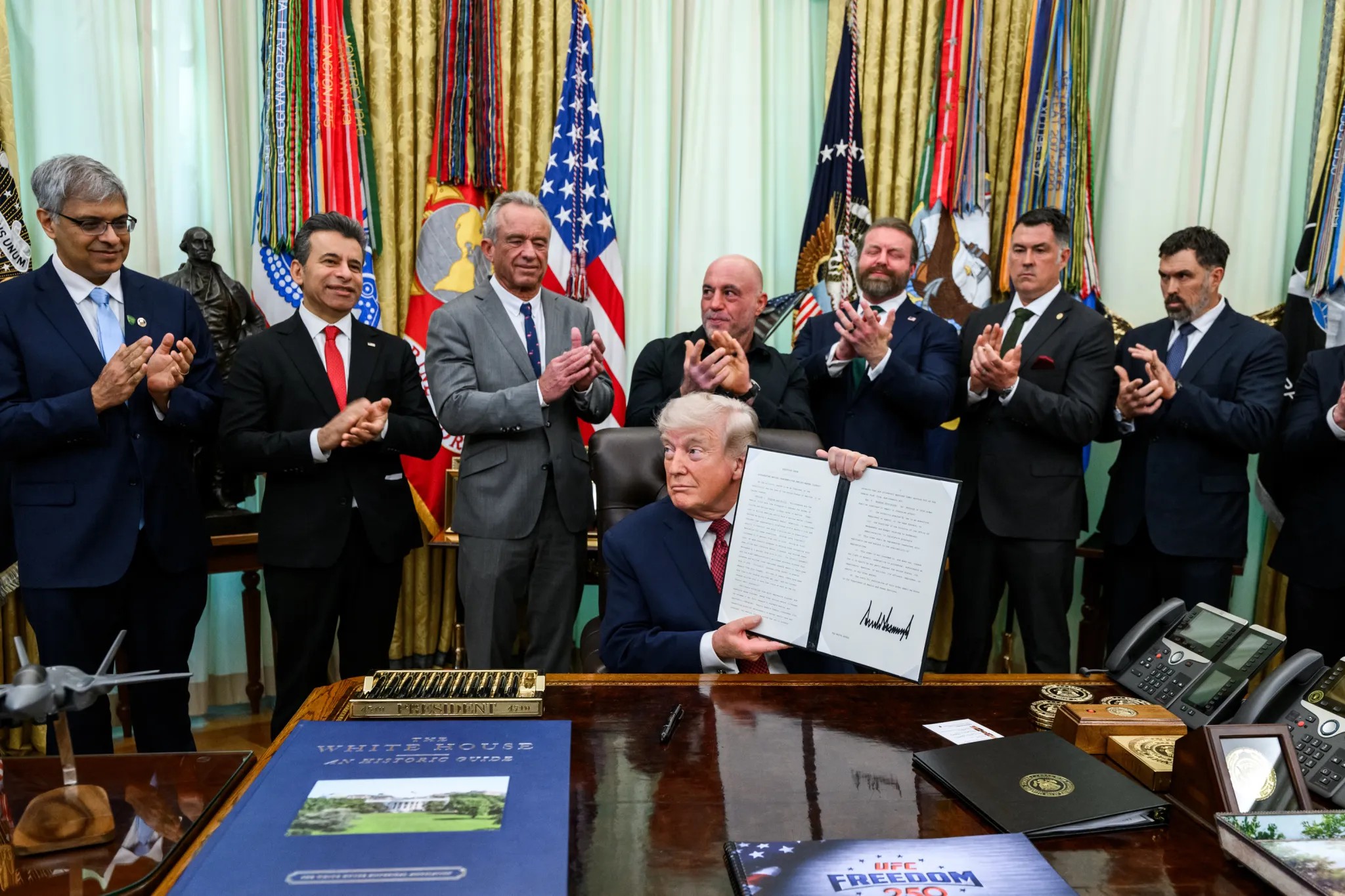
Stocks of most publicly traded psychedelic drug developers jumped when President Donald Trump signed Executive Order 14401, directing the FDA and other federal agencies to accelerate research and improve access to psychedelic drugs, citing their potential as promising treatments for serious mental illnesses.
Among its provisions, the order directs the FDA to provide Commissioner’s National Priority Vouchers (CNPVs) to “appropriate” psychedelic drugs that were granted the agency’s Breakthrough Therapy designation and met the voucher program’s criteria. The FDA’s parent agency, the Department of Health and Human Services (HHS), is required to spend at least $50 million through the Advanced Research Projects Agency for Health (ARPA-H) “to support and partner with” state governments that have enacted or are developing programs to advance psychedelic drugs for serious mental illnesses.
“This is an unmet public health need and potentially promising treatments. That’s why there’s a sense of urgency around this, and why we’re doing it now,” FDA Commissioner Martin A. Makary, MD, said at the ceremony where Trump signed the order. “Applications are about to come in, and this is the perfect timing for this announcement.”
At least one analyst agreed that the timing was right for Washington to spur the development of psychedelic drugs.
“Investor mindshare should rise meaningfully ahead of pot’l approvals in 2027–30,” Andrew Tsai, equity analyst with Jefferies, observed in a research note. “As we approach the first pot’l FDA approval of a psychedelic in 2027, President Trump is providing an official stamp of validation to the class in the form of an executive order, reassuring us that the FDA/HHS/White House’s support of psychedelics is real/actionable (not rhetorical).”
Proving correct
Makary said the FDA planned to issue CNPVs to three serotonin 2a agonists, a class that includes LSD and other psychedelic drugs. While he did not reveal specific companies and drugs by name, market watchers immediately speculated that one of the drugs was COMP360 synthetic psilocybin, the lead clinical candidate of Compass Pathways (NASDAQ: CMPS)—speculation that proved correct when COMP360 won a CNPV on Friday.
COMP360 is expected, according to Tsai, to be the first psychedelic drug to win FDA approval in 2027. In February, Compass announced what it called statistically significant and clinically meaningful data from two Phase III trials assessing COMP360 in treatment-resistant depression (TRD), COMP005 (NCT05624268) and COMP006 (NCT05711940). The data showed positive effects for COMP360 within one day, lasting at least through six months after just one or two doses among those who have a clinically meaningful response.
COMP360 is also in Phase II trials for both PTSD and anorexia nervosa.
Compass fueled speculation about an FDA voucher approval by issuing a statement supporting the executive order: “Today’s announcement aligns regulatory urgency with patient need, and we applaud the Administration for taking this important step forward in accelerating access, without compromising rigorous science.”
Investors celebrated with Compass, whose shares soared 42% from $6.66 to $9.46 on April 20, the first trading day after the order signing. Shares yo-yoed the rest of the week, sliding 7.5% to $8.75 Wednesday before rebounding nearly 5% to $9.15 Thursday and rising another roughly 5% to $9.58 Friday on news of the voucher approval. Year-over-year, Compass shares have more than doubled, soaring about 140% from $5.22 on April 24, 2025.
FDA names additional voucher grantees
The FDA indeed issued three CNPVs on Friday—one to Compass as previously mentioned, one to Usona Institute, a nonprofit medical research organization, for psilocybin for major depressive disorder (MDD), and one to Otsuka Pharmaceutical (Tokyo Stock Exchange: 4578) for methylone (TSND-201) for post-traumatic stress disorder (PTSD). Otsuka is acquiring the methylone program as part of its up-to-$1.225 billion ($700 million upfront) purchase of privately held Transcend Therapeutics, announced last month.
Launched in October by Makary, CNPVs are awarded to drug developers whose work is deemed to address a health crisis in the United States, deliver more innovative cures, address unmet public health needs, and increase domestic drug manufacturing as a national security issue. The vouchers entitle companies to reviews of their final applications within a target timeframe of 1–2 months, rather than the current 10–12 months.
“Ultimately, we do not see the FDA’s issuance of the first set of CNPVs as precluding other psychedelic players from also obtaining CNPVs in the future—so we think the FDA’s action today bodes well for the space broadly,” Tsai wrote after the FDA announced the voucher recipients. “Net-net, the macro backdrop for psychedelics is improving.”
That improvement, Tsai added, reflects Trump’s endorsement of psychedelic drugs, a collaborative FDA, and growing interest in the space by big pharma giants such as Johnson & Johnson (NYSE: JNJ), which generated $1.696 billion in 2025 sales and $468 million in first quarter sales from Spravato (esketamine), an NMDA receptor antagonist indicated for treatment-resistent depression (TRD) and depressive symptoms in adults with MDD with acute suicidal ideation or behavior in conjunction with an oral antidepressant.
The voucher decision hardly budged Otsuka shares, which dipped nearly 1% Friday from ¥10,870 ($68.18) to ¥10,810 ($67.80).
However, Compass was one of several psychedelic drug companies to see their shares surge on news of the executive order.
AtaiBeckley (NASDAQ: ATAI), formed last November by the merger of atai Life Sciences and Beckley Psytech, jumped 22% from $4.03 to $4.90 on April 20, then plateaued the rest of the week, finishing Friday at $4.63 and a 15% one-week gain. AtaiBeckley shares year-over-year have more than tripled, rocketing 204% from $1.53 a year ago Friday.
Definium Therapeutics (NASDAQ: DFTX) shares rose 5% over two days, from $22.68 the Friday before Trump signed the order to $23.84 on Tuesday, but gave back all the week’s gain, finishing Friday at $22.48. Long-range investors have fared better, as Definium shares have more than tripled, zooming 249% from $6.43 on April 24, 2025.
GH Research (NASDAQ: GHRS) shares climbed 17% from $18.34 to $21.50 the first day after the executive order, only to drop 6% the rest of the week, closing Friday at $20.25 and settling for a 10% one-week gain. GH’s shares doubled year-over-year, growing 101% from $9.50 a year ago Friday.
Showing volatility
The executive order wasn’t enough to boost shares of Cybin, which operates under the name Helus Pharma (NASDAQ: HELP). Helus showed the most volatility in the days following the order signing, tumbling 12% from $5.61 to $4.93 on April 20. The drop followed Helus’ announcement that its CEO, Michael Cola, stepped down immediately at the request of its board, succeeded by interim CEO Eric So, while the board carries out a search for a permanent chief executive.
“It’s like they can’t give investors a break,” fumed “SamZaki320” on a Reddit chat board. “The only positive is that the executive order sentiment is pushing back against a total disaster. Not that it’s a good thing, other companies are up double digits.”
Helus shares bounced back 17% to $5.77 Wednesday and dipping 0.35% to $5.75 Thursday despite the company announcing two powerhouse additions to its scientific advisory board—Robert Langer, ScD, the David H. Koch Institute professor at MIT and a co-founder of Moderna (NASDAQ: MRNA); and Stephen Brannan, MD, a neuroscience drug development expert with over 20 years of experience designing and implementing clinical programs for psychiatric and neurological disorders. Shares fell 2% Friday, closing at $5.61.
In a statement, interim CEO So lauded Trump’s order: “The Executive Order reflects growing recognition of the urgent need for new treatment options in serious mental health conditions and the importance of advancing innovative therapies through rigorous, research-based development.”
Looking beyond Washington
Yet So acknowledged that Washington alone can’t advance psych drug development beyond what its science can accomplish: “Policy momentum is meaningful, but the future of this field will ultimately be determined by the strength of the clinical evidence and the ability to deliver safe, reliable treatments at scale.”
As did Helus and Compass, Definium also praised the executive order: “We applaud the Administration’s recognition that psychedelic medicines may represent meaningful new treatment options for patients,” Definium CEO Rob Barrow stated. He cited his company’s clinical development program for DT120 (lysergide tartrate) for conditions that include generalized anxiety disorder (GAD) and MDD.
At the ceremony where he signed the executive order, Trump acknowledged being asked to address psych drug development by podcaster Joe Rogan and others, which the president said led to talks with Makary as well as HHS Secretary Robert F. Kennedy Jr., NIH Director Jay Bhattacharya, MD, PhD, and Mehmet Oz, MD, administrator for the Centers for Medicare & Medicaid Services.
“Research has been going on for quite some time. But usually with things like this, nothing ever happens, no matter how the research ends up. We’re changing that,” Trump said. “Why would we wait three or four years to get it done? Or 10 years? Frankly, let’s get it done immediately—and that’s what happened.”
Leaders and laggards
- Daiichi Sankyo (Tokyo Stock Exchange: 4568) shares slipped 10% from ¥2,790 ($17.50) to ¥2,499 ($15.67) on Friday after the drug developer announced it was delaying the release of its annual earnings results for the fiscal year that ended March 31, from April 27 to May 11, “as additional time is required to finalize the financial figures.” May 11 is the day when Daiichi Sankyo plans to release its five-year business plan. “The company is currently reviewing the supply plans for its oncology products portfolio and development pipeline in light of rapidly changing business conditions. As a result, additional deliberation is required to reasonably estimate the amount of loss provisions to be recorded in connection with contracts with contract manufacturers,” Daiichi Sankyo added in a statement.
- Inhibrx Biosciences (NASDAQ: INBX) shares leaped 37% from $84.08 to $115.09 Wednesday after Reuters reported, citing unnamed sources, that Merck & Co. (NYSE: MRK), Merck KGaA (XETRA: MRK), and Ono Pharmaceutical (Tokyo Stock Exchange: 4528) were in talks with Inhibrx for a joint spinoff of two precision-engineered cancer candidates, INBRX-106 and ozekibart (INBRX-109). The treatments could have a combined value of more than $9 billion if their clinical trials prove successful, the report stated. Inhibrx declined to comment, while the other companies cited did not respond to Reuters queries. INBRX-106 is a hexavalent sdAb-based, OX40-targeting candidate being studied as monotherapy and in combination with Merck & Co.’s cancer immunotherapy blockbuster Keytruda® (pembrolizumab). Ozekibart is a tetravalent death receptor 5 (DR5) agonist antibody designed to exploit the tumor-biased cell death induced by DR5 activation. On Tuesday, Inhibrx announced ozekibart showed positive data in a Phase I/II trial (NCT03715933) assessing the drug plus Folfiri in patients with locally advanced or metastatic, unresectable colorectal cancer.
- Organon (NYSE: OGN) shares surged 31% from $8.60 to $11.26 Friday after the Indian news outlet The Economic Times reported that Sun Pharmaceutical Industries (NSE: SUNPHARMA and BSE: 524715) had submitted a $13 billion offer for the women’s health drug developer spun out of Merck & Co. (NYSE: MRK) in 2021. The deal would be Sun’s largest ever merger-and-acquisition (M&A) deal—if Sun can prevail over at least two other would-be suitors for Organon, German-based private family-owned drug developer Grünenthal, and EQT (Nasdaq Stockholm: EQT), a Swedish-based global investment organization. The latest surge comes two weeks after Organo shares zoomed 28% on an April 10 Economic Times report stating that Sun Pharma had submitted a $12 billion all-cash offer for Organon.
- Spruce Biosciences (NASDAQ: SPRB) shares tumbled 26% from $69.89 to $51.69 Tuesday after the neurological disorder drug developer priced a $69 million offering of common stock and pre-funded warrants that generated $64.4 million in net proceeds. The offering consisted of 1.15 million shares of common stock priced at $50 per share and pre-funded warrants to purchase 50,000 shares at $49.99 per share. Al shares and pre-funded warrants were sold, and underwriters of the offering exercised in full their option to purchase up to an additional 180,000 shares at the public offering price on Tuesday. “We intend to use the net proceeds from this offering to advance the company’s pre-commercial and launch activities, for planned clinical trials, and for working capital, capital expenditures, and other general corporate purposes,” Spruce stated in its prospectus supplement filed Tuesday. Leerink Partners, Guggenheim Securities, and Oppenheimer & Co. acted as joint book-running managers, while Jones and Craig-Hallum acted as co-managers for the offering.
The post StockWatch: Trump Order Lifts Psychedelic Drug Shares appeared first on GEN - Genetic Engineering and Biotechnology News.
Apa Reaksi Anda?
 Suka
0
Suka
0
 Kurang Suka
0
Kurang Suka
0
 Setuju
0
Setuju
0
 Tidak Setuju
0
Tidak Setuju
0
 Bagus
0
Bagus
0
 Berguna
0
Berguna
0
 Hebat
0
Hebat
0