













































%20and%20Batch%20Production%20Records%20(BPR).png)













Talus Bio’s Structure-Free AI Model Targets Unstructured Proteins in Their Native Cellular Context

Alex Federation, PhD, has been interested in undruggable targets since his days as a trainee in the laboratory of Jay Bradner, MD, then at Dana-Farber Cancer Institute now at Amgen. At the time, the lab was working on finding molecules that could bind to genomic targets, several of which made it into clinical use. This was also around the time that genome sequencing technologies were becoming more affordable and accessible to scientists.
“My big excitement when I was starting my independent career was trying to ask the question, ‘could these new technologies actually help us unlock these undruggable targets?’” he told GEN in an interview. “There is a lot of interest in this problem” of cracking challenging targets as well as in turning the findings into “something that has an impact in the real world and patients.”
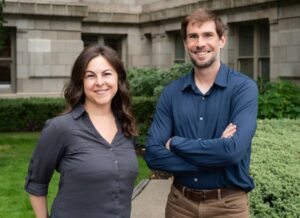
Those early roots put him on the path that led to co-founding Talus Bioscience, a company that uses artificial intelligence (AI) to enable drug discovery for the disordered proteome, alongside Lindsay Pino, PhD, who also serves as the company’s chief technology officer and leads the development of the company’s screening platform. In addition to being a co-founder, Federation is also the company’s CEO. He credits Pino with introducing him to proteomics as an effective approach for taking on the undruggable target problem.
This week, Talus released Ptarmigan-1, a solution powered by the company’s MARMOT platform, which it describes as a first-of-its-kind structure-free AI model that accurately predicts small molecule binding sites across the entire human proteome, including proteins that are too unstructured for traditional 3D modeling tools to resolve. MARMOT stands for Measuring Modulation of Transcription and is the underlying experimental assay that captures snapshots of proteins in their cellular environment without removing or tagging them.
On a separate note, the company’s name and the names of its products are somewhat whimsical as they are drawn from Seattle’s mountains and wildlife. But there is a link to the core challenge that company is taking on. Talus refers to a precarious boulder field requiring careful navigation which is a metaphor for navigating disordered proteins. Marmots and ptarmigans are wildlife that are native to the mountains—a possible reference to Talus’ way of measuring proteins in their native state.
Talus’ approach focuses on the approximately 40 percent of human proteins in cells that lack stable, defined 3D structures and cannot be studied or targeted using conventional structural biology methods. Outside cells, they fall apart, making them difficult to purify or analyze using standard experimental workflows, Federation noted. Even advanced AI tools like AlphaFold render these proteins as uninterpretable structures.
“Our platform is essentially a unique way to actually watch what these proteins are doing in the cell in their native state without having to take them out of the cell and letting them fold and function within that native environment where all their partners are,” he explained. “That gives us really for the first time the ability to see them in their native state and find molecules that can interact with these proteins in their native state.”
Importantly, the company’s technology is label free since adding tags to these proteins changes their dynamics. In a sense, it’s “like we’re taking a cell and taking snapshots of where the proteins are at any given time and what molecules are sticking to those proteins at any given time,” he said. “And we use these new label-free proteomics methods as our camera to take those snapshots. That’s the fundamental measurement that we’re taking.”
The company has adopted a two-pronged business model. First, they have identified a small number of targets that they are developing molecules for internally. The most advanced molecule in their pipeline targets a rare bone cancer called chordoma. Specifically, they are targeting the brachyury protein, which is encoded by the TBXT gene. This particular protein is typically only expressed in embryonic stem cells; the cancer reactivates it. Simultaneously, the company is open to partnering with other companies to work on targets in a range of disease areas.
Finding molecules for invisible protein pockets
Ptarmigan-1 is the first version of Talus’ flagship structure-free model, and also a first of its kind AI model, according to its developers. There have been some approaches that have tried to accomplish similar goals, “but this is the first one that will actually tell you if a compound binds and where on the protein it binds,” Federation said.
For targeting transcription factors, which Talus is interested in, this is an important capability. Despite clear biological validation of the disease relevance of transcription factors in disease, going after them as potential drug targets has proven to be an intractable challenge. It is “the type of target where the biology is so clear,” he said. “[W]e need molecules that can control these, and this is really the first step to make that possible.”
Ptarmigan-1 differs from other AI drug discovery tools, which rely on fitting a molecule onto a defined protein pocket. By eliminating the structure requirement entirely, Ptarmigan is designed to target the approximately 40% of the proteome, including many disease-relevant transcription factors and regulatory proteins that are flexible and lack a 3D structure that could be targeted by therapeutics developers. With this release, “we want to get a first tool out there that can really broaden the landscape … beyond just those structure targets,” Federation said. “We are excited for people to be able to take that and apply it broadly to the proteins that they care about.”
Talus has shared some results from a proof-of-concept study where they used Ptarmigan-1 to evaluate a STAT6 inhibitor series, a validated target for inflammatory disease with a hard-to-model binding site. The results showed that the model outperformed structure-based methods in selecting successful drug candidates even though it had not seen the target or molecules during training. The model also identified small molecules that bound to the flexible pocket on STAT6. These candidates were validated in a third-party lab.
“The data we’re building at Talus is structure-agnostic, meaning we can measure proteins whether or not they hold a fixed shape,” Pino said. “That means the model can learn just as well from flexible or intrinsically disordered proteins as it does from structured ones, which is what lets it generalize to targets nobody’s had a way to study before.”
Details of the AI model are provided in a preprint that describes its architecture and the data that went into training it. Rather than forcing proteins into a 3D structural space, Ptarmigan embeds proteins and compounds in a shared high-dimensional mathematical space and then identifies candidate compounds by proximity in that multidimensional space. The model also has a speed advantage over other methods based on internal benchmarks from the company. They claim that since it skips the protein folding process, it runs 5,000 times faster than structure-based methods, and is capable of screening over three billion compounds against the human proteome in a day.
Ptarmigan-1 is currently free to scientists through a public portal. Users will be able to run a limited number of experiments for free using the platform. But for expanded usage or larger target-specific campaigns that are a heavier lift computationally, Talus is open to direct collaboration for example, partnering with a company that has validated targets and an existing assay but lacks viable molecules.
Collaborations will make it possible to do “some of these really massive searches that allow us to break into that really novel chemical space” and “search screens on the order of billions of compounds.” Also, “we hope someday when we have the next iterations of these [AI models] to be able to partner on those as well,” Federation said. Oncology is one the company’s primary interests, but the Talus team is also interested in targets in immunology, neurology, and cardiometabolic disease.
The company is committed to ensure scientists have continued access to the model by maintaining a free-access tier for our Ptarmigan models over the long term. As of today, Talus Bio has announced $28M in venture and non-dilutive funding.
The post Talus Bio’s Structure-Free AI Model Targets Unstructured Proteins in Their Native Cellular Context appeared first on GEN - Genetic Engineering and Biotechnology News.
Apa Reaksi Anda?
 Suka
0
Suka
0
 Kurang Suka
0
Kurang Suka
0
 Setuju
0
Setuju
0
 Tidak Setuju
0
Tidak Setuju
0
 Bagus
0
Bagus
0
 Berguna
0
Berguna
0
 Hebat
0
Hebat
0