






















%20and%20Batch%20Production%20Records%20(BPR).png)








British Board of Orthodontics unveiled at BOC 2026
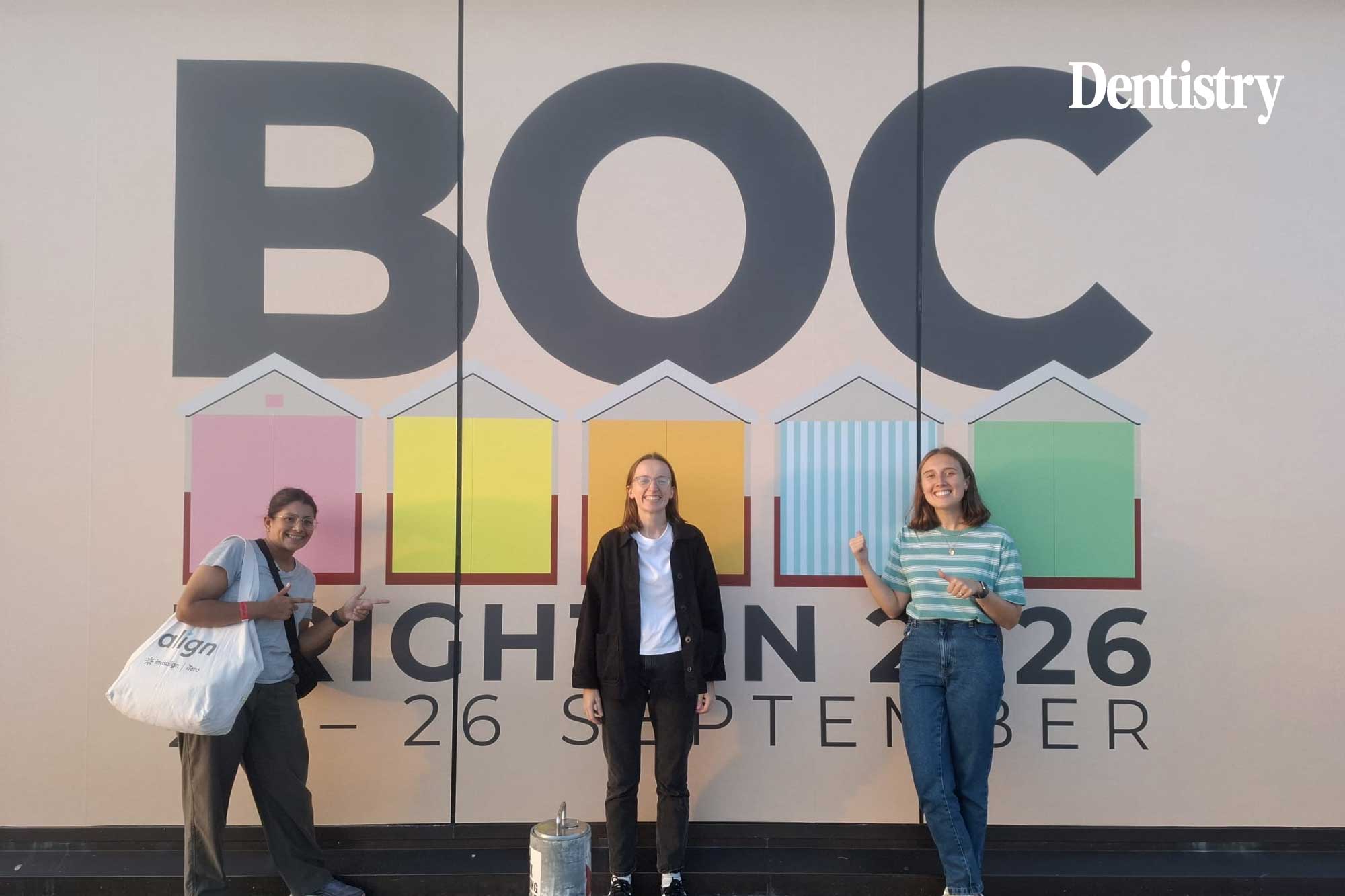
The British Orthodontic Society (BOS) officially launched a British Board of Orthodontics at its conference in Brighton, aiming to provide a framework for clinical excellence that will affirm the UK’s position among the world’s orthodontic leaders.
The British Orthodontic Conference (BOC) 2026 kicked off with the unveiling of the new board, which the society hopes will be comparable to existing European and American boards.
The board will recognise clinicians who critically assess their work, reflect on decisions, solve complex problems and continue developing their skills. Assessment will focus on diagnosis, treatment planning, case complexity, decision-making, record-keeping and the finished result.
BOS honorary patron Alison Murray said the board would ‘inspire young people to keep standards up’. President Robbie Lawson added that he has ‘long been encouraging colleagues to see qualification not as the end of the journey, but the start’.
Previous European board examiners will be brought in to ensure standards are similar, with a body of British board diplomats established within two to three years.
The society has also created a pathway specifically aimed at new graduates, allowing them to present two cases initially, followed by a further four in time.
Full information about board certification is expected to be on the BOS website by December. Alison Murray encouraged clinicians: ‘Be bold, be brave, put yourself out there.’
Why is it so hard to prove the value of orthodontics?
The conference took place from Thursday 24 to Saturday 26 September 2026 at the Brighton Centre on the Brighton seafront. Simon Watkinson, BOS director for professional development, said he hoped delegates would leave ‘informed, inspired and even more connected to the orthodontic community’.
In addition to an exhibition hall and a social programme including a fancy dress party on the Brighton pier, the conference featured a lineup of speakers representing the best in both UK and international orthodontics.
A theme that arose in many of the talks was the connection between orthodontics and patients’ quality of life. Speaker Hanieh Javidi, senior clinical lecturer and consultant in orthodontics, said: ‘Orthodontic treatment does more than move teeth, it meaningfully improves how young people experience their oral health.’
Specialist orthodontist Andrew Dibiase gave a fascinating lecture which addressed the burden of pretty privilege on young people’s peer relationships. He posed questions such as whether malocclusion could be considered a temporary disability and whether the NHS should be attributing greater funding to orthodontic work to reduce appearance-based bullying or resilience training to help children cope with it. Ultimately, he concluded that the NHS would save a lot in mental health treatment if they invested in orthodontics.
Throughout this discourse, speakers drew attention to how often the impact of orthodontics is overlooked. Dibiase said: ‘We know we have value, why do we find it so hard to prove the value of orthodontics?’
Are fixed appliances ancient history?
Another key point that many speakers touched on was the importance of treatment choice and the skill of the clinician in making it. Ute Schneider-Moser, a specialist orthodontist from Bolzano, Italy, challenged the assumption that all orthodontics is inevitably moving towards clear aligners.
She said: ‘Aligners are no magic wands; they must be employed by a skilled practitioner and it is the skill of that practitioner which determines success.’
She therefore advised that clinicians: ‘Choose wisely – there is no cookbook.’
For Ute, the main advantage of fixed appliances is predictability, compared to clear aligners which may prove less accurate and more time consuming. She also highlighted the environmental impact of clear aligners, from plastic waste to micro-leakage into the body.
In addition to international speakers such as Ute, the conference attracted delegates from across the world. Nursyafika Abdul Khalim attended with a group of orthodontic trainees from the Universiti Teknologi MARA in Kuala Lumpur, Malaysia.
She praised the many well-known orthodontists represented in the speaker lineup, saying: ‘I hope I can bring something back to Malaysia to share with my colleagues.’
Create a free account for unlimited access — plus the Dentistry Bulletin delivered to your inbox.
Apa Reaksi Anda?
 Suka
0
Suka
0
 Kurang Suka
0
Kurang Suka
0
 Setuju
0
Setuju
0
 Tidak Setuju
0
Tidak Setuju
0
 Bagus
0
Bagus
0
 Berguna
0
Berguna
0
 Hebat
0
Hebat
0