








































%20and%20Batch%20Production%20Records%20(BPR).png)











Understanding menopause in dentistry

This October, to mark Menopause Awareness Month, Dentistry is launching Menopause Matters in Dentistry, in partnership with Colosseum Dental.
Through expert insight, evidence-based information and the real experiences of dental professionals, the month-long campaign will focus on education, visibility and practical support, exploring the different ways menopause can affect those working across dentistry – as well as its potential implications for oral health.
Menopause can affect everything from sleep and concentration to confidence and oral health. This article explores what dental professionals need to know – and how they can better support themselves, colleagues and patients.
We’re all familiar with the hot flush – the classic cliché used as shorthand to sum up menopause for generations of people. But while they’re the symptom most readily associated with menopause, hot flushes are only a small part of the story – particularly when it comes to menopause in dentistry.
Menopause and perimenopause signal the onset of significant changes for people experiencing them. Disruptions to sleep, mood, memory and concentration, alongside headaches, joint pain, palpitations and genitourinary symptoms are among the many ways perimenopause and menopause can affect everyday life (NICE, 2024; NHS, 2025).
For some people, the impact is relatively mild; for others, symptoms can have a profound effect on their health, relationships and working lives (NICE, 2024).
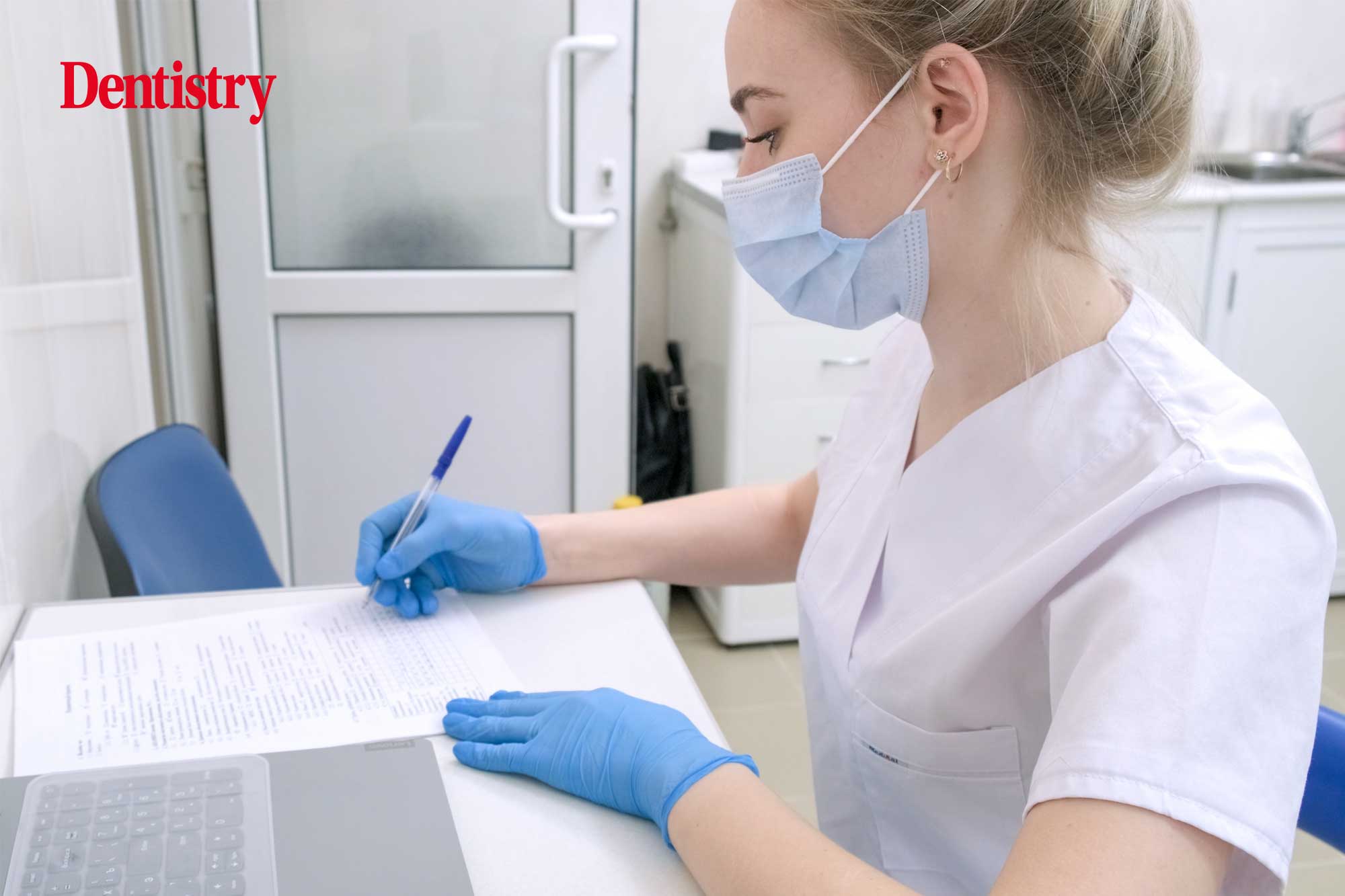
In dentistry, menopause deserves particular attention. Clinical practice requires concentration and precision, often while working in brightly lit environments, wearing personal protective equipment (PPE) and moving between patients with limited opportunities for a break.
Understanding menopause in dentistry therefore matters – whether experiencing symptoms yourself, supporting a colleague or caring for patients navigating this stage of life.
The stages of menopause
Menopause describes the point when someone has not had a period for 12 months and is not using hormonal contraception that affects their menstrual cycle (NICE, 2024). After this point, someone is described as postmenopausal (NHS, 2025).
In everyday language, however, terms such as ‘menopause’, ‘menopausal’ and ‘going through menopause’ are often used interchangeably to describe the wider transition and the symptoms associated with it. Technically, these experiences can span both perimenopause and postmenopause.
Symptoms typically begin before menopause itself is reached: a stage called perimenopause.
Perimenopause is the transition leading up to menopause, as hormone levels fluctuate and symptoms begin.
While symptoms begin during perimenopause, reaching menopause doesn’t necessarily mean symptoms stop. Guidance from the NHS last year states that symptoms typically last between seven and nine years and can persist for longer. Some, such as joint pain and vaginal dryness, may continue after other symptoms have subsided.
While menopause predominantly affects women, some transgender men and non-binary people registered female at birth can also experience it (NICE, 2024).
Symptoms of menopause and perimenopause
One of the first signs of menopause is often a change to periods, which may become more or less frequent, and heavier or lighter. However, symptoms can emerge while someone is still menstruating and may not immediately be recognised as being associated with menopause (NICE, 2024; NHS, 2025).
Common symptoms include:
- Hot flushes and night sweats
- Sleep difficulties
- Fatigue
- Low mood
- Anxiety
- Memory and concentration problems (‘brain fog’)
- Headaches and migraines
- Palpitations
- Muscle and joint pain
- Reduced libido
- Vaginal dryness
- Urinary symptoms.
Changes to skin, hair and body composition can also occur.
However, the experience is highly individual: symptoms can vary in type, severity and duration, and may change over time (NICE, 2024).
Not everyone’s journey is the same
Menopause doesn’t always happen gradually or at the expected age.
Surgical menopause occurs when both ovaries are removed before natural menopause. Because ovarian hormone production falls abruptly rather than gradually, symptoms can begin suddenly (British Menopause Society, 2024).
Medical or induced menopause, sometimes referred to as chemical menopause, can result from medical treatments that affect or suppress ovarian function. This can include some cancer treatments and medications used to manage conditions such as endometriosis. Depending on the treatment, the effects may be temporary or permanent (British Menopause Society, 2024).
Early menopause occurs between the ages of 40 and 44, while premature ovarian insufficiency (POI) involves loss of normal ovarian function before the age of 40 (NICE, 2024).
These distinctions are important – someone experiencing a gradual natural menopause in their early 50s may require very different support from somebody suddenly entering surgical or treatment-induced menopause at a much younger age.
Menopause and dentistry
For dental professionals, menopausal symptoms can intersect with the demands of the job.
A poor night’s sleep followed by a full day in clinic can exacerbate fatigue. Hot flushes may feel harder to manage beneath PPE and surgery lights. Joint and muscle pain can add to the physical demands of dentistry, while anxiety, low mood or brain fog may affect someone’s confidence at work.
Perimenopause may also arrive at an already demanding career stage. Some professionals will simultaneously be managing clinical responsibilities, practice ownership or leadership roles alongside commitments outside work. That doesn’t mean someone experiencing menopause is less capable of doing their job.
It does mean that seemingly small workplace adjustments can sometimes make that job considerably easier.
These could include access to cool drinking water, temperature control or fans where appropriate, appropriate breaks, changes to uniforms or PPE arrangements where clinically permissible, and flexibility around working patterns or appointment schedules.
Most importantly, support should be individual. The National Institute for Health and Care Excellence (NICE) (2024) recommends an individualised approach to menopause because symptoms and circumstances vary between people and over time.
A simple conversation can be a better starting point: ‘Is there anything about your working environment or schedule that we could adjust to support you?’
Listen, don’t assume and respect the person’s privacy.
The impact of menopause on oral health
For dental professionals, there is another important dimension to the conversation: patients.
Research into menopause and oral health is continuing to evolve. A scoping review of 30 studies identified xerostomia and altered taste among the most commonly reported oral manifestations, alongside research investigating periodontal health, alveolar bone, the oral microbiome and other oral changes (Labunet et al, 2025).
Civiletto-S Martín and colleagues’ (2026) systematic review also found greater clinical attachment loss, increased probing depths and more pronounced signs of periodontal inflammation among postmenopausal women compared with premenopausal women.
However, importantly, the authors rated the certainty of the periodontal evidence as moderate to low because of methodological variability and concluded that higher-quality prospective research is needed before the findings can inform clinical guidelines.
Age, medication, systemic health and other factors can also influence oral symptoms such as xerostomia (Labunet et al, 2025). Menopause should therefore not automatically be assumed to be the cause of oral changes.
For the dental team, this provides another reason to take a comprehensive history.
When a patient presents with new dry mouth, burning sensations, altered taste or changing periodontal health, sensitively exploring their wider health, symptoms and medications may help build a fuller clinical picture.
Finding the right support
There is no need to wait until symptoms become unbearable before seeking advice. The NHS (2025) recommends seeking support when menopause or perimenopause symptoms are affecting everyday life and notes that getting advice early may help reduce their impact on health, relationships and work.
Treatment and management should be individualised. Options may include hormone replacement therapy (HRT), non-hormonal treatments and cognitive behavioural therapy (CBT), depending on symptoms, medical history, individual circumstances and preferences. Lifestyle measures around physical activity, sleep and general wellbeing may also form part of the conversation.
Reliable information and further support are available from the NHS, NICE, the British Menopause Society and Women’s Health Concern.
Ultimately, better menopause awareness isn’t about becoming an expert in somebody else’s health. It is about understanding that experiences differ, recognising when someone may need support and creating an environment in which they feel able to ask for it. For dentistry, that means looking at menopause through more than one lens: as a health issue, an oral health consideration, a workplace issue and a conversation that all of us can become better equipped to have.
References
British Menopause Society (2024) Surgical menopause: Toolkit for clinicians. British Menopause Society. Available at: https://thebms.org.uk/wp-content/uploads/2024/10/13-BMS-TfC-Surgical-Menopause-SEPT2024-D.pdf (accessed: 23 September 2026)
Civiletto-S Martín F, Rus MJ, de la Cruz Gándara Alvarez A, Simon-Soro A, Cantiga-Silva C (2026) Impact of menopause on clinical periodontal outcomes: a systematic review. Clinical Oral Investigations 30: 143
Labunet A, Objelean A, Kui A, Rusu L, Vigu A, Sava S (2025) Oral manifestations in menopause – a scoping review. Medicina 61(5): 837
National Institute for Health and Care Excellence (NICE) (2024) Menopause: identification and management (NG23). Available at: https://www.nice.org.uk/guidance/ng23 (accessed: 23 September 2026)
NHS (2025) Menopause and perimenopause. Available at: https://www.nhs.uk/conditions/menopause-and-perimenopause/ (accessed: 23 September 2026)
Apa Reaksi Anda?
 Suka
0
Suka
0
 Kurang Suka
0
Kurang Suka
0
 Setuju
0
Setuju
0
 Tidak Setuju
0
Tidak Setuju
0
 Bagus
0
Bagus
0
 Berguna
0
Berguna
0
 Hebat
0
Hebat
0