
















































%20and%20Batch%20Production%20Records%20(BPR).png)


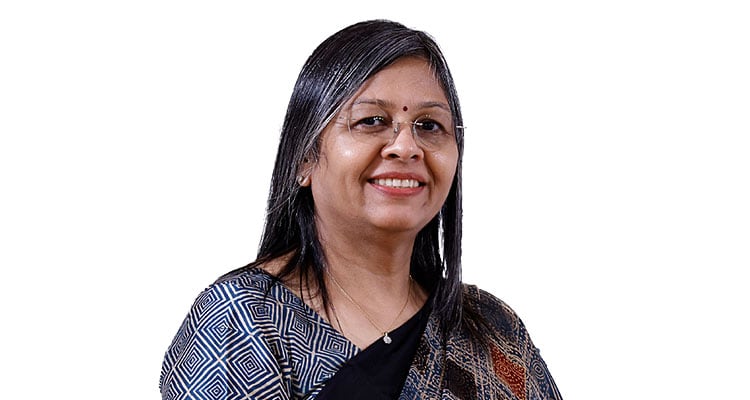












The mindset behind market leadership

In a market where many are content to follow, Nick Caesari explains how a leadership mindset built on innovation, intentional ‘headspace’ and a refusal to accept limitations can transform a struggling venture into an industry leader.
Could you introduce yourself and give us some background on your business?
I am the chief executive officer (CEO) of two companies working in the transport sector.
My first company, started in 2012, is one of the leading training providers working with most of the major UK fleets (HGV, vans, grey fleet) and providing training to drivers, helping to protect vulnerable road users (pedestrians and cyclists), and improving driving standards and road safety.
Innovation is a key part of our strategy and some of our successes include the introduction of counter terrorism training to the transport industry and being the first (and largest) virtual reality training provider in our sector.
My other company is all about transport accreditation standards and was developed as a direct competition to two government owned schemes.
Although it’s been a challenging journey competing against the government, we are now the fastest growing fleet accreditation scheme in the UK, recognised on major infrastructure projects such as TfL, HS2, Sizewell and National Highways, as well being adopted by some of the UK’s largest fleets.
In dentistry, many practices offer similar treatments. In your industry, how do you differentiate your business from the competition, and what is your process for identifying what your customers actually value?
You can choose to be a leader or a follower in the market.
We do not obsess about what our competition is doing because by then, it is too late.
We spend a lot of time undertaking research to find the gaps in the market, industry sectors that aren’t being serviced properly, demographics that have been overlooked, or where dominant players exist and the perceived barrier to entry seems too high.
Once we identify that opportunity, we become experts in that area.
We develop a solution that either creates a completely new product offering or significantly improves the customer value of existing products in the market.
We make sure that we don’t go to market too fast, launching a substandard product.
But equally, we do not over engineer our products to the point of perfection, because otherwise we risk a competitor getting to market before we do.
Whatever our product, we make sure it will be challenging for our competitors to replicate easily; we want them sitting in their meetings saying, ‘how did they do that?’.
Our competitors eventually work it out and, in some cases, catch up.
But by that point we are already onto our next new proposition.
We are seeing a rise in the cost of living and business overheads. As a leader, what is your strategy for maintaining profitability during tough economic cycles?
We work in a highly competitive industry where most competitors use price as the key for winning or retaining business.
That is a short-sighted approach that quickly erodes margins and creates a customer expectation that the same product will just keep getting cheaper over time.
We found that the most effective way to maintain our margins is to keep innovating our product range to provide a vastly improved level of service and customer experience.
It is not about the price of a product or service; it is about the customer’s perception of the value of that product or service and that is what we obsess about.
The other area we obsess about is cost (direct or overhead), as we are fully in control of those.
We regularly review our cost base, find out where we might be bleeding cash and find efficiencies fast.
Cashflow is everything to a business so we monitor our cash flow often because the sooner we know when cash will be tight, we have enough time to influence and improve that position.
What is your philosophy on recruitment and retention?
Leadership is what is important, not management.
As CEOs, you could assume that everyone should just do as we say but that is not a very productive ‘people’ strategy.
You set the temperature of the business and people look to you to inspire them and make them feel like they are part of something exciting.
You need to take time to explain the vision, how it will help the company, and most importantly, individuals’ roles in helping to achieve that vision, and what it could mean to them personally when it’s achieved.
As CEOs, we need to understand what motivates everyone, create development plans for each employee and don’t wait for the annual appraisal to promote someone.
If they are outstanding and have the right attitude for progression, move them up fast, pay them more, set higher expectations and keep driving.
Equally, also learn to accept that some people are content with where they are in life and pushing them is not going to achieve a better outcome.
Many dentists struggle with being both the ‘lead worker’ and the ‘business owner’. How do you balance this?
For me it is all about headspace.
I run two companies, which although are in the same sector, their position and objectives differ significantly so what works for one, might not work for the other.
Like all business owners, I could fill my ‘headspace’ everyday with accounts, staff development, operational issues etc (times two companies). And although all those things are still very important, they are actually a distraction to growth.
You need to carve out time for yourself every week, away from the office, where you can focus on the challenges and the ideas.
Even if I am in the office, I will disappear for a while for a walk or a coffee, staring up at the sky, clearing my mind and populating it with that one objective.
You’d be amazed what you can come up with in five minutes and for me, it is this activity that drives our innovation and new products.
Every successful entrepreneur has a ‘war story’. Can you tell us about a significant mistake or setback?
I have unfortunately had to lose a business that I worked hard on for seven years and it came down to one very poor decision.
The worst part was that it was after our most successful year working on the 2012 Olympics, but that was part of the problem; we felt indestructible because of the Olympics project and complacency set in.
I backed the wrong client opportunity, which took us down in less than a year.
I have started three businesses since that time, and each one is different because I have learnt from the mistakes I have made in each.
That is the most important thing, asking yourself, ‘what can I do better’ and not focusing on blaming everyone or everything else.
Technology in all walks of life is moving incredibly fast. How do you decide when to invest in new, expensive innovation and when to stick to the tried-and-tested methods?
Technology is expensive and it can be a real money pit if you don’t know what you are doing.
People are obsessed with AI at the moment but like most emerging technologies, they only become an achievable reality for most businesses when they are available commercially ‘off-the-shelf’.
We are lucky enough to have our own development team that works on propriety technology so we can perfectly shape the proposition to our customers’ requirements however that is not our default position.
What we are really good at is converging technologies, where we take several ‘off the shelf’ products and ‘mash’ them together as a complete solution.
Most of the hard work has already been done, you just need to identify a unique way of delivering that solution.
If you could sit down with a room full of aspiring business owners today, what is the one piece of advice you would give them?
Don’t let ‘you’ be the reason as to why your business is limited.
I have always stated that I have no ceiling, there is nothing I can’t achieve because I have a willingness to learn, I am a fast learner and I have access to Google (and now AI).
Push yourself to find the answers first before you push others.
Invest the time, do the research and never say to yourself ‘I don’t know how to do that’ before attempting to find out. You’ll be amazed at what you’re capable of achieving if you just push yourself and ignore psychological barriers.
Follow Dentistry.co.uk on Instagram to keep up with all the latest dental news and trends.
Apa Reaksi Anda?
 Suka
0
Suka
0
 Kurang Suka
0
Kurang Suka
0
 Setuju
0
Setuju
0
 Tidak Setuju
0
Tidak Setuju
0
 Bagus
0
Bagus
0
 Berguna
0
Berguna
0
 Hebat
0
Hebat
0