


























Combined evaporative cooling and sprinkler system demonstrates positive effects on broiler performance, water use
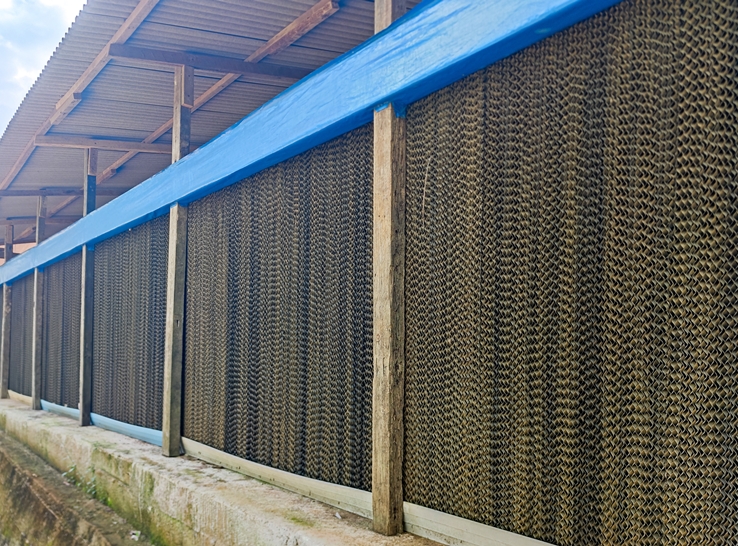
Heat stress continues to negatively impact broiler performance, welfare and resource efficiency during summer production, particularly in regions with high ambient temperatures and humidity. Conventional evaporative cooling (EC) pad systems effectively reduce house temperature but rely heavily on water use and often increase relative humidity, which can impair birds’ ability to dissipate heat through respiration.
Sprinkler systems offer an alternative cooling strategy by directly cooling birds while using less water and minimizing increases in house humidity. However, limited data exist on their combined use with EC systems under commercial-scale conditions.
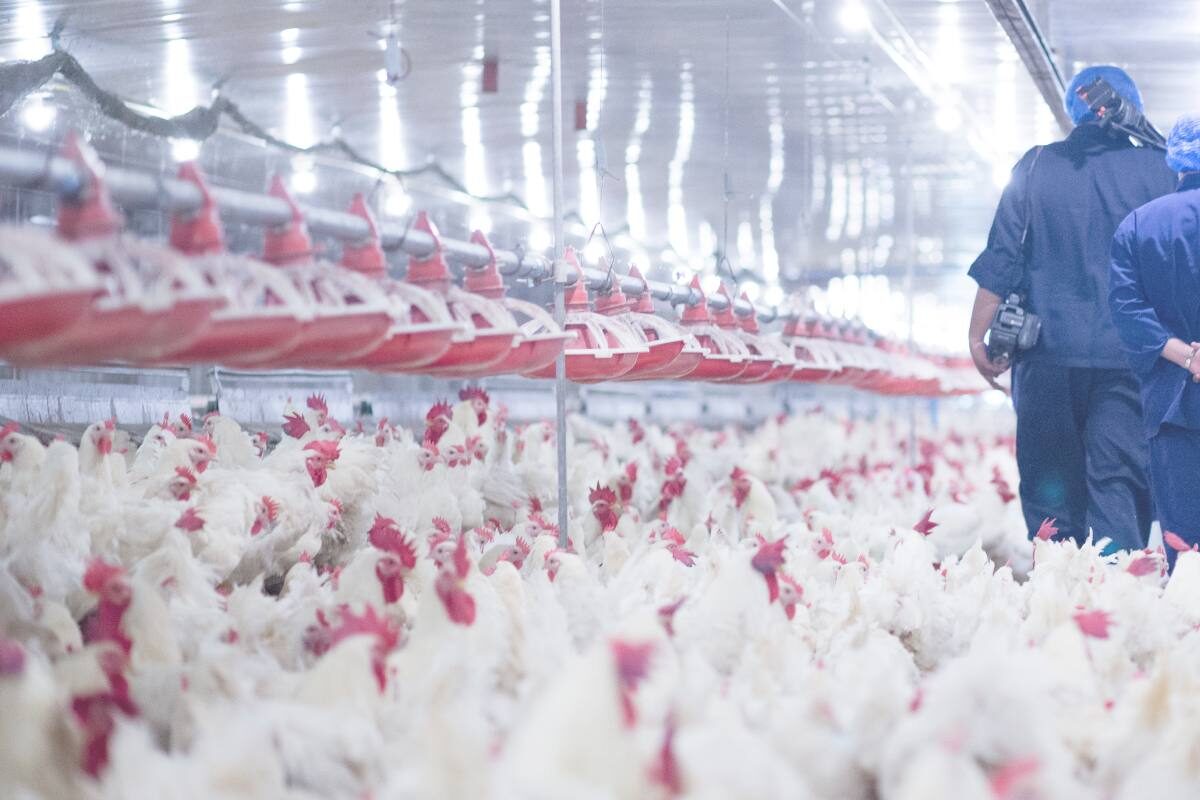
This project, led by Jonathan W. Moon, PhD, Mississippi State University, evaluated a combined evaporative cooling and sprinkler system (ECSS) relative to a conventional EC system in two commercial-sized broiler houses (42′ x 400′) across two summer flocks at Mississippi State University’s poultry research farm.
Study design
Cooling treatments were alternated between houses to minimize house effects. The ECSS strategy incorporated sprinkler-based activity promotion beginning at 21 days of age and sprinkler cooling beginning at 28 days, with cool-cell activation delayed until higher temperatures (88° F) compared to the EC system, where cool cells were activated at temperatures no lower than 82° F.
Environmental conditions, cooling-water use, bird performance, physiological responses, litter and air quality, and welfare indicators were monitored throughout both grow-outs.
Results
The ECSS treatment produced higher in-house temperatures but significantly lower relative humidity during daytime cooling hours compared to the EC system. This combination created more favorable conditions for respiratory evaporative heat loss in broilers.
Additionally, the ECSS strategy resulted in a numerical reduction in cooling-water use of approximately 39% across two flocks (63,696 versus 105,091 gallons), representing savings of more than 20,500 gallons per flock.
Drinking-water consumption did not differ between treatments, indicating that increased in-house temperatures did not increase bird water intake. Bird core body temperatures were effectively maintained under both cooling strategies, with no meaningful differences observed across most of the monitoring period.
Broiler performance was not adversely affected by the ECSS strategy, as live bodyweight, feed-conversion ratio, mortality, pay per pound and overall processing performance were comparable across treatments.
Birds in the ECSS treatment exhibited higher feather-soiling scores. The feather tarnishing was caused by dust adhering to water droplets that remained after evaporation. This soiling was superficial and cosmetic, rather than a sign of wet litter or poor house conditions.
Birds were not continuously wet, as sprinklers were applied only when conditions were appropriate, and the water evaporated before follow-up applications.
Measures of litter quality were also unaffected by treatment. Litter ammonia levels, nutrient composition, moisture, total bacterial plate counts, Salmonella prevalence and paw scores did not differ between treatments, suggesting that the combined-cooling approach did not negatively affect litter quality.
Overall, these findings suggest that a combined ECSS may increase in-house temperatures and decrease relative humidity, resulting in reduced cooling-water use while maintaining effective thermal regulation and bird welfare.
“The ECSS approach represents a promising alternative cooling strategy for commercial broiler production in hot, humid environments, with potential benefits for sustainability and resource conservation,” Moon concluded.
The research was funded by USPOULTRY and the USPOULTRY Foundation. Click here to view the industry summary.
Editor’s note: Content on Modern Poultry’s Industry Insights pages is provided and/or commissioned by our sponsors, who assume full responsibility for its accuracy and compliance.
The post Combined evaporative cooling and sprinkler system demonstrates positive effects on broiler performance, water use appeared first on Modern Poultry.
Apa Reaksi Anda?
 Suka
0
Suka
0
 Kurang Suka
0
Kurang Suka
0
 Setuju
0
Setuju
0
 Tidak Setuju
0
Tidak Setuju
0
 Bagus
0
Bagus
0
 Berguna
0
Berguna
0
 Hebat
0
Hebat
0